
This is a newspaper clipping from The Los Angeles Times, Friday May 6, 1949, taken from page 31. Courtesy of Newspapers.com.
The manner in which children are dealt with by parents and teachers, guardians and nurses either aids or hinders the progress and future welfare of the individual and of society.
Sonia H. Davis
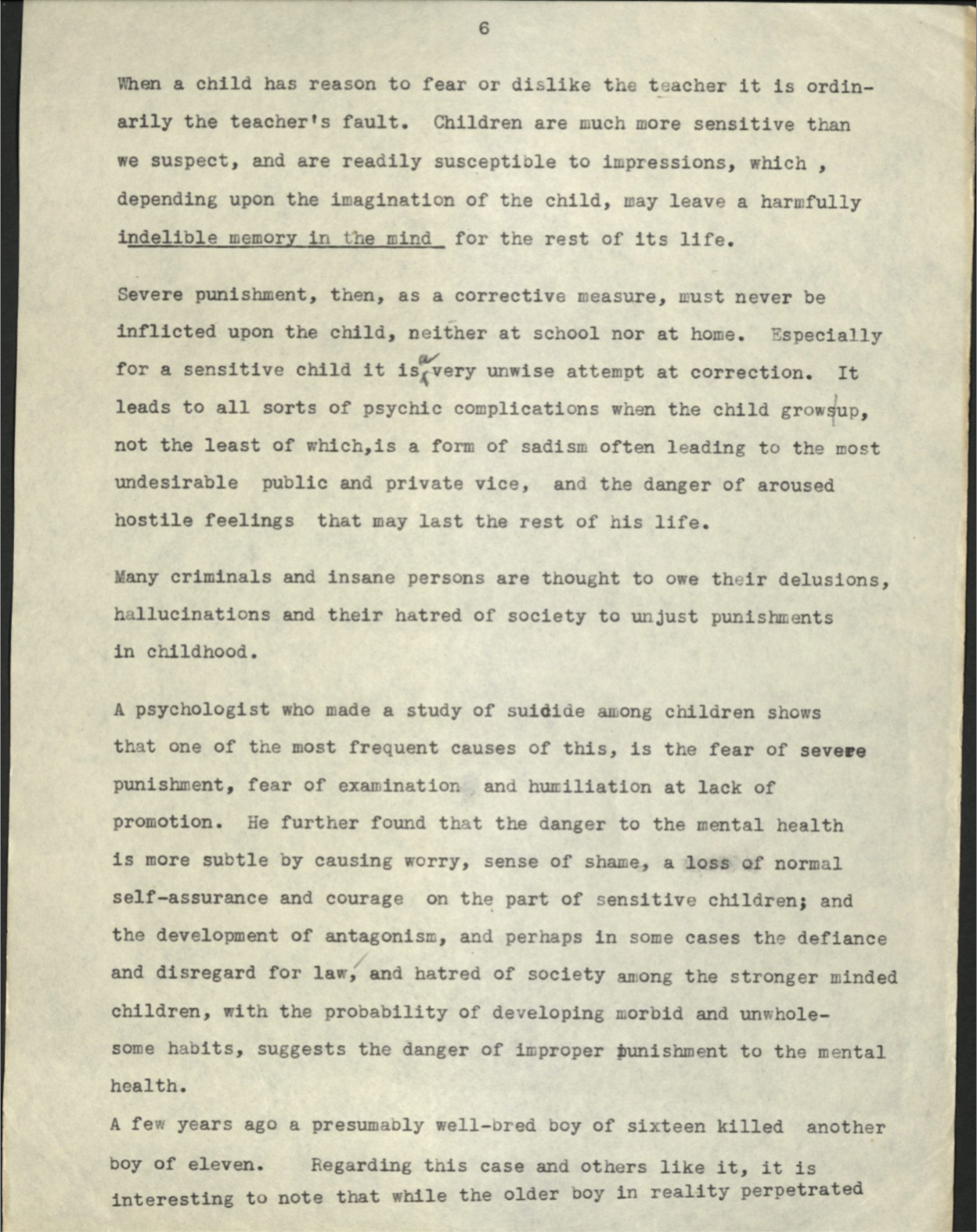
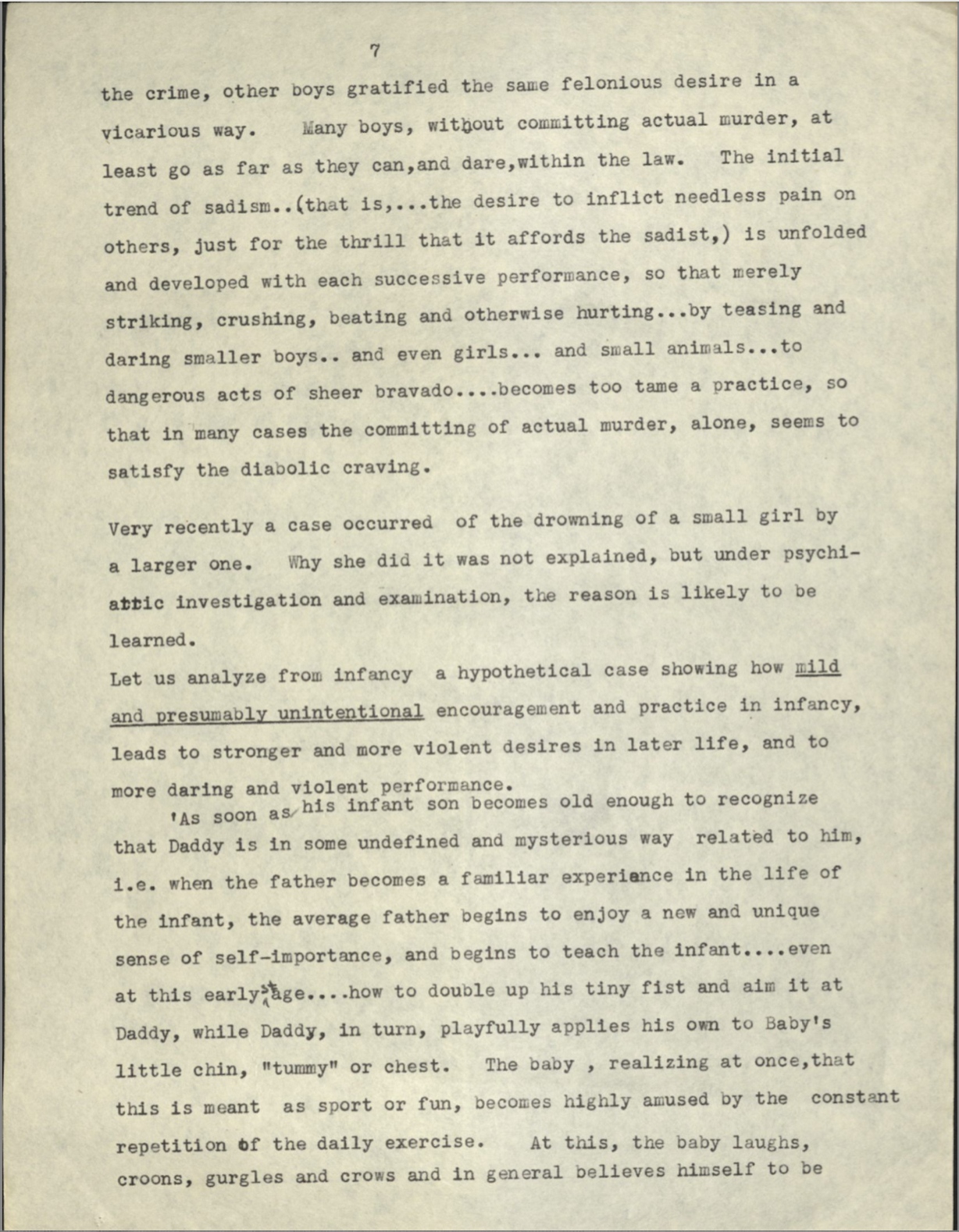
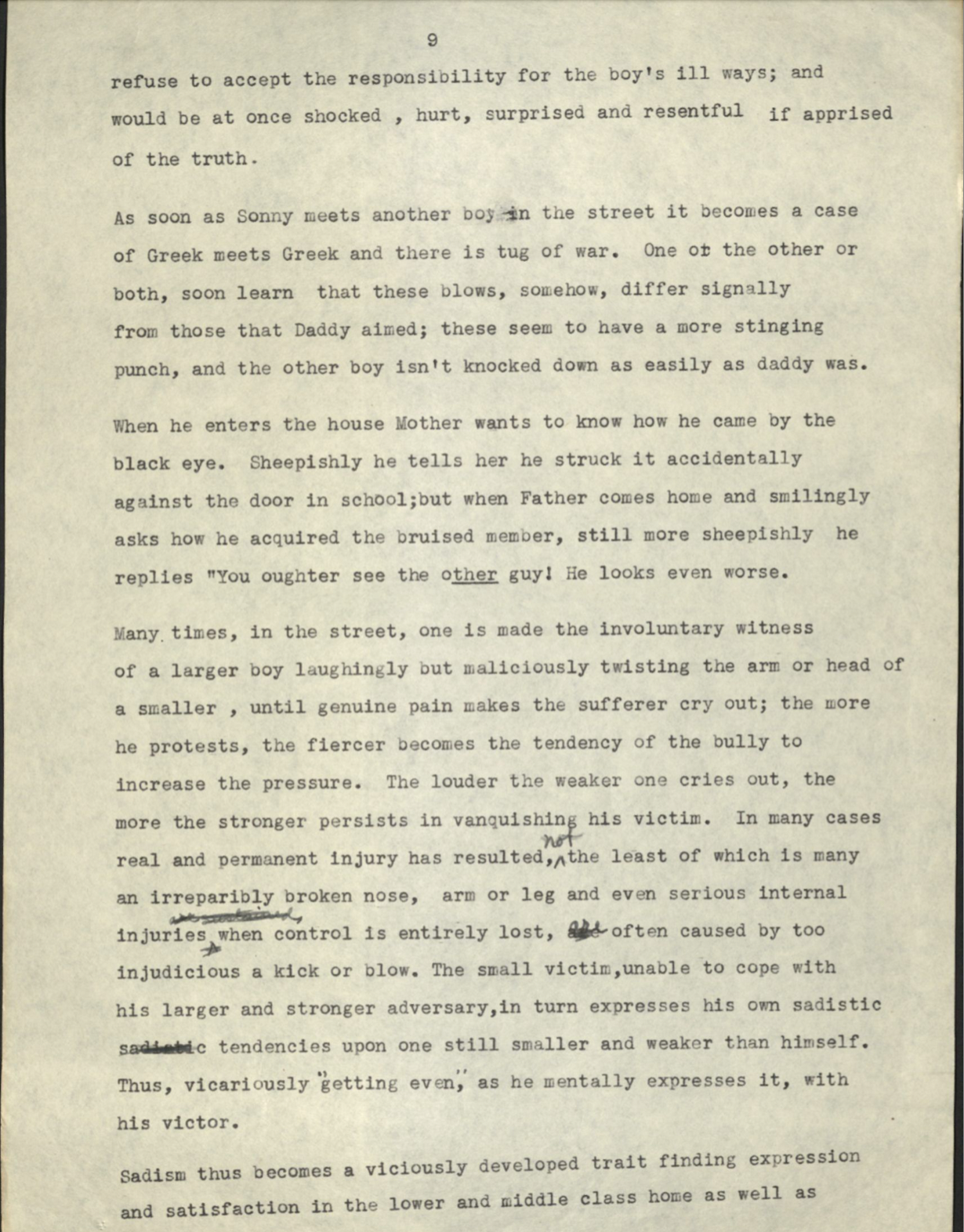
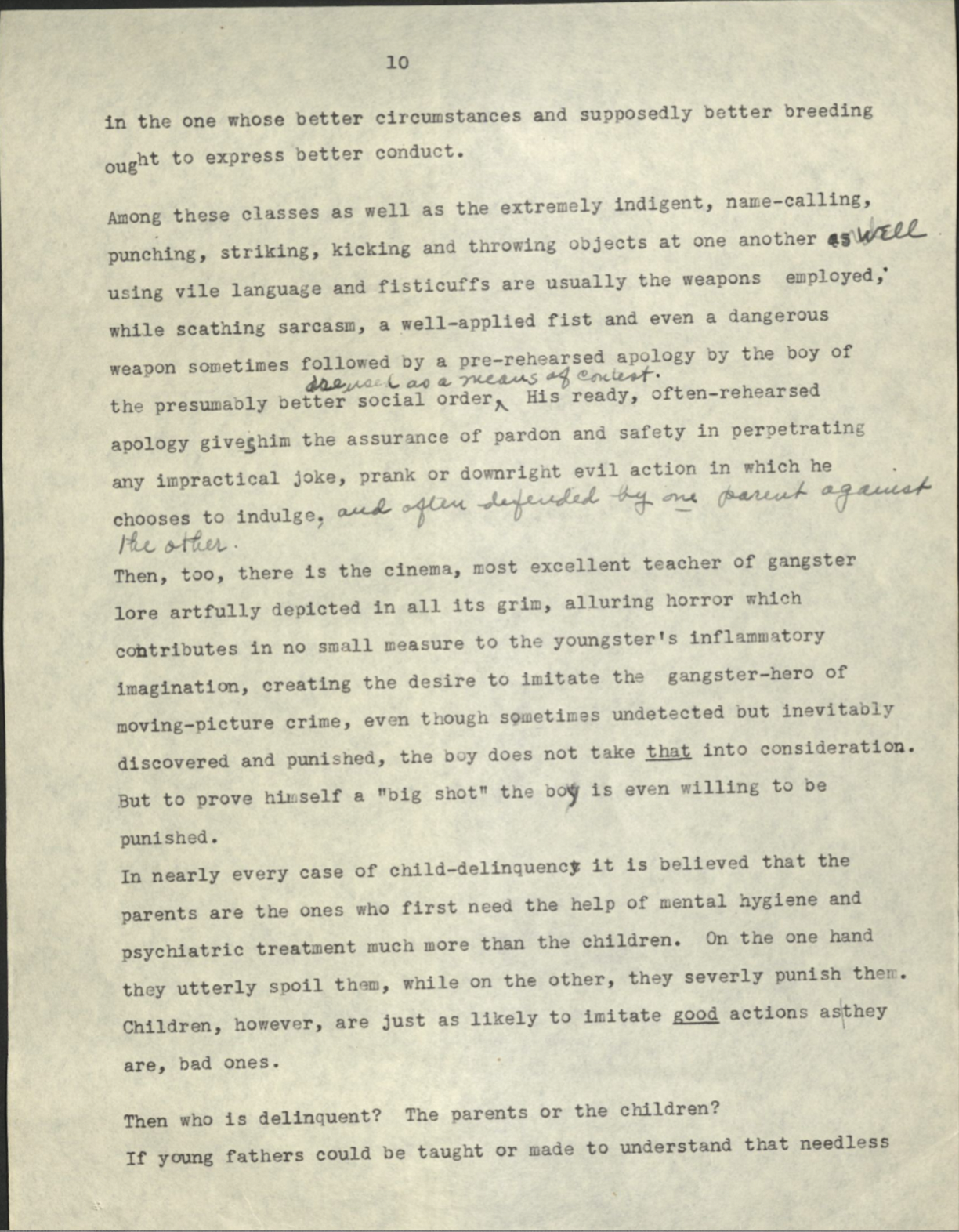
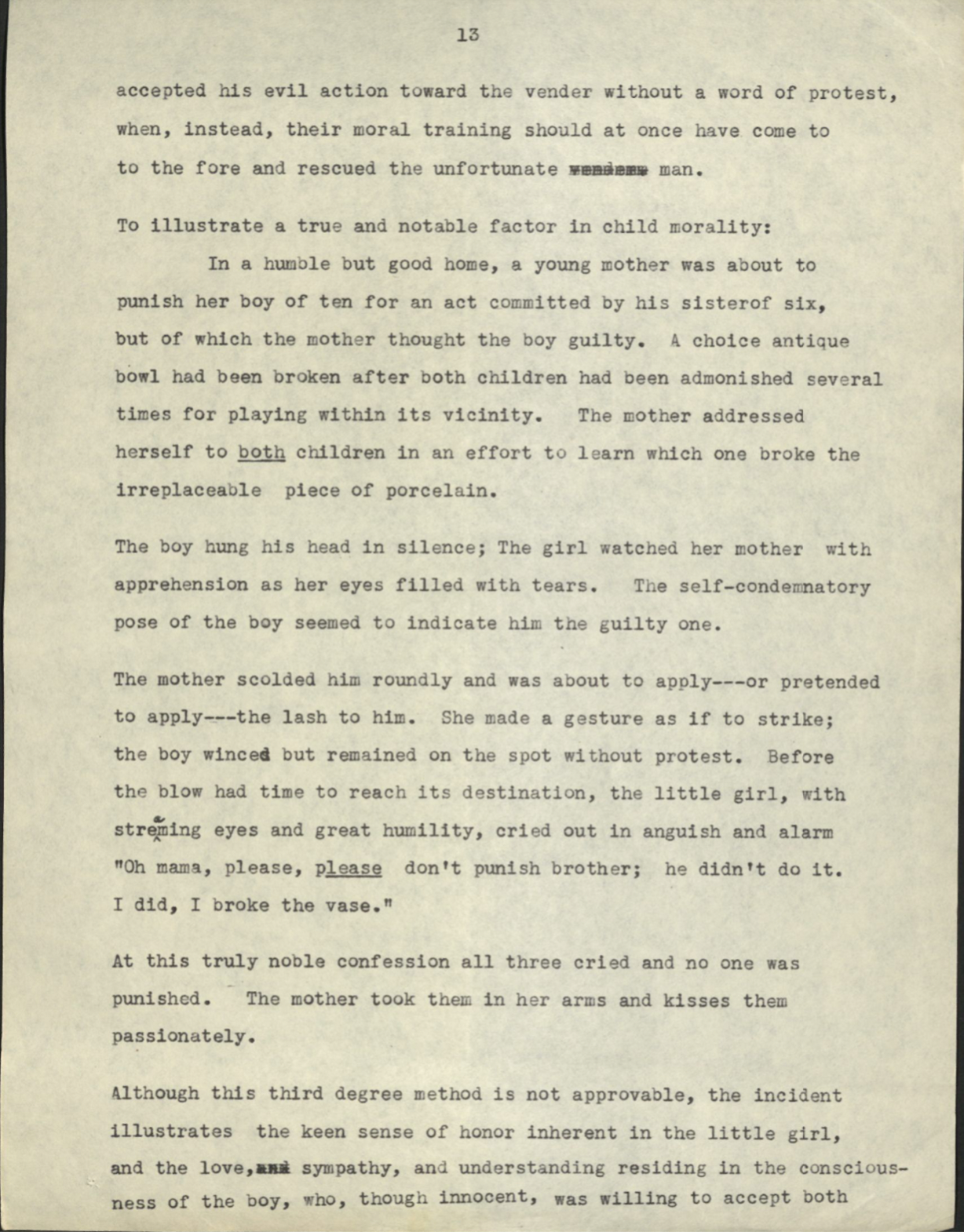
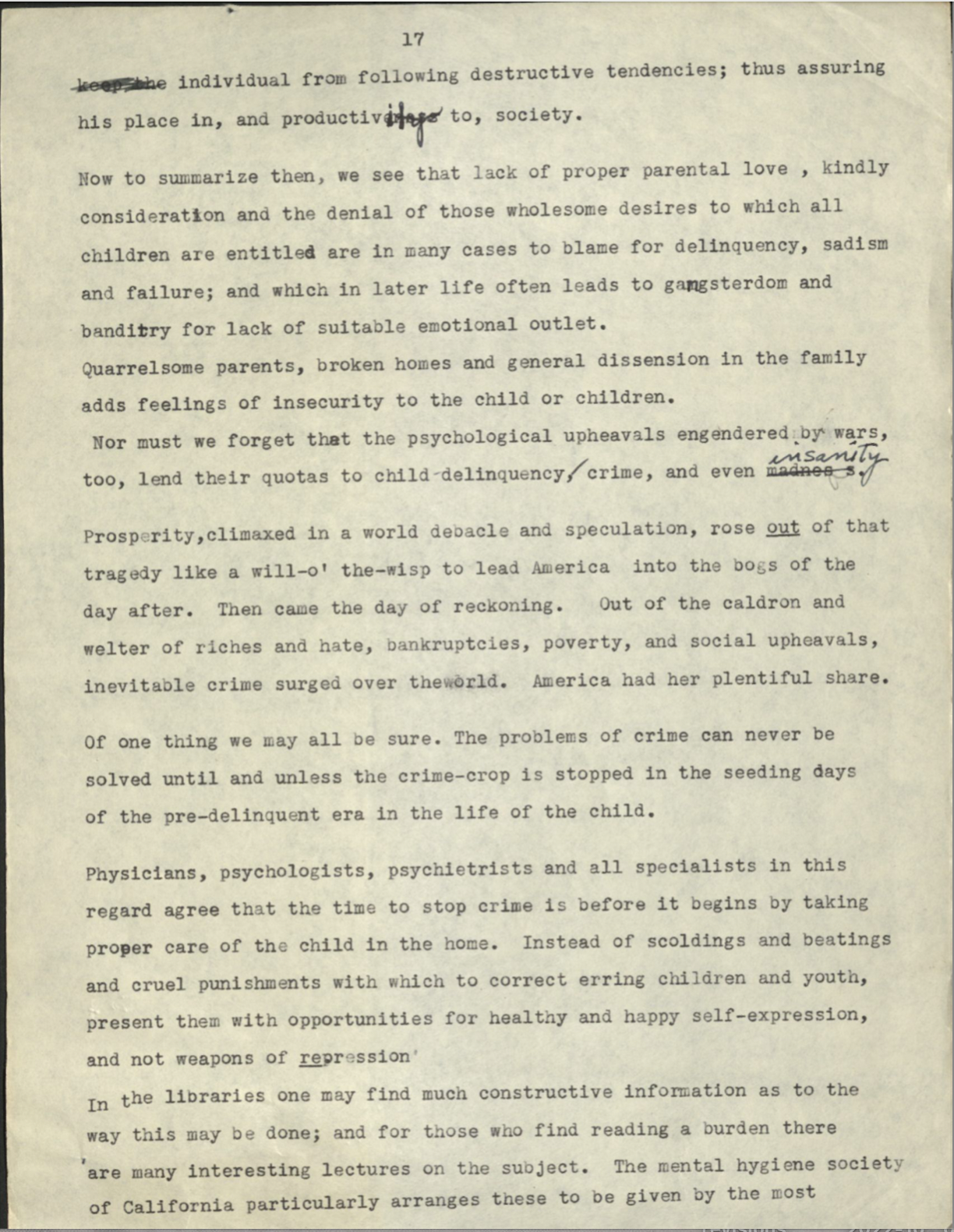
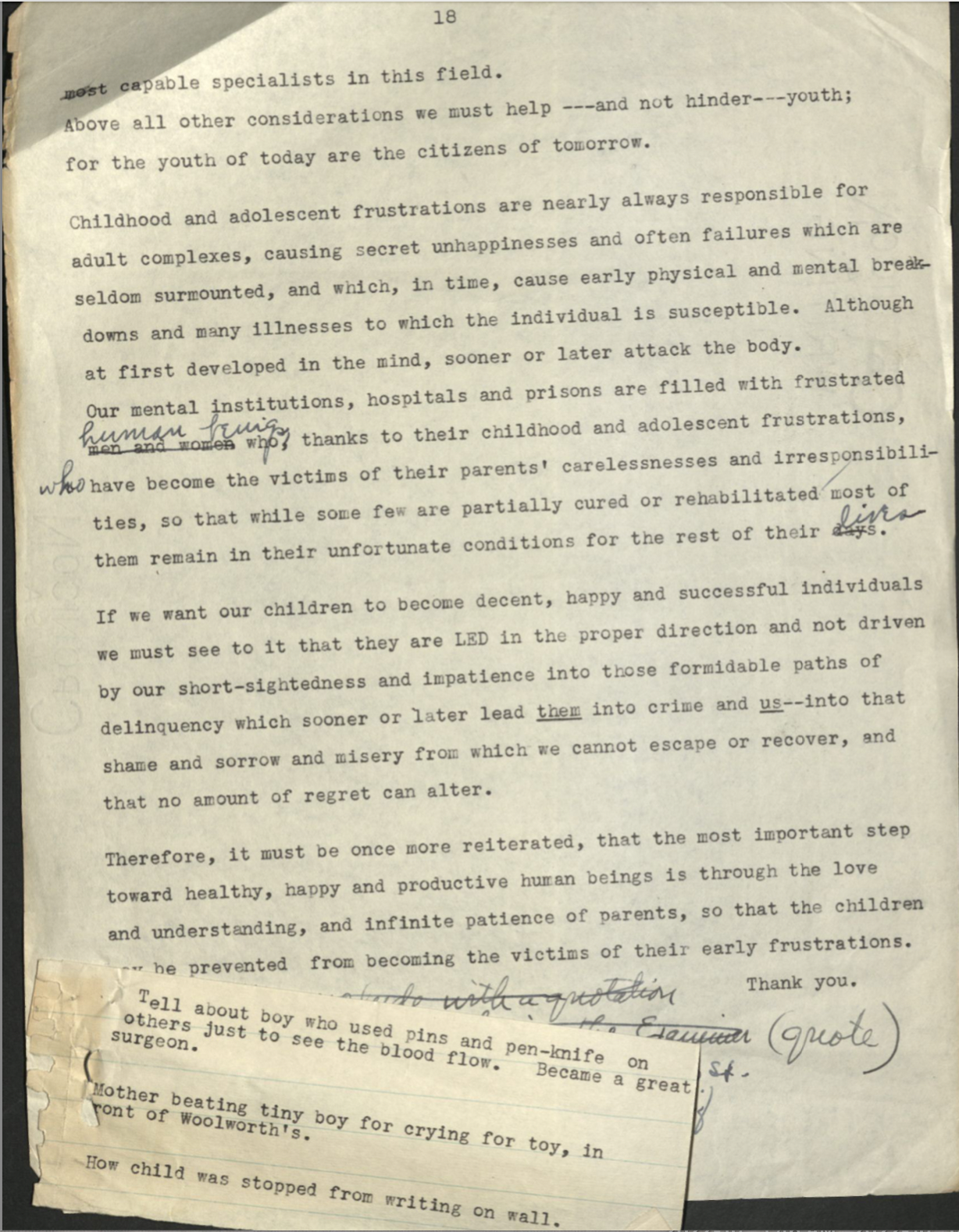
Child Delinquency is an essay that focuses primarily on the proactive methods of raising children to have the best mental hygiene. Sonia was the guest speaker for the group Mental Hygiene Group in Los Angeles on May 1949, and she presented this piece of writing at the meeting. In the essay, spanning over 19 pages, Sonia elaborates on the importance of understanding the sensitivity of children and the necessity to guard their mental formation at the earliest age possible, for it is within these tender years that will ultimately form the personality they will adopt into adulthood.
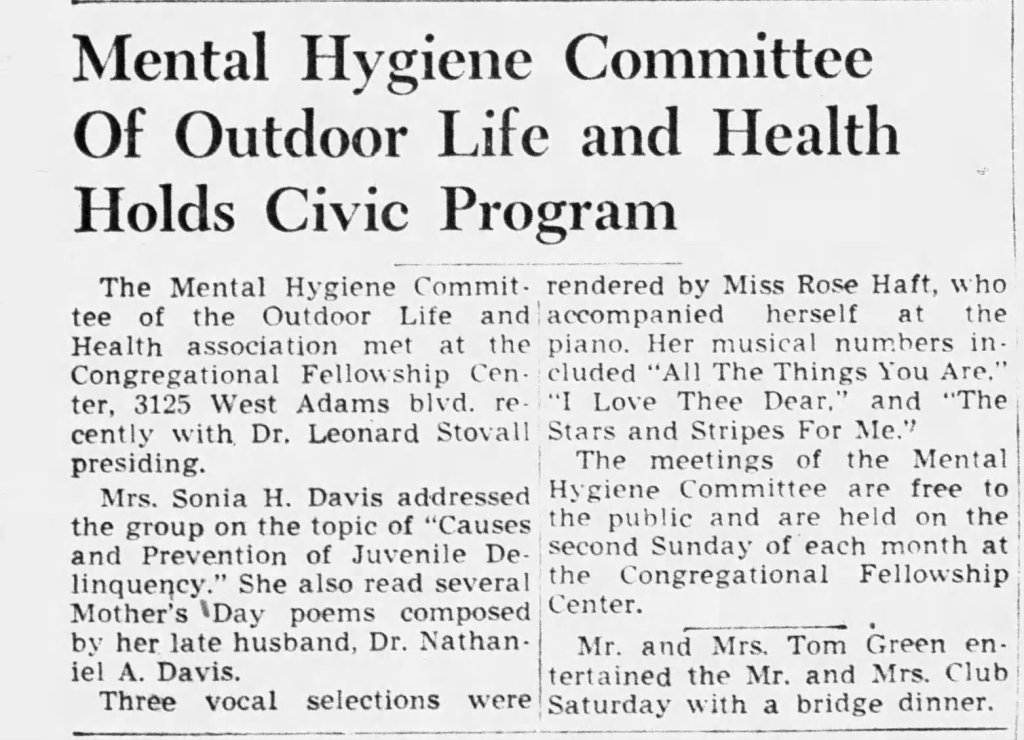
This is a clipping from the California Eagle, Thursday May 26, 1949, taken from page 10. Courtesy of Newspaper.com.
Punishment avails nothing. For centuries, the endeavor to correct or eliminate the delinquent and criminal tendencies of; and regenerate, the wrong-doer, has been pursued and combatted with fallacious methods. These methods, usually, have been tried along governmental, political, legal and even social lines by measures of punitive enforcement but always, have they not only failed to eliminate or decrease waywardness and crime, but conversely, they have encouraged and developed crime to almost an exact science.
Sonia H. Davis
Sonia brings attention to the psychological results regarding punishment—punishment from parents, teachers, and public authorities. These punishments vary in presentation and range from sheer impatience to the severe physical, and regardless of which it may be, each are damaging to the child. For one minor example, when a child persists to ask question upon question, it is how the parent reacts that matters the most. A parent could become instinctively impatient and respond with lies just to get the child to stop asking questions, or simply dismiss the child’s constant interrogation altogether by telling him or her to drop the matter and go play elsewhere. Although these reactions are natural, Sonia, however, stresses the importance to see this opportunity as a duty and as well as a pleasure to become involved and seek the correct answers for their children. The endless questioning is simply a child’s groping for knowledge. It is best that they receive an answer from their parents than to seek it elsewhere on their own, or to grow frustrated with unfulfilled curiosities.
A teacher is equally as important as a parent when helping the mental development of children. Although teachers are called to primarily instruct, there are moments in which a teacher must exact a correction in behavior and/or the progression of learning. Even though classrooms are abounding with an array of adolescent personalities, which therefore makes it difficult to rein in the student’s complete attention, Sonia still advises the teacher to take a moment to collect oneself if the need arises for a necessary correction. The quick instinct to punish for wrongdoing or for a child’s lack of knowledge, in Sonia’s opinion, is a short-sighted reaction. Teachers are encouraged to approach each issue with patience and with an understanding of what is done today will ultimately affect a future.
A teacher is not to spotlight a student for wrongdoing in front of his fellow students, or to heavily criticize a student’s work in belittling ways. Sonia argues that in just the same way that a teacher would not want to be put down before their fellow staff by their boss, so the teacher must not bring such tactics into the classroom. The teacher must strive to build confidence and curb unwanted behavior in ways that will bring about positive habits within the youth. Of course, Sonia admits, all these theories are always easier said than done. Nevertheless, it is encouraged to put them into practice.
In spite of its many poignant points, this single keynote stands out the most due to the historical significance in which it was relayed. The beliefs that are passed on from generation to generation also gives rise to delinquency in children. Parents are unknowingly (or knowingly) developing in their children the complex of either inferiority or superiority by the handing down of pre-conceived racial prejudices and sectional hate. When Sonia completed Child Delinquency, the year was 1959. Segregation of the whites and blacks was still prevalent throughout America. Although California was progressive in terms of abolishing certain degrees of segregation before the rest of the nation, the beaches in Los Angeles, for example, were still very much segregated by color.
Therefore, for Sonia to claim (in her own backyard, practically) that these prejudices are taught by parents and not learnt from children socializing among different ethnicities is a very bold statement for its time. Sonia was challenging parents to really step beyond their unwarranted prejudices in order to give their children the freedom to love others equally and without constraint. To do otherwise is to breed competition within their children against other people due to their rank in society, rather than sharing the joy of mutual successes regardless of superficial differences.
Through and through, Child Delinquency is a phenomenal essay. It deserves a special place in parental outlets, such as in books, periodicals, or online forums. The underlying message of this essay is simple: Sonia advises to ignore negative reinforcements, but to put positive reinforcement into practice for the sake of our children’s future.
You may read the full essay:
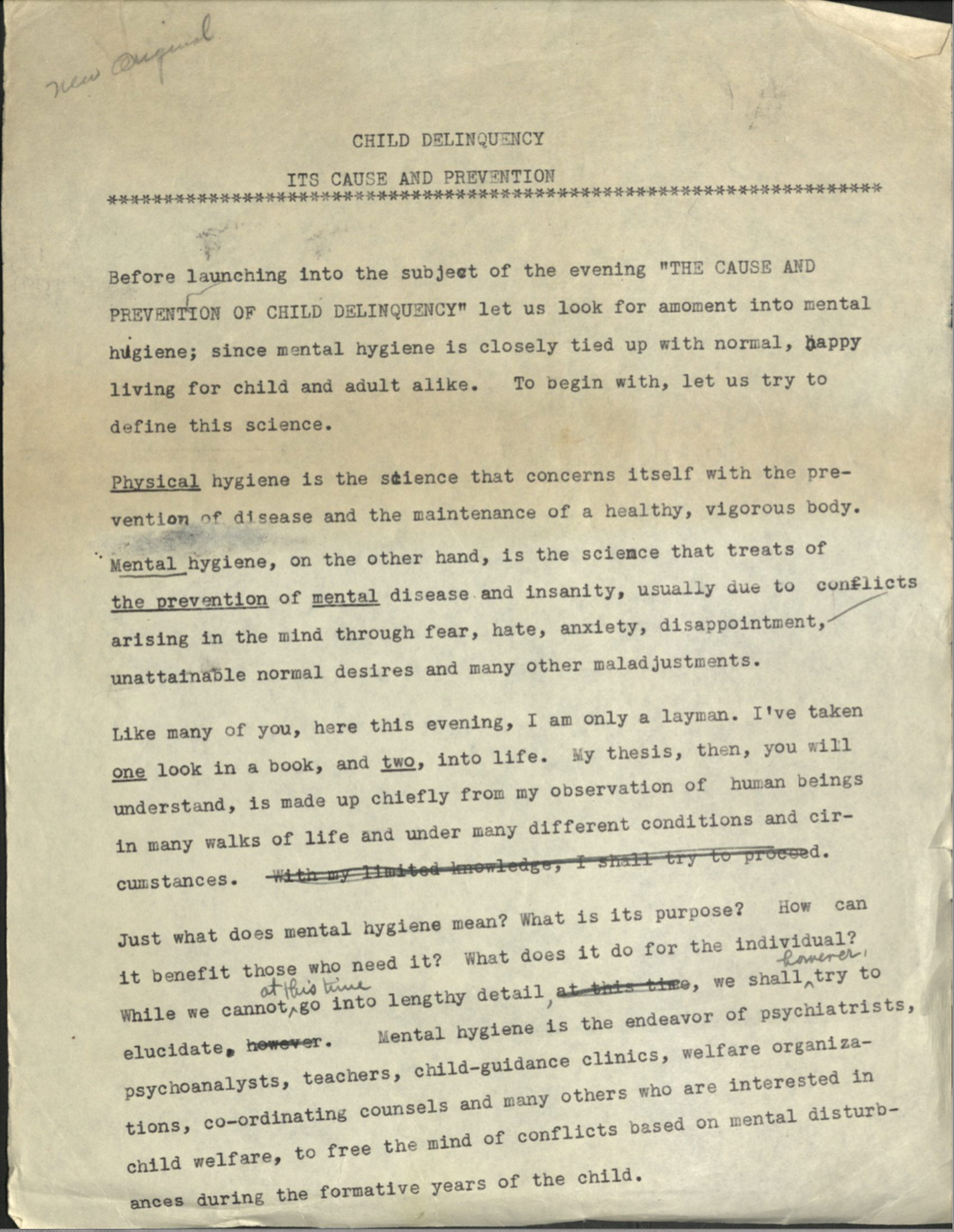
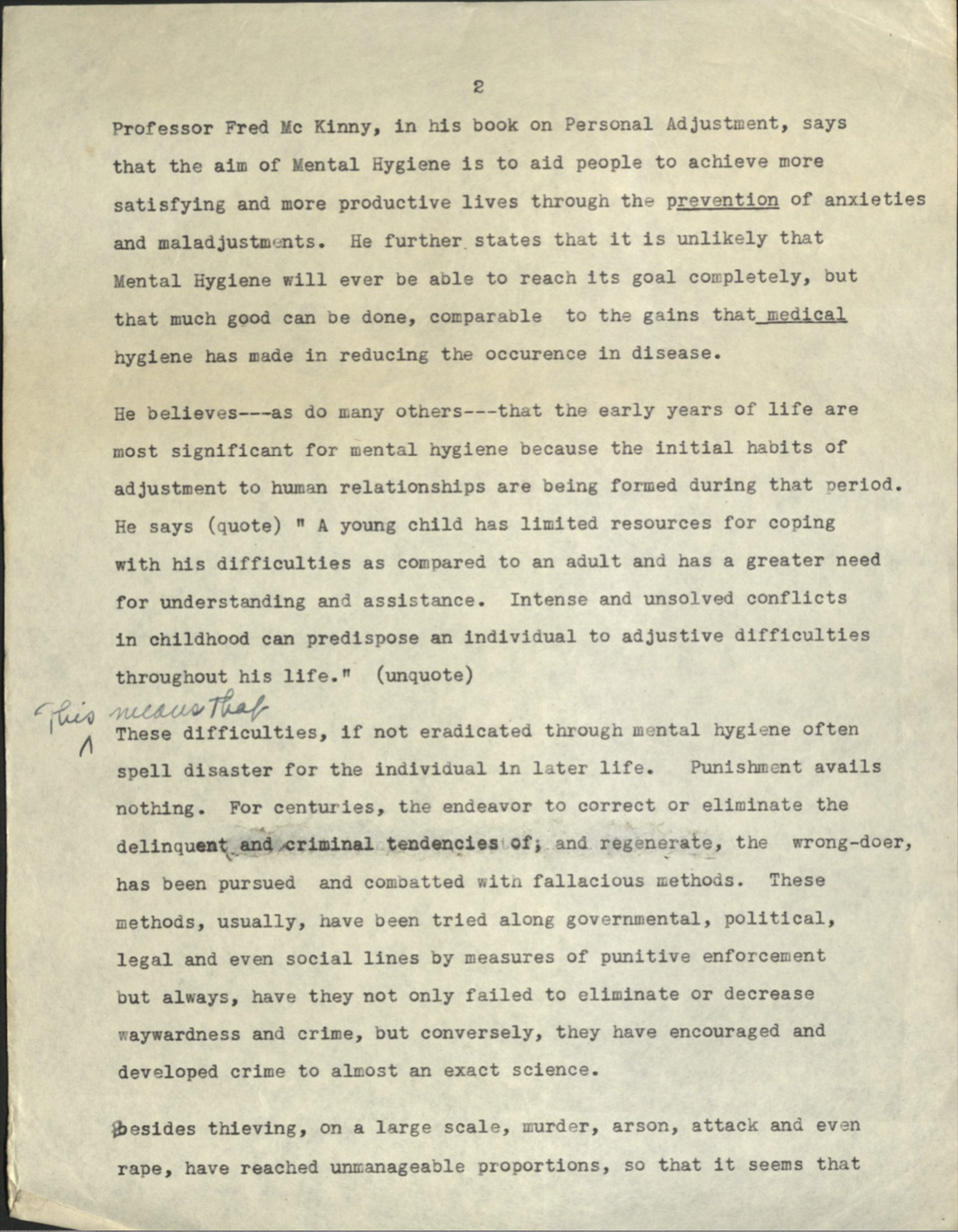
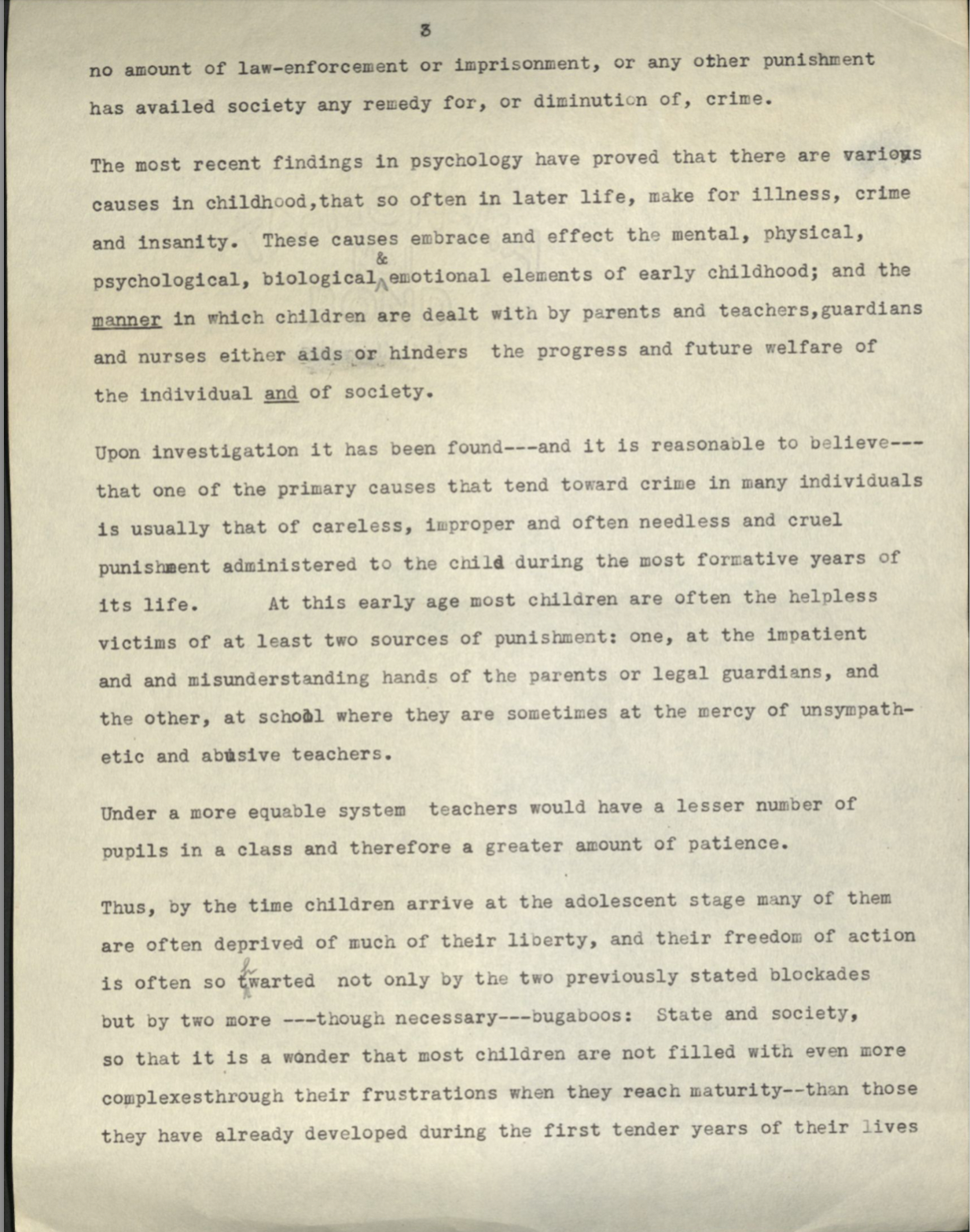








 The Papers of Sonia H. Davis
2 responses to “Child Delinquency (An Essay)”
Sonia’s ideas seem way ahead of the times even compared to my own childhood. Her honest acknowledgment that living by these principles is difficult seems refreshing and brave to admit. The more I learn about her the more impressed I am by her breadth of knowledge and expertise.
LikeLiked by 1 person
Due to her upbringing, it’s easy to see why she had these views. Her stepfather made her feel unwelcome, and he was not only abusive toward her, but also violent toward his biological children. Sonia was certainly intelligent (more than people give her credit for) and felt very deeply about certain social issues, which is why her essays are fascinating to read 😊
LikeLike