Two are one. Another bears the name of Lovecraft. A new household is founded!
H.P. Lovecraft to Lillian D. Clark, March 9, 1924, Letters to Family and Family Friends 1.106.
Anything addressed to “H.P. Lovecraft” or (miraculous and unpredictable appellation) “Mrs. H.P. Lovecraft” will henceforward reach its recipient without additional formalities.
H.P. Lovecraft to Lillian D. Clark, March 9, 1924, Letters to Family and Family Friends 1.106.
Before the altar and vast windows of St. Paul’s Chapel, Sonia H. Greene met the gaze of her soon-to-be husband. He, with the stamp of antiquarian appreciation, went through his stately assurance. Then, Reverend George Benson Cox, in traditional vestments and with a ceremonial expression, turned to Sonia. Would she take the weird writer in her midst, to be her husband, to have and to hold from that day forward, for better, for worse, for richer, for poorer, in sickness and in health, to love and to cherish, from that day forward till death would they part? The world stilled—the empty and solemn mood of the chapel deepened as though an audience waited with bated breath for her momentous decision. In the iridescent glow of the cross, whose delicate light adorned her with additional grace, Sonia said, “I do”.
On March 3, 1924, Howard Phillips Lovecraft and Sonia Haft Greene became husband and wife. Two became one: Mr. and Mrs. Lovecraft. They had stepped out of St. Paul’s Chapel with the high hopes of a lasting matrimonial bond, and with her own quiet hopes of making him a better man.
I had hoped (perhaps it was wish-thinking) that my ‘embrace’ would make of him not only a great genius but also a lover and husband.
Sonia H. Davis, The Private Life of Howard Phillips Lovecraft, unedited manuscript.
A hundred years later…
We look at that special day through scholarly lens, and perhaps even wish we had been witnesses to such a ceremony—sitting in one of the many empty rows, observing when they exchanged vows and rings. Yet, I believe that if we had been, at most, passersby on that day, striding past the open chapel doors, the scene within would’ve appeared as any ordinary ceremony taking place, and we might have overlooked its significance. It is only through the perspective of our present that we look back longingly to the past.
Fortunately, Howard and Sonia’s friends did not overlook the magnitude of such a day. The Blue Pencil Club, an amateur journalism organization of which Sonia was a member, announced the big news in their column “Blue Pencil Club Elects New Officers”, in The Standard Union:
Brooklyn, New York, Thursday, April 3, 1924, p. 2. Source: Newspaper.com
Transcription:
Announcement was made of the recent marriage of one of the club’s members, Mrs. Sonia Greene, of 259 Parkside avenue, [sic] to Howard P. Lovecraft, of Providence, R.I.
In her memoir, Sonia revealed that the Blue Pencil Club had additionally elaborated on their wedding day:
An account of that marriage is to be found in the “BROOKLYNITE” April 1924 the official organ of the Blue Pencil Club of Brooklyn, N.Y.
Sonia H. Davis, The Private Life of Howard Phillips Lovecraft, unedited manuscript.
It is interesting to note that despite his kindness in having dedicated a poem to the newlyweds, Rheinhart Kleiner had reservations regarding their marriage. In “A Memoir of Lovecraft”, he recalled having felt “faintness at the pit of my stomach and became very pale” upon hearing the news from George Julian Houtain and his wife. Houtain, having laughed at the effect that the announcement had on Kleiner, “agreed that he felt as I did”. (Something About Cats, p. 221) While Kleiner does go on to praise Sonia for her outward beauty, he divulges further in his memoir that her “severe conduct” and naivety was something that gave a general feeling to others that Howard and Sonia were ill-fated as a pair.
Unfortunately, there isn’t enough accounts on Sonia from unbiased sources to give a clearer picture of Sonia’s true conduct. And I say “unbiased” only because the claims we have of Sonia are mainly from the close friends of Howard. They regarded him highly, and while outwardly beautiful, Sonia didn’t seem to measure up to the majority of them. Did her background as a Ukrainian Jewish woman have an impact on how they viewed her physically and intellectually? Most definitely.
While I can easily launch into the psychological reasoning behind Sonia’s overall behavior (which I did to some extent in the introduction to Two Hearts That Beat as One), what genuinely mattered most is what Howard saw in her. It speaks volumes of a man, who was devoutly xenophobic, to marry out of his preferred ethnic group. Why? Because we see that she was more than just an immigrant and a Jewess to him. He saw her the way she wanted to be seen: intellectually attractive. The truth is, what they shared most in common was intellectual thought and ideals—something that has not been entirely acknowledged.
In the provided account, The Brooklynite had claimed that “Mr. and Mrs. Lovecraft entertained members of the Blue Pencil Club at their home” on March 23, 1924. Howard had mentioned a possible meeting with fellow amateurs to his aunt, Lillian D. Clark:
We have now sent invitations to several amateurs to come over next Sunday…
H.P. Lovecraft to Lillian D. Clark, March 18, 1924, Letters to Family and Family Friends 1.115.
March 18th was a Tuesday, and March 23rd would have been that following Sunday, just days after Howard’s letter. In his subsequent letter to Lillian, he briefly referred to the meeting:
Yes—the assemblage of March 23 came off successfully…
H.P. Lovecraft to Lillian D. Clark, March 30, 1924, Letters to Family and Family Friends 1.130.
However, this “assemblage” was not in fact the Blue Pencil Club because only a few sentences down from that very same passage, he explained what happened:
On Saturday S.H. and I were to have gone to the Blue Pencil meeting; but on account of fatigue and a cold on her part we refrained. The next morning we rather regretted our absence, for it seems that the meeting had been something of a party in our honour, with a carefully prepared speech by Mortonius, and the presentation of a wedding gift—a magnificent set of glassware—by the club as a whole!
H.P. Lovecraft to Lillian D. Clark, March 30, 1924, Letters to Family and Family Friends 1.130.
The “magnificent set of glassware” is obviously the “cut glass punch bowl and glasses” that the Blue Pencil Club presented to them. Evidently, Mr. and Mrs. Lovecraft had not actually entertained the club, ultimately having missed a party in their honor. Nevertheless, it was obviously the thought that counted.
The fact that both Sonia and Howard were thoroughly immersed in amateur journalism, and especially because Sonia was by this point the president of the United Amateur Press Association, an identical report of their wedding was printed in the United Amateur.
On March 3, 1924, occurred the wedding of Sonia H. Greene, President of the United Amateur Press Association, and H.P. Lovecraft, Official Editor of that society.
The marriage is the culmination of nearly three years of acquaintance, beginning at the Boston convention of the National in 1921, and ripened by a marked community of tastes and parallelism of interests. It may quite justly be added to the long list of amateur journalistic romances which our social chroniclers delight to enumerate and extol.
The ceremony, performed by the Reverend George Benson Cox, took place at historic St. Paul’s Chapel, New York; a noble colonial structure built in 1766 and dignified by the worship of such elder figures as General Washington, Lord Howe, and that Prince of Wales who later became successively the Prince Regent and King George the Fourth.
Following the wedding, the bride and groom departed on a brief tour of the Philadelphia region, whose venerable and historical landmarks accorded well with the scene of the ceremony itself. On Sunday, March 23, after their return to New York, Mr. and Mrs. Lovecraft entertained members of the Blue Pencil Club at their home, 259 Parkside Avenue, Brooklyn, where, needless to say, amateurs will always be welcome.
Mr. and Mrs. Lovecraft plan a continued career of amateur activity, which will begin with a vigorous attempt to resuscitate the United. Already in harmony as to plans and policies, the union will not alter or modify their programme as previously announced; but will add the final touch of cohesiveness to their concerted efforts.
“News Notes”, United Amateur 23, No. 1, May 1924, Collected Essays, Volume 1: Amateur Journalism, 1.352-53.
Prior to Howard, Sonia had been married to Samuel Greene. After their divorce, Sonia dated Francis Bosco, a bank teller for Bank of Italy (later Bank of America). According to her autobiography, Francis and Sonia were engaged, but the engagement was called off because he was Catholic and she was Jewish. After Francis, Sonia revealed she fell hard for “Kay”, a gentleman she met at a ball. He was very much like Samuel Greene, smart and yet argumentative. All these men were book smart, but also abusive toward Sonia, except for Francis. He seemed to have treated her kindly.
By the time she met Howard, Sonia was depraved of the kind of love that went beyond “free love”. While Howard isn’t perhaps the sort of man one imagines as a “knight in shining armor”, he was just that for Sonia. She genuinely believed he was the man of her dreams:
Sonia H. Davis, Autobiographical Writings, Box 9, Folder 5, John Hay Library, Providence, R.I.
Transcription:
After having met many men , [sic] some proposing marriage, a few indigent ones seeing in me a good “meal ticket” sought me for that, but not one as far as I could see, wanted me because there was anything in common between us, because there might have been real love; with several it seemed to me, it would have been a marriage of convenience; others bluntly suggested “Free love”, while a few probably did love me but I still sought the “man of my dreams”. One day I thought I had met him.
At some point during their lengthy correspondence, Howard and Sonia talked about love, and what made love genuine in a relationship. Sadly, since their correspondence did not survive, we don’t know the entirety of what said between the two regarding this particular topic. However, Sonia managed to preserve the passage that ultimately made her fall in love with him. This excerpt was later included in what would be the essay, The Psychic Phenomenon of Love.
Aside from his perception of love, Sonia also likely fell in love with the comforting prospect that Howard would respect her more, physically and emotionally, than her previous lovers. She knew he would not abuse her, but encourage her, not only entice her body, but seduce her mind. Yes, Howard had his flaws, but in comparison, he was precisely who she needed at that time of her life.
While the marriage ultimately failed, I will not focus on that unfortunate fact today, for today was a day in which both Howard and Sonia believed their love was eternal and worth the risk. Today, an exact century ago, they declared with clear certainty to be together for better, for worse, for richer, for poorer, in sickness, and in health. And when you really think about their relationship in the context of those marital assurances, their love had indeed persevered.
There must be a lot of different kind of people in the world. And I don’t think fighting anybody helps to understand them.
The Story of Phillis Wheatley, Shirley Graham Du Bois, p. 142.
But history often fails to record the many forgotten heroes and heroines of minority races because many historians, and the times in which they live, bear an unreasoning hostility to those minorities.
Sonia H. Davis, Book Review of Phillis Wheatley First American Negro Poet.
Having been an immigrant in Liverpool and then in America before becoming a U. S. citizen, it is not surprising that Sonia did not hold the same prejudices as her second husband H.P. Lovecraft. She understood what it felt like to live in a foreign country, trying to learn their language and their traditions while preserving her own. Even before their marriage, Sonia “wanted, if possible, to eradicate or partly remove some of his intensely fixed ideas”, and she would also say “that these underprivileged of all races and nations is what made America the great and strong Country that it is”. (The Private Life, unedited manuscript.) Yet since we only have his letters to reference, there is one particular passage that may reflect a tinge of prejudice from Sonia.
It seems that the direct communication of this park with the ever thickening Harlem black belt has brought its inevitable result, & that a once lovely soundside park is from now on to be given over to Georgia camp-meetings & outings of the African Methodist Episcopal Church. […] Wilted by the sight, we did no more than take a side path to the shore & back & reënter the subway for the long homeward ride…
H.P. Lovecraft to Lillian D. Clark, July 6, 1925, Letters to Family and Friends 1.310.
“Wilted by the sight, we”? Are we then to believe that Sonia was wilted by the sight that African Americans were gathered at the park, or wilted at the idea that they did not have the park to themselves for some quietude? There is a vast difference. For Lovecraft, it was the former, rather than the latter. But what about Sonia? We will never know, not if we are to depend on Lovecraft’s letters to give us an answer. Whatever it may have been, Sonia was more open about her desire for unity with all ethnic groups after her third marriage to Nathaniel A. Davis. He was an advocate for unity, regardless of creed and skin color, and Sonia, the ever-reflecting temperament of the men she married, also became an advocator for the very same things.
Sonia (in the first row in middle with Nathaniel) at a Race Relation meeting in 1939. Source: H.P. Lovecraft and His Legacy.
The question remains, however, was she always this advocator of the minority while married to Lovecraft. Sonia wrote The Private Life of Howard Phillips Lovecraft manuscript in the late 1940s, with an abridged version seeing publication on August 22, 1948, in The Providence Sunday Journal. Sonia of the 1940s was very different from the Sonia of the 1920s—she was very outspoken about the evils of white supremacy. Rightfully so. Although, I wonder how much of her memoir, specifically the passages regarding her responses to Lovecraft’s xenophobic flaws, was later rephrased and overly emphasized to fit her ideals at the time of writing it. If she wrote the memoir right after their marriage in 1929, would it still focus on HPL’s racism and her need to correct that part of him? How much of the memoir was swayed by her current thoughts, rather than of the time the moments occurred?
This isn’t in any way to portray her memoir in a negative light, but rather, to shine a possibility that The Private Life of Howard Phillips Lovecraft was perhaps shaded by the greater need to express equality to the minority. When it came to her ethnicity, however, she admitted:
As to H.P. not knowing that I was a Jewess until I told him; that was very natural, since I saw nor felt it any need to broadcast to the universe.
Sonia to Winfield Townley Scott, September 24, 1948, John Hay Library, Providence, R.I.
After marrying Nathaniel, she would think it necessary to broadcast it, writing essays of Jewish historical figures—expounding to the point that some of her papers were skewed and historically inaccurate. Her heart was certainly in the right place.
Tangent aside, reading Amos Fortune, Free Man and The Story of Phillis Wheatley further equipped Sonia to advocate for what was (and is) right. It isn’t quite clear when Sonia read these two remarkable books. Sadly, both book reviews are not dated. Amos Fortune, Free Man was published on January 1, 1950, while The Story of Phillis Wheatley was published on June 1, 1949. If we are to assume she read them as soon as they were released, our country was still very much segregated between whites and blacks—ultimately between whites and all ethnicities who were not white. California, however, was just slightly ahead of the curb in repealing Jim Crow laws with one minority group at a time. (For a timeline of the Jim Crow laws in California, you may read it here: Study the Past. These laws specifically targeted the growing Asian population.)
In 1913, writing about Los Angeles and Pasadena, W.E.B. Du Bois claimed, “Nowhere in the United States is the Negro so well and beautifully housed, nor the average efficiency and intelligence in the colored population so high.” (Chapter 5 – The California Reparations Report)
When The Story of Phillis Wheatley was published in 1949, California had already repealed in 1947 the 1866 segregation law which required separate schools for children of Chinese, Japanese, Mongolian parentage. (Study the Past) Additionally in 1947, the segregation of Mexican American children from public “white” schools was repealed. This change for Mexican Americans was brought on by the Mendez v. Westminster case in Orange County, which would later pave the way for the Brown v. Board of Education of Topeka—the landmark 1954 Supreme Court Case that ruled racial segregation of African Americans in public schools was unconstitutional. (OCDE Newsroom)
The case of Mendez v. Westminster began simply enough, with Gonzalo and Felicitas Mendez wishing to enroll their three children at 17th Street School, a public school in Westminster, in 1943. They were met with rejection, for this school with its beautiful playground, was only for white folk. The Mendez family, along with four other Mexican American families, sought legal action. In February 1946, the judge ruled to terminate discriminatory practices against students of Mexican descent. The ruling was upheld on April 14, 1947. (OCDE Newsroom) Sylvia Mendez, the daughter of Gonzalo and Felicitas Mendez, remembered the whole ordeal:
I remembered going (to court) every day and sitting in the front row, and not knowing what they were fighting for. I thought they were just fighting for me to get into the White school.
She says, ‘No, Sylvia. That’s not why we were fighting. We were fighting because under God we’re all equal. And you belong at that school, just like everybody else belongs at that school. And that’s what we were fighting for.
While the Mendez v. Westminster did not initially receive recognition at the time of its occurrence and favorable conclusion, the case of Brown v. Board of Education of Topeka certainly ran with the conviction further and spread it nationwide. Just like the Mendez family, Oliver Brown filed a class-action suit against the Board of Education of Topeka, Kansas, in 1951, when his daughter Linda Brown was denied entrance to an all-white school, which, too, was a public school. This extraordinary case challenged the “separate but equal” doctrine, sincerely proving its falsity. On May 17, 1954, the Supreme Court, the very court which had enacted the “separate but equal” doctrine in 1890, came to its decision, banning segregation in public schools. (History)
In 1955, Rosa Parks refused to relinquish her seat on a bus in Montgomery, Alabama, which sparked an array of boycotts, some of which were led by Martin Luther King Jr. In 1957, President Eisenhower deployed federal troops to protect nine students so they may enter Central High School in Little Rock, Arkansas. The Civil Rights Act of 1964 was passed, followed by the Voting Rights Act of 1965 and the Fair Housing Act of 1968. (History) It was in these turbulent times, yet liberating times, that Sonia read about two extraordinary historical figures, whose lives left immeasurable legacies in spite of the prejudices they faced because of their skin color.
Amos Fortune, Free Man
Transcription:
Amos Fortune
This is a distinguished + authentic biography of an African prince, At-mun, captured in 1725, transported to America and sold as a slave to a Quaker Weaver. Treated as a member of the family, named Amos, he was educated and trained. When offered freedom he refused it, but was sold, at his master’s death, to a tanner, who also appreciated him. He was given his freedom in 1769 after 40 years as a slave. Out of his small earnings he bought freedom for 3 women + a child. He established his own tannery in Jaffrey and bought land there. He was a benevolent and deeply religious man, always helping those in need. And he was a highly respected member in his community.
On his death he left money to the church and to the school. This is a very inspiring book, not only as a beautiful story with a tragic beginning + a happy ending but because of its great, moral, mental + spiritual values.
Amos Fortune, Freeman is the story of a man who, born free in Africa, was sold in America as a slave. In time he purchased his own freedom + was able to give freedom to several other people. This dramatic story of a slave who achieved recognition as a free man and a worth-while citizen is based on the life of an actual person. Amos Fortune Freeman lived from 1710 to 1801 and is buried beside his wife in a little cemetery on a hill-top in Jaffrey, New Hampshire.
The story of A. Fortune is a moving tale of a man who made the Democratic ideal come true.
(use this before ending with spiritual values.)
The photo on the right is the dust jacket, while the photo on the left is the design beneath the dust jacket.
Sonia’s book review is clearly a rough draft. This is the only copy of her thoughts on Amos Fortune. It is unclear whether she ever revisited the review and rewrote another version to completion. Given by her faithful summarization of the book, I would venture to guess she wrote much of what is presented after having immediately read it. Amos Fortune, Free Man was written by Elizabeth Yates and won the Newbery Medal in 1951 and the William Allen White Children’s Book Award in 1953.
At-mun, later Amos, was captured in 1725, and was brought to Boston to be sold. At the time of his capture, At-mun was fifteen years old and a prince of his tribe. When the ship arrived in Boston, At-mun was auctioned, like the many before him. Mr. Caleb Copeland, a Quaker, bought At-mun outright, knowing he would provide a Christian home for At-mun, now Amos. Mr. Copeland, along with his wife and children, helped teach and train Amos. As Sonia stated in her review, Amos was given an opportunity by Mr. Copeland to buy his freedom. However, as elaborated in the narrative, Amos rejected the opportunity because he had seen the slaves, who had bought their freedom, struggle on their own without any skills for an actual free and better life. Therefore, Amos learned Mr. Copeland’s trade, so when the time was right, he would be able to support himself.
With this conviction set in mind, Amos worked hard to earn for his freedom, and for others as well. He went on to save throughout the years enough money to buy the freedom of his first wife, Lydia Somerset, and later his second wife, Violate. After moving to Jaffrey, New Hampshire, Amos and Violate adopted a daughter, Celyndia. Their lives in Jaffrey prospered with their tanning business, in spite of the occasional prejudices toward their family.
While it is the story of a slave, who overcame all odds, it’s ultimately the story about the power of faith. As revealed in the book review, Amos was a deeply religious man, always helping others in need. In one particular passage, during his years with his wife and daughter in Jaffrey, further shines a light on his desire to help those in need. When hardship upon hardship met the Burdoo family, another African American family in Jaffrey, Amos swiftly considered donating his hard and long-earned funds to aid the family:
But after the evening with Lois Burdoo Amos had begun to think differently.
He told Violet how he felt as they sat outside the cabin after their noon day meal and Celyndia played nearby.
“It makes a hurt in my heart to see Lois so badly, sadly off since Moses died, and all those little children with hardly a roof over their heads or so much as a crust to eat,” he said, his eyes on the mountain but his hands resting on Violet’s hands that were folded in her lap.
“What are you fixing in your mind to do for that no-account family?” Violet asked warily, her idea of the Burdoos being far from his. “Buy a little house in the village for them,” he said slowly. “Lois can do a piece of work now and then and the children too. We’ll get them some new clothes and help them to a start in life.
Amos Fortune, Free Man, Elizabeth Yates, p. 131.
While Violate’s remark may seem cold and standoffish, she had seen the forest from the trees with this family. The Burdoo family had, by this point in the narrative, been receiving assistance from the town without proof of progressing in their circumstances. Yet, Violate’s observation of her husband in the ensuing pages truly captures the spirit of Amos and his generosity:
How many times, Amos Fortune, have you been standing on the way to laying hold of your own good life and how many times have you set it all aside? Three times. There was Lily, then there was Lydia, and then you put your all on me. I’m not wanting Lois Burdoo to live in hardship but I’m thinking you’ve got a right to live in dignity.
Amos Fortune, Free Man, Elizabeth Yates, p. 135.
While Amos Fortune, Free Man was originally considered a biography, it now leans more toward historical fiction. Being a middle grade book, much was left unsaid and/or details changed. One prime example being Amos’ wife, Violate, whose name was change to Violet in the narrative. Ultimately, this is a book for children who have yet to grasp the dark history of our country, and while the author didn’t shy away from describing the attitudes of racism, it certainly held back as not to overburden the reader with such hate. Even in the face of such injustices, Amos was a man who thoroughly trusted in God—a God who did not, has not, and will not discriminate. Many times in his life, as expressed throughout the pages of this book, he prayed for his place in this country. He was ever modest in his wishes, profoundly trustful in God’s ways; Amos Fortune represented Christianity at its humanly best.
Oh Lord,” Amos said, “You’ve always got an answer and You’re always ready to give it to the man who trusts You. Keep me open-hearted this night so when it comes I’ll know it’s You speaking and I’ll heed what You have to say.
Amos Fortune, Free Man, Elizabeth Yates, p. 140.
Some of the information presented in the overall story differ from actual events, but this can be easily remedied by learning more from reliable websites such as The Amos Fortune Forum. Prior to his death, and after separating a sum of his money for his wife and child, Amos donated the remaining funds to the church and to the town to support Schoolhouse Number 8, which to this day The Jaffrey Public Library administers the Amos Fortune Fund.
It is a shame that Sonia did not expand on her thoughts on Amos Fortune, Free Man. It is clear, however, that she was moved by the book. Followed by her unfinished review, Sonia copied chapters one and two. The first page is missing to this section, but with my copy of the book, I was able to compare her pages with the original text:
What she intended to do with these pages of the story is unknown. It’s quite possible she planned to use them as reference material to expound on her review. However, that’s simply speculation on my part.
The Story of Phillis Wheatley
Transcription:
BOOK REVIEW OF PHYLIS WHEATLY [sic]
FIRST AMERICAN NEGRO POET. By Sonia H. Davis
It is my privilege to present to you a short review of the life and work of Phylis [sic] Wheatley, the first poet of the negro race in America.
The story of Phylis [sic] Wheatley is written by Shirley Graham, and was published by Messner, in 1950. While the story of Phylis Wheatlet [sic] is as thrilling as any historical novel, it also points the moral of a way of life among some early white New England families; a way of life not only for themselves, but also for the “stranger within their gates”. The great strength of the book lies in the treatment of their slaves, by some of the white folks in Boston, Massachusetts. Although on the one hand there is great cruelty practiced by many of the slave-venders as well as by some of the slave holders , [sic] there are also many God-fearing persons who find slavery wrong and courageously speak out against it,
If I’m still alive, please return you may copy what you wish. S.H.D
manifesting by the treatment they accorded their own slaves how much they condemned the evil practice.
A clear picture of the every-day life of the Wheatley family and especially of the life of Phylis [sic] herself, emerges magnificently from the pages of the book. The biography tells of the remarkable life and attainments of a little Negro girl stolen from Africa when still a very small child, who was sold on the block to a kind and prosperous white family in Boston. She was educated by them the Wheatleys in the classical manner and she rewarded their efforts and their love by becoming well known for her poetry and her character both in the colonies and in England. She was actually lionized in England London and in Boston.
Phylis [sic] Wheatley was an Afro-American verse writer, born in Africa about 1758. In 1763 she was brought to Boston on a slave-ship. She was put up for sale in the market place and was purchased by Suzannah, [sic] the wife of Mr. Jhon [sic] Wheatley, while they were out on their errands of marketing.
When the gentle Mrs. Wheatley saw the frail, pathetic, naked little girl being exhibited for sale on the auction block, she persuaded her husband to let her buy the child. He tried to lead her away,telling [sic] her the auction block was not a place for a lady to attend. However, Mrs. Wheatley insisted upon going to the auction ; [sic] and although she almost fainted on seeing the poor, bedraggled little mite and the other stolen slaves, she insisted stubbornly upon buying the little girl and refused to go away. To her horror she saw the auctioneer pick up the naked little savage. Addressing her husband in a quavering voice she said “Jhon, [sic] it’s a little girl”! The child’s eyes were closed shut tight, and she shivered in the morning sunshine; and her whimpering was that of a terrified young animal. A man’s voice was heard to offer ten shillings. There were several other offers, but when the last was two and a half pounds, Mrs. Wheatley called out “I’ll give three pounds” whereupon the child was sold to her.
In astonishment Mr. Wheatley asked what she expected of a puny little black girl who was seemed to be about five or six years old and was as yet unable to do any effective work. She was so thin and weak she could hardly stand. To this question his wife replied that she could not bear to see the child abused; and that the others buyers appeared to be so cruel. The crowd standing nearby laughed at the child, and accused her of being dumb, so the auctioneer gave her a few resounding slaps on her bottom and she started to scream.
A string was tied around the child’s waist. Having bought and paid for her purchase, Mrs. Wheatley was about to go on her way, but the child did not move. “You gotta jerk the string” a tough, uncouth onlooker informed her as he stepped forward to show her how. Seizing the cord in his hand, he gave it a sudden, quick pull. “Oh no!” cried Mrs. Wheatley in a distressed voice as the child almost fell to the ground. The man handed her the cord, but Mrs. Wheatley’s distress was such that she did not thank him. Embarrassed by the child’s nakedness, she quickly stripped the scarf from her neck and wrapped it around the trembling body. As Mrs. Wheatley, accompanied by her husband, was leading the child through the streets, the gossiping towns-people [sic] saw them and snickered with amusement. When the Wheatleys walked to their waiting carriage, they did not find the one man-slave they owned. (he was really not a slave; Mr. Wheatley acquired him through a business transaction) So they they were obliged to walk all the way home. When Black Prince came home, he was asked where he had been and why he wasn’t waiting at the carriage. He said that whenever Mrs. Wheatley was doing her shopping on days when slave-ships came in, he would go to the dock, thinking there might be some one he knew. Needless to say he was quite forgiven. Black Prince did all sorts of work around the house and grounds, and also helped his master in the shop when it was busy. For this, Mr. Wheatley paid him a small wage.
The whimpering child, led by the string in Mrs. Wheatley’s hand, did not know what would happen to her; where she was going, or why, her baby mind was not able to conceive. All she knew was that she was cold and hungry and terribly unhappy. Many of the slaves during the voyage died on the ships, but the little girl’s sturdiness saved her for survival.
When they reached home the child broke away from Mrs. Wheatley’s grasp. With the string trailing after her, the child disappeared in the bushes. Upon hearing the commotion outside, their fifteen year old daughter,Mary, [sic] appeared on the porch and regarded her parents with wonderment and surprise. She heard her father say “Come, Mary, help your mother; she bought a slave at a street auction and now she let it get away.” Mrs. Wheatley pointed to the quivering bushes, indicating where the child is was.
With fruits and flowers she was finally enticed out of the bushes. While mother and daughter, with the help of another slave, Aunt Sukey, were engaged in trying to urge the child out of the bushes, Mary’s brother, Nathaniel,came [sic] along. Needless to say, upon seeing the little girl with the string tied under her arms, he was no less surprised than his sister. “They were auctioning her off on the block,” explained Mrs. Wheatley. “She was is so tiny and helpless” she added. The children understood, and helped their mother and Aunt Sukey to get her into the house.
The bewildered little waif then realized that they meant her no harm. At last she smiled and came out of the bushes. She was taken into the house and Aunt Sukey gave her a bath, and some clothing was found for her.
As the story unfolds it indicates the Wheatleys to have been predominantly good people. One day Mr. Wheatley was approached by a woman who had evidently escaped from one of the slave ships. She showed sign of terrible abuse. He gave her shelter in his shop and later took her home. Mr. Wheatley was a tailor, and although prosperous —for those times—he was probably not a very wealthy man. The Wheatleys cared for their slaves almost as if they were members of the family.
Aunt Sukey bathed and dressed the little savage, and gave her some food, for the want of which she had almost fainted. Mary Wheatley insisted that the little girl sleep in her room.
Being given flowers and greens as well as food,the [sic] child understood their kindness and responded appreciatively. Mary gave her the name of Phylis. [sic] To make her understand that that was her name, she pointed to her several times and called her by that name. She probably pointed to herself also and pronounced her own name, alternating the actions and the sounds until the child understood. Mary Wheatly [sic] had stretched her hand and picked a human bud that had been tossed among the rocks of New England. She transplanted it into her home and in her heart, and tended it with loving care. Mary’s patience in teaching the child to speak English must have been phenominal. [sic] She would touch a table or chair and call the article by its name several times. Her own name, by repetition, was probably taught her as animals are taught to understand their names.
Phylis [sic] seemed to be afraid of cats, but Mary’s kindly attitude soon dispelled all fear of unfamiliar things. Soon her brother Nathaniel took over the teaching of Phylis, [sic] and he found her to be an apt pupil. As she learned to read well, she soon exhibited a fondness for books, thus acquiring a superior education. She read Latin with facility and thoroughly understood it.
At an early age she began to express her thoughts in verse; and some of her poems, written at the age of fourteen, give evidence of her poetic ability. At nineteen she visited England, where she attracted much attention.
A volume of poems dedicated to the Countess of Huntington was published there, containing Phylis’ [sic] portrait and bearing the title “POEMS OF VARIOUS SUBJECTS RELIGIOUS AND MORAL”, by Phylis Wheatley,Negro [sic] servant to Mr. JhonWheatley, [sic] of Boston, in New England.”
After her return from England, she published several poems, among others, an address to General Washington. Her book was reprinted in Boston and passed through several editions. At first she received no credit for her poems but after she was examined by the best judges she was thought qualified to write them. This was signedby [sic] his Excellency, Thomas Hutchison, Governor. It was signed also by several other notables, namely, the Honorable Andrew Oliver, Lieut. Governor; Jhon [sic] Wheatley, her master; and several Clergymen.
The family of Mr. Wheatley having been broken up by death, after her return from England,during [sic] the distress and poverty after the revolution, she marries a Negro named Peters. In the 1790’s he practiced law in the Courts, altho’ in 1784 in 1784 he was thrown into debtors’ prison. (This was a custom of the times.) Her last days were spent in extreme want. From the opening scene on the slave-ship, to the close, trying to keep her baby warm, this is a tragic and thrilling story. It must be read to understand its significance and its beauty as well as its extreme tragedy.
I am confining this review to Phylis, [sic] that is why I am skipping much that the reader will find of other great interest in the book; such as the romance and marriage of Mary; the death of the tender, kindly Mrs. Wheatley, and the tragic end of the noble young Nathaniel who protected Phylis [sic] as he did his own sister against slanderous gossip that, among evil persons, crept up from time to time to harass him because of her close relationship to the family and particularly Nathaniel’s close propinquity as her teacher.
The Wheatleys, as the rapidly moving story indicates, loved Phylis [sic] very much. This is manifested in the patiencepracticed [sic] by each member of the family in teaching her and encouraging her to write; and although she often helped with the duties in the household she was at no time treated as a slave. In fact, what I can deduce from the story is that the Wheatley slaves had never been treated as such in any way at any time; and they were all cared for abundantly throughout their lives except Phylis [sic] who met with tragedy, especially during and immediately after, the revolution when every one suffered from a common, cause. In fact, Phylis [sic] was treated as a particular member of the family and had been much loved and respected not only by the family that adopted her, but by the entire city of cultured Boston, as well as by the other slaves who found no need for jealousy.
The story of the life of Phylis [sic] Wheatley is not only interesting but it is also important because she has contributed greatly to the cultural growth not only of her own people, but to the cultural growth of our Country. [sic] Her story is not unlike that of many other members of her race who found themselves suffering from disabilities in similar circumstances, circumventing their condition and rising to great heights. A fact that proves conclusivly [sic] that there is no such thing as an inferior race until the white man by his cruelty and injustice forces them into inferiority. Given the same opportunity as other normal persons in a free Country, [sic] the colored races, too, are capable of great deeds and great sacrifices, and can rise to commendable heights in their fields of artistic, cultural and scientific endeavors, and win success as well as any other; except that in their specific cases their heights are reached mostly through the hard, cruel way, made so difficult for them by their white brother. Nor do I mean that they attain to financial success only, although that, too, sometimes comes to them as a just reward along with a desrvedly [sic] earned recognition of their worth as human beings.
I speak chiefly of those successes which are they preceeded [sic] by their sincere efforts + which followed toward goodness and righteousness and decency in which they may well take a justifiable pride,along [sic] with the rest of similar humanity, for the world,in [sic] each case, is a better place for their having lived in it and achieved their successful objectives.
But hustory [sic] often fails to recordthe [sic] many forgotten heroes and heroines of minority races because many historians, and the times in which they live, bear an unreasoning hostility to those minorities. Failing to accord them that meed [sic] of credit which they deserve, those countries in which they have lived and served, and for which they have often died, repeatedly become poorer and in many cases, sometimes decline. Vide Spain, after the Inquisition; Germany, after Hitler; and Haym Salomon who, single handed, had financed our own American Revolution, yet whose glorious name and selfless deeds had never been entered in our history books, yet and whose great name and illustrious deeds are recorded in the archives in Washington, D.C.
Yet Many of these forgotten martyrs and heroes repay a thousand fold for the privilege that is theirs to serve mankind as a whole. Not the least of these had been the love that Phylis [sic] Wheatley had borne for humanity. And in this connection I should like to add that the glorious name of Phylis [sic] Wheatley—perhaps in a trifle more humble way—but just as great and just as effective, will go down in history and literature along with the names of the many other great writers, scientists and humanitarians, few of whom had attained recognition in their own day.
Although in a different field of endeavor, her name will stand forever beside the names of such heroes and heroines, poets and artists as Crispus Attucks, the first victim of the American Revolution; Josiah Henson, whose life was partly portrayed in Uncle Tom’s Cabin; Frederick Douglas, Sojourner Truth and all that galaxy of many wonderful, great and unselfish Negroes of our early history and of Abolishionist [sic] days who had lived and sufferred [sic] and worked and died, who have accomplished so much good for the greatest number, many of whom and had become triumphant in all their struggles in order that they might make life a little less difficult and perhaps much better not only for their own fellowmen who came after them, but for all humanity. Yet in all their achievements they remained humble. To mention but a few, of the past as well as some of the living heroes and heroines of today, many of whom have gone down into history, and many others who, I feel sure, will go down not only into history but also and into the Hall of Fame.
X “Booker T. Washington,, George Washingto [sic] Carver, Dr. Du Bois, the Dean of American Letters, Dr. Woodson,a [sic] great philosopher and writer, Mrs. Bethune, the Founder of a University, Dr. Ralph Bunche, one of the great diplomats, philosophers and teachers of today,” (1961) the late Dr. Leonard Stovall, the great humanitarian, Founder and President of the Out Door Life and Health Association, and in whose sanatorium were to be found patients of other colors and creeds, without prejudice, bigotry or discrimination, among whom I had found, upon a visit, white men as well as other men of other nationalities, was the first Negro doctor—at that time—elected as a member at an all-Caucasian convention of Doctors [sic] a few years before he died. All these, and many others were and are great men and women; and those who are still extant are the inheritors who are carrying on in the footsteps of their forerunners.
All have done—and are still doing—better jobs in the fields of their endeavors. Not least was the great American Negro poet, Phyllis [sic] Wheatley, who, at the age of nineteen years, was actually lionized both in London and Boston, in the late 1700’s, just before the Revolution.
Because of those of their race,who, [sic] before them,had [sic] contributed towards the paving of the way,each [sic] had hewn a cleft in his climb of that steep mountain of hardship, deprivation and discrimination by which their followers might find another step to reach the heights, we have, today, some of the most brilliant and excellent citizens among the Negro race, who are helping to make this a better America.
Because of the real liberty and freedom granted to the Negro race in California and several other other states, thousands of highly intelligent and capable Negroes are filling positions of trust and responsibility in our Post Offices, [sic] Libraries, [sic] banks and many other offices where honesty, integrity and capability are required and appreciated.
Let us not be too smug and complacent in believing that the white race is superior to any other. When given the chance of equality before the Law, this type of Negro is to be found among large groups of the highly intelligent and capable. There is no such thing as an inferior race until the white man makes such, of him. Let no one tell us that they are inferior. Given half a chance, they rise to the occasion and to their responsibilities, as indicated in the many foregoing names, and they prove themselves just as spiritually and intellectually superior and modest as white folks of similar capacity, and in some cases supercede [sic] them. Neille Sellasie’s [sic] Ancestors [sic] and the people they so kindly ruled, were an educated and cultured race while their white brethren —metaphorically—still hung from the tree-tops by their tails.
It was not Jefferson , [sic] but Thomas Payne [sic] who first said “All men are born equal.” It has been alleged that it was Payne, [sic] as Jefferson’s friend, who gave him a few ideas regarding The Declaration of Independence. Neither Paine nor Jefferson, I beleive, [sic] meant that all men were born equal intellectually, spiritually or financially. Payne [sic] must have meant—and passed the idea on to Jefferson —that all men were born equall [sic] in having been expelled from the mother’s womb. But every living child after it has been born, regardless of its race or color deserves an equal chance to “Life, Liberty and Happiness.” Given that chance in a democratic country, the Negro can be and is a capable human entity with all the physical and psychological attributes of a normal white man. He has the same desires and feelings of hunger and thirst, love and hate,—love [sic] for his friends of any color or race—and hate for his enemies, even of his own. And even his blood, like that of any other white or colored race, is red. Had Were not the foregoing names of the great Negroes aforementioned not had the chance, we would not have benefitted from thair [sic] services. To mention but one, of recent vintage, but who, unfortunately, passed away too soon.
The late Dr. Leonard Stovall and his highly educated and cultured wife, mother-in-law, sister-in-law (music teacher in the public schools) his daughter, an excellent practicing physicien, [sic] as is also his son; all of them exceedingly handsome by the best standards of beauty, having had the chance in a free democracy—as the standards of their ethics may well attest, may well be emulated by some of the wealthiest white clods.
I must not leave out another highly ethical, cultured couple, Dr.John [sic] and Dr. Vada Somerville his beautiful and gracious wife. Dr John came from the West Indies, as a student in an American High School and…
The Story of Phillis Wheatley was written by Shirley Graham Du Bois. The second wife of W.E.B. Du Bois. In my research on the book, I was unable to find out if the story had won any awards. Whether it did or did not, this book is certainly a gem. It’s unclear as to why Sonia referred to the book as Phillis Wheatley First American Negro Poet, for that is not its title, and the only book I was able to find with that name was Phillis Wheatley: First African-American Poet by Carol Greene published in January 1995. Therefore, not the book that Sonia had read. (And no, Carol Greene is not related to Sonia—only a fitting coincidence!)
Sonia had a great deal to say about this book. The book review may seem incomplete, but I have recently found its last page in another PDF which has yet to be transcribed. In some ways, Sonia’s review on Phillis Wheatley was very much an essay to prove the validity of African Americans in our society. This book review/essay was something of a banner for her to wave with untiring advocacy. Nothing undaunted, Sonia integrated a portion of it in her letter to Vice President, Lydon B. Johnson.
Transcription:
Sonia H. Davis
667 S. Hoover St
L.A.5 Feb. 11, 1961
To His Honor
Lydon B. Johnson
Vice-President of the U.S.A
The Capitol, Washington D.C.
My Dear Mr. Vice-President
Greetings. As the presiding officer of the Senate please permit me to call your attention to what I believe to be an oversight—intentional or otherwise—regarding Mr. Weaver, the new Housing administrator.
In the L.A. Times of Feb. 9 I read that Mr. Weaver, as the National Chairman of the NAACP, was, according to my interpretation, persona non grata. Perhaps not quite openly—but tacitly—he was accused of being a radical and a subversive. If this be true, how is it that he was endorsed for his present office? This tacit accusation, was after all, it seems to me, the out cropping, of—shall we say—a mild form of racial bias?
I do not know Mr. Weaver. I have never met him. But if the NAACP is believed to be a subversive organization, then it is a slur upon a fine, religious and dedicated Jew, who has long ago passed on, and who had originally organized the NAACP a great many years ago. I believe he was the father of the late beloved Rabbi, Stephen S. Wise of the former Free Synagogue of N.Y. City.
Rabbi Wise, Senior, as stated above, was a very religious and dedicated Jew, and could not have been a communist, a Socialist or any other sort of radical + subversive. If he can be called radical, so was Abraham Lincoln, the Great Imancipator [sic].
In the early 17th century, the Negro did not emigrate of his own accord. Chained, ill nourished, and badly abused, only 11 survived out of the original 44 that were kidnapped and brought to Jamestown by foul means of force, and sold to such colonists as had the means to buy them.
These slaves and others, that followed by way of the kidnappers, became a great traffic in the South. (Unfortunately, a few northerners were also guilty. In a short time, aided by their white masters, they multiplied far beyond the number that were “shanghai-ed”.
The good Rabbi, in his compassion and wisdom, who well knew that Liberty and Freedom were both born of the Old Testament, sought this freedom for the Negro, who, he knew that under the circumstances would be with us always, and wanted the negro in America to be the best negro in the world. That is why he organized—with the help of others—the National Association for the Advancement of the Colored People.
In 1853, five (5) Jews had banded to-gether [sic] in an effort to save a runaway slave and would not relinquish him to the State Marshall who would have sent him back to his cruel master to be strung to a post and brutally whipped.
The names of these men were: Michael Greenbaum, George Schneider, Adolph Loeb., Julian Rosenthal and Leopold Mayer.
These five men, whose (illegible word) fell upon later Jews, and a few Christians, all took up the spiritual and humane cudgels for the negroes when Lincoln became President. They were among the first to prevail upon him to free the slaves, and were the first to sign the formal demand—calling attention to the Old Testament—for the Declaration of Emancipation.
If this can be called subversive or radical, then Lincoln was subversive and radical and all those compassionate Jews in the South whose homes, business-establishments and Synagogues were pillaged, burned or otherwise destroyed recently, because they wanted to help the negro integrate in the schools and stop the beginning of a civil war, must also be called subversive; as did also many white nonJews, [sic] who tried to do the same, as did President Eisenhower, and I believe our new President also entertained the same idea. This must have been the idea of all those true Americans in the Capitol who endorsed Mr. Weaver.
A great many of the negroes have become spiritually and intellectually of age. And now they deserve to come into their own. Given the same chance before the Law as all other first class citizens, there is no stopping them from becoming the type of American for which Rabbi Wise had hopes.
“Booker T. Washington, George Washington Carver, Dr. Du Bois, the Dean of American Letters, Dr. Woodson, Mrs. Bethune, the Founder of a University, Dr. Ralph Bunche, one of the greatest diplomats, philosophers and teachers of today; the late Dr. Leonard Stovall, the first negro Doctor invited to an all-white doctors convention, a few years before he died; all these were great men and great lovers of humanity, and those who are still extant are the inheritors who are carrying on in the footsteps of their. All forerunners still have done and are doing, better jobs in the fields of their endeavors. Not least was the great American negro poet, Phylis [sic] Wheatley, who, at 19 yrs. of age, was actually lionized both in London and Boston; in the late 1700’s just before the Revolution.
Because of those of their race, who, before them, had hewn a cleft for them in their trudge of that steep mountain of hardship and deprivation by which their followers might find another step to reach the heights, we have, today, some of the most brilliant and excellent citizens among the negro race, who are helping to make this a better America.
When given the chance of equality before the Law, this type of negro is to be found among large groups of the highly intelligent and capable, filling positions of trust and responsibility, where honesty, integrity and capability are required and appreciated.
Let us not be too smug and complacent in believing that the white race is superior to any other. There is no such thing as an inferior race until the white man makes such, of him. Let no one tell us that they are inferior. Given half the chance they rise to the occasion and to their responsibilities, and prove themselves just as spiritual + intellectually superior and modest as white folks of similar capacity.”
(Last 4 paragraphs are quotations from my essay on Phyllis [sic] Wheatley, the First Negro Poet of renown in America.)
(This writer is a Jewess)
Please believe me to be, my dear Sir, most respectfully and humbly yours
“For an America that may remain Immutably American”
Sonia Haft Davis
This letter is chock full of tidbits worth analyzing. Mr. Weaver was Robert C. Weaver, and he was national chairman of the National Association for the Advancement of Colored People (NAACP) for only a year. In 1966, despite his reservations regarding Weaver’s political stance, Lyndon B. Johnson, now president, elected Robert Weaver as head of the new Department of Housing and Urban Development in 1966. (Britannica) Another thing worth noting is that it was not a single Jew who originally organized the NAACP. Emil G. Hirsch was one of many who helped fund the NAACP, and other founders consisted of W.E.B. Du Bois, Wells-Barnett, and Mary White Ovington. (Google)
Three years after her letter to the vice president, Sonia briefly mentioned her book review of Phillis Wheatley in a letter to her niece, Leonore Goldberg:
Sonia to Leonore, September 11, 1964, Box 1, Folder 1, From S.H. Davis 1944-1970, John Hay Library, Providence, R.I.
Transcription:
I’ve written several things, but they are resting peacefully in their crypts.
I gave a book-review [sic] on ‘The First Negro Poet in America” the author is or was a negro writer, Shirley Graham. Of course that cannot be published.
It’s a mystery as to why Sonia did not think it publishable. If I had to speculate, I’d say she feared disturbing any copyrights surrounding the work. The last thing she ever wanted, and this was a fear instilled within her by August Derleth, was getting sued for publishing articles regarding someone else’s work.
Unlike her faithful summarization of Amos Fortune, Free Man, Sonia’s review on The Story of Phillis Wheatley contains some errors. As much as I’d love to go through all of them and give proper corrections, I’m only going to focus on the obvious and minor mistakes for the sake of length and time. For one, the great strength of the book doesn’t entirely rest in the treatment of slaves, nor does it frankly reveal the vile treatment of slaves. While we do get a glimpse of those for and against slavery during the auction block passage, the actual horror of slavery was hinted at, elaborated through glimpses such as this excerpt:
He brought the ship in without mishap, docking so close to the Old Feather store that the prow almost touched its side; then without a backward glance he slowly made his way to the rail and, climbing overboard, dropped on to the almost deserted wharf. For this sailor was a Boston man; he wanted to get off the ship and away so that no one would know he had shipped on a slaver. He fled from his disgrace but he could not escape the knowledge of what was going on behind him.
They were prying open the hatches, loosing such sights and sounds and smells as would stagger hardier souls than the young pilot. Human beings had been packed and chained and fastened in that hole for three long months.
Water had been passed down and food tossed into the hole but no one on the ship had dared go down. At first the screaming and shouting and wailing had gone on day and night. After a time the awful silence was even more horrible. Of course on every trip much of the cargo “spoiled” but what was left brought a good price. For slavers were men who kidnaped black people in Africa and brought them all the way across the seas to be sold as slaves in America. They referred to themselves as traders in “black ivory.” So many of the Africans died on the way that losses were heavy. It was a nasty business, avoided by decent seamen. So before the people of the town were astir the young sailor had lost himself in the jumble of warehouses and dramshops surrounding the piers. He resolved to choose his next ship more carefully.
The Story of Phillis Wheatley, Shirley Graham Du Bois, pp. 14-15.
The great strength of the book lies on Phillis’ adjustment to her new surroundings—relinquishing certain tribal rites and overcoming fears such as learning the difference between the house cat and a jungle cat—then inevitably on her genius. After the ship’s arrival with the “black ivory”, the reader is immediately introduced to John Wheatley and his wife, Susannah Wheatley, enjoying a morning out in the market. Yet, like a dark cloud rolling in to overrun a sunny day, their simple outing was darkened by the commotion at the auction block.
We can only ever imagine the vending savagery of auction blocks, and we get a crisp and daunting picture of such a scene when Mr. and Mrs. Wheatley came upon the sight. Immediately, we share in the same anguish as Susannah Wheatley, refusing to believe that such wickedness could be presented with such shameless transparency. In spite of her husband’s insistence to walk and look away, Susannah stood boldly and refused to turn a blind eye:
“Here, my dear, never mind Prince. Don’t look at them. We’ll go this way!” He was endeavoring to lead her away. But Mrs. Wheatley held back.
“No, no, John! Let’s not run away. They’re human beings.”
The Story of Phillis Wheatley, Shirley Graham Du Bois, p. 18.
Her declaration was a testament to how the Wheatley family treated their slaves. In fact, the first sentence in the following passage gives another reminder of the family’s opposition toward slavery:
The Wheatleys had three slaves, though they would have indignantly repudiated the system. Aunt Sukey had been with Susannah Wheatley’s family since Mrs. Wheatley was a girl and had gone with her young mistress to her new home on King Street. There she had organized the house and nursed the twins through many ailments.
Now she was old and did little work, though she continued to keep a sharp eye on everything and would countenance no “sass” from the children. Lima was a very black Portuguese woman. Mr. Wheatley had come across her one evening down on the wharves where she was begging for work, declaring that she was “va’ strong” and good cook.” It was evident that she had escaped from one of the ships, but as she showed signs of horrible abuse, he gave her shelter in the shop and later took her home where she proved to be even better than her word. “Board and keep” was all she asked for long and faithful work and she soon slipped into a permanent place in the kitchen.
Black Prince, the third slave, was a different matter. Mr. Wheatley had obtained him through a business transaction which he always suspected as being shady. Prince was a well-proportioned, intelligent young fellow. After a time master and slave entered into a bargain whereby the slave would buy his own freedom. Prince did all sorts of odd jobs during his spare time. In rush seasons he worked in the tailor shop and Mr. Wheatley paid him a small wage.
The Story of Phillis Wheatley, Shirley Graham Du Bois, p. 32.
In that passage, we get further insight on the slaves who helped the Wheatley family. Particularly of the ones that Sonia mentioned in her review, such as Black Prince and Lima, the woman John Wheatley rescued. Upon purchasing the little girl, who would become Phillis Wheatley, Sonia did accurately paraphrase, and in some places even copied word for word, the exchange of Susannah and the onlooker:
“You gotta jerk the string” a tough, uncouth onlooker informed her as he stepped forward to show her how. Seizing the cord in his hand, he gave it a sudden, quick pull. “Oh no!” cried Mrs. Wheatley in a distressed voice as the child almost fell to the ground. The man handed her the cord, but Mrs. Wheatley’s distress was such that she did not thank him.
Sonia H. Davis, Book Review of Phillis Wheatley First American Negro Poet.
“You gotta jerk the string!” an onlooker informed her.
He stepped forward, “Here, I’ll show you.” Seizing the cord in his own hand he gave it a sudden, quick pull.
“Oh, no!” The cry was wrung from Mrs. Wheatley as the child almost fell to the ground.
“See, that does it,” the man handed her the cord.
“Now, she’s moving.”
Mrs. Wheatley’s distress was such that she did not thank him.
The Story of Phillis Wheatley, Shirley Graham Du Bois, p. 23.
After this ordeal was behind them, Phillis Wheatley was welcomed and adored by the rest of the family. Mary Wheatley, the daughter of John and Susannah, would take it upon herself to teach and raise Phillis. As glossed over by Sonia, the narrative elaborates on some of the teaching moments between Mary and Phillis:
Mary sat on a stone bench, a table strewn with papers and books in front of her. Now she placed her finger on the table, fixed her eyes sternly on the child and asked, “What am I touching?”
“Rocky! Rocky! Rocky!” The small one made a song, rocking in rhythm to her words.
“No, Phillis!” At the sharp command the child stopped and her eyes grew large.
“Hear me, now!” Once more Mary made a large gesture of pressing her finger against the table. “Tell me. What do I touch?”
The child’s attention was focused. For a moment she was very still, her eyes wrinkled. Then her lips formed a syllable.
“Wa-” she stopped, watching Mary’s face. And Mary shook her head.
“What is this, Phillis?” Mary asked again, unhurried, patient. “Remember, I told you yesterday. Ta—” she started the word and stopped.
At this a broad smile spread over the little dark face.
“Tay-bah!” she shouted the word triumphantly.
“Table! That’s it, Phillis, that’s it!”
The Story of Phillis Wheatley, Shirley Graham Du Bois, pp. 39-40.
While Nathaniel Wheatley, Mary’s brother, also taught Phillis, his “tragic end”, as described in the book review, was not because he was harassed for his “close propinquity as her teacher”. The truth is, many families in Boston knew Phillis and loved her poetry. A lot of the wives in the neighborhood would invite her over for tea. The only ones who did not entirely join her side were the husbands of these very wives, and that was only when Mary sought to publish Phillis’ poetry. It wasn’t until Phillis proved herself the poet that she was publicly accepted. Granted, the narrative perhaps doesn’t reveal the darker sides of these accounts, since it, too, is a children’s book. A single sentence, however, reveals the death of Nathaniel Wheatley:
Years later he learned that the reason Nathaniel Wheatley did not come to them that summer of 1783 was that he had passed away in London.”
The Story of Phillis Wheatley, Shirley Graham Du Bois, p. 166.
The “he” in the sentence was Phillis’ husband, John Peters. He had hoped Nathaniel would come to visit his family, but when he did not, he grew resentful. The actual cause of Nathaniel’s death was not explained in the narrative.
While the life stories of Phillis and Sonia are different in many ways, they are similar in other smaller ways. They both endured the initial hardships of living in a foreign land, ultimately rising the ranks of high society, then meeting with hardships toward the end of their lives. One line that particularly sealed the undeniable similarity between the two women is from Sonia’s review:
“Her last days were spent in extreme want.”
It’s a simple sentence, but heavy words that Sonia most certainly felt—probably even while writing the book review. After the passing of Nathaniel A. Davis on April 6, 1945, Sonia struggled with her finances and sadly, she had struggled with it to the very end of her life. Sonia understood what it felt like to be in need, in spite of the small gifts of money that her family occasionally provided for urgent necessities.
Life in Boston was difficult after the American Revolution, and after marrying and beginning a family with John Peters, Phillis struggled. John Peters tried his best to provide for his family, but after accruing a great amount of debt, he was sent to prison. Selling everything of value, and barely making enough as a scullery maid, Phillis scarcely had enough for bare necessities. On December 5, 1784, at the age thirty-one, Phillis passed away. Phillis had contracted pneumonia, and most sources claim that was the single cause of death. Another source claims that while dealing with pneumonia, Phillis passed away after giving birth to her daughter, who also passed away on the same day. The narrative and the Phillis Wheatley Historical Society claims Phillis was buried with her baby daughter.
The life stories of Amos Fortune and Phillis Wheatley, on the other hand, are far similar than different. Amos and Phillis lived simultaneously in Boston, Massachusetts, until Amos went to live in Jaffrey, New Hampshire in 1781. The obvious differences lie in their profession and age. Unlike the fiction of Jesmyn Ward, whose dark prose reveals the harrowing shades of slavery, the lighter prose of Amos Fortune, Free Man and The Story of Phillis Wheatley gives proof that there’s always hope when all seems dark—kindhearted rescuers in a crowd of evil-minded suppressors. Both Amos and Phillis were taken in by caring, Christian folk, who stood against slavery, even though these kind “masters” were put in the difficult position of participating in the auctioning block in order to save these slaves. Living in Boston, who knows how often Amos and Phillis crossed paths in the markets, in the streets, attending to their masters.
After reading the two books myself, I can see why Sonia was impacted by these books, and why she admired them. They portray what a person can achieve when they believe and trust, regardless of the hardships one faces. Each book was beautifully written in their own way. I know how these books stirred my own soul, and I can only imagine, given the times Sonia lived in, how much more they moved her, giving her reason to speak up against prejudices. I personally recommend acquiring copies of these two books. The Story of Phillis Wheatley by Shirley Graham Du Bois is harder to come by at a reasonable price, but the Internet Archive does have it available to borrow for an hour. Amos Fortune, Free Man by Elizabeth Yates is affordable and easily attainable.
Even with the work on Sonia’s autobiography all done, I am continually learning more about Sonia. Just when I thought I knew her, something re-emerges in my searches—a piece of letter, a single statement—that I’m prompted to reanalyze my perception of her. In June 2023, I wrote a piece about Sonia’s childhood friend, Laya Machat-Smyth, and while at the time of writing that post, I believed I had divulged all there was to tell in that matter. However, as I have delved further in Sonia’s essays and letters, I began to see old materials in a new light.
To be more specific, it was the second postscript of a letter which brought an all new emphasis on her friendship with Laya:
Transcription:
P.P.S Dr. Machat (the dentist) and his sister (now Mrs. Smyth) live in Santa Barbara. Before I beame [sic] real sick, each—at different times—came to get me and have me stay at their homes sometimes weekends; but Sadie Machat as we used to call her, now Mrs. Smyth, sometimes kept me on a visit for a week.
Her husband is an Entomologist. For many years I lost track of them, but when I came to Irene’s First wedding, in ’47 I went to visit Dr + Mrs. Machat and learned that the Smyths were in Calif. that he was at the Los Angeles Museum.
Before that they were in Peru where he had a yearly contract for nine years, trying to destroy some sort of bug that ravished and destroyed many fruits and vegetables. They were given a well-furnished house and a maid. Mrs. S, having nothing do, sang for the “Lima Opera Co.” For six years after they left Peru, he worked in the Los Angeles Museum. They lived in Hermosa Beach for a few years, then built themselves a lovely home on top of a hill in Sta. Barbara, a very interesting residence. They came to see me at Magdas and took me to dinner. Dr. Machat sent me a small radio; also “Only in America” by Harry Golden, and recently he subscribed to a periodical, “Carolina Israelite” by Harry Golden, for me. On my birthday, they took me to dinner.
S.
The letter itself and the first postscript of the letter is missing. It isn’t even clear to whom Sonia was writing to, but we can only speculate given by the correspondents whose letters contained the most autobiographical writings. Leonore Goldberg is certainly the highest possibility, with her father and mother, Sidney and Florence Moseson, coming in second, and Mrs. Christine D. Hathaway coming in third. These individuals were plainly interested in Sonia’s life, and they wished to learn more about it. The majority of her autobiographical writings were presented to Leonore and to her parents. However, what had not been shared with them, Sonia revealed to the Special Collections librarian, Christine D. Hathaway. It is unclear if Brown University, or at the very least Christine, had promised to publish some sort of biography on Sonia. What’s clear is that Christine requested autobiographical information from Sonia, and collecting it for whatever reason:
My following remeniscences [sic] will shock and surprise you, but, I do not think any of this belongs in the Biography…
Sonia to Christine, October 8, 1968, p. 2, Autobiographical Writings, Box 9, Folder 1, John Hay Library.
The following I do not remember whether I had unfolded to you, or not. You may use it, if you think it good enough.
Sonia to Christine, October 8, 1968, p. 4, Autobiographical Writings, Box 9, Folder 1, John Hay Library.
As per your request, I am sending you my half-brother, Sidney’s biography.
Sonia to Christine, Mar 7, 1968, p.1, Box 1, Folder 1, From S.H. Davis 1944-1970, John Hay Library.
Christine and Sonia began corresponding in 1968 after Sonia had sent several literature materials of Nathaniel’s to the John Hay Library. Much of the rare tidbits of Sonia’s life were disclosed in these letters over the year. All of the Florence Carol Greene excerpts in the autobiography were extracted from Sonia’s letter to Christine on October 8, 1968.
No letter to Leonore, Sidney and Florence Moseson mentions Florence or their troubled relationship, and one could argue that perhaps Sonia didn’t think it was necessary to rehash a family matter because they already understood the conflict firsthand. Yet, to Christine, Sonia elaborated on Florence’s moments of adolescent innocence and moments of young adult rebellion. Once the autobiography is published and released, only then can the reader really know the amount of autobiography that was drawn out from their letters together.
And thus, to any one of these individuals, Sonia felt the need to explain her reuniting with Laya through her brother Dr. Julian (Jules) Machat in 1947. It’s no secret that Sonia had her moments of great extravagances. It was in her nature to be go all out, so to speak, in any occasion that involved guests and friends.
In addition to being an extremely personable woman, she was a rare cook, and displayed magnificent hospitality to club members. On at least one picnic she had brought an entire stuffed and roasted turkey to be cut up among the members and guests. Such generosity made some of our conservative members a little uneasy, but the dinners she gave to the club in her home were the really dazzling events.
Rheinhart Kleiner, “Discourse on H. P. Lovecraft” in Lovecraft Remembered, ed. Peter Cannon, p. 161.
As she got older, Sonia enjoyed hosting concerts to celebrate or to raise funds for organizations that were dear to her. In another fragmented letter, which is undated, Sonia revealed that Jules had attended one of her concerts with his nephew.
Transcription:
I used to invite Dr. Machat; he came once with his nephew, and when he saw the singers and dancers, he asked: Where do you get such talent. [sic] I told him she is my friend, she has her musicians—who pay her when they receive jobs, etc etc
It’s unclear if this nephew was Laya’s son. No record has emerged to confirm if Laya ever had children, and Sonia neither revealed as much, nor elaborated on the identity of his nephew. While the date of this particular concert is unknown, in 1954, Sonia had hosted a concert in her home, after recovering from an illness. Laya and her husband, Eugene, attended it. Sonia introduced many of her friends, but when it came to introducing her childhood friend, the bond between these women was undeniable. Both Laya and Jules had attended Sonia’s concerts, and while we only get Jules’ surprised reaction to the talent, it’s certain that Laya was equally amazed, being the fact, she was an opera singer.
The beauty of scholarship (if you can call it beauty) is that information is always updating.
Certain facts I might’ve thought and stated as true a year ago are now likely outdated or even incorrect because of perspective and new materials which have emerged over time. Much of this is the case with this subject. In my previous post, I had stated that Laya had two older siblings. That was incorrect, and the fact is Laya was the oldest, and Jules was the youngest. The source I originally used was the 1910 census, in which “Sadie” (which we now know was Laya’s nickname) was given the estimate birth year of 1887, which in 1910 would have made her twenty-three years old.
Laya’s actual birth date was May 18, 1890, therefore making her twenty years old in 1910. Shortly after her birth, her parents emigrated to America, specifically to Brooklyn, N.Y. Fortunately, the census does have the correct year of when they settled in Brooklyn. Another questionable thing about this census is her occupation. She was a teacher at a public school, which isn’t anything out of the ordinary, but it does make me wonder if she was doing this job while she prepared on the side to become an opera singer? For in 1911 through 1915, Laya had claimed to have lived in Italy. (FamilySearch)
In some ways, this census is conflicting in regard to Laya, and even in regard to Jules. The census states he, too, was an immigrant. However, another census reveals he was born in N.Y., which would technically be correct unless Laya and Jules were twins.
While this new evidence may not seem much, it’s ultimately another puzzle piece to the friendship of Sonia and Laya. Even if it’s a tiny piece—every little bit helps to ultimately complete the picture. Sometimes even just correcting a piece that was wrongly placed is progress. Revisiting this friendship is always a wonderful thing, for I’m able to see that even when paths vastly diverge and each person follows their own dreams and goals, a true friendship will always meet again and be able to pick up the pieces as though time had never came in between.
It’s reaffirming of how much Sonia felt at home with the Machat family. Whether it was Jules or Laya, Sonia bonded well with these siblings. The Machat family was a foundation for Sonia at a time when her mother wanted to keep her, but her stepfather forced her out. It is evident in the way that Sonia spoke of the Machat family that their love and home had been a safe space in which Sonia would always count on in times of trouble.
I was always under the assumption this photo was taken around 1949, but upon closer inspection of the note alongside the picture, Sonia wrote: SHD 63 years old. This photo was actually taken in 1946. Source: John Hay Library, Providence, R.I.
So here I am an old, decrepit woman, but I’m not waiting to die. That will come soon enough.
Sonia to Sidney Moseson, his wife Florence, and daughter Leonore, August 25, 1964.
The back of a letter to Sidney and Florence Moseson, circa 1970. Source: John Hay Library, Providence, R.I.
On December 26, 1972, Sonia passed away in Sunland, California.
Though I’ve been studying Sonia’s life for the last two years, this is the first year that I’ve reflected on her death anniversary. It’s a date that has rarely crossed my mind, especially with the chaos of Christmas and family birthdays in December. Yet, when I think of when she died, the day after Christmas, it saddens me to think that in some ways she was likely overlooked on her last days because of the chaos of the holiday. I can’t even begin to describe how she spent December 25, 1972, only because she did not keep any record of her daily life. However, knowing her character, I would assume she did her best to celebrate with her friends at Diana Lynn Lodge, the nursing home she lived in Sunland during the last years of her life. I know in my heart of hearts that she would have endured the holiday cheerfully, regardless of what ailed her.
Therefore, on this very day, Sonia H. Davis will be remembered. I can’t think of a better way to remember her and her legacy than by reflecting on all the goodness that’s been achieved in trying to bring attention to her life. While my words may seem I accomplished all of this in my own strength, that is not the case. It has taken a literal community to achieve these amazing milestones. Your support and encouragements have made it happen—Thank you!
The end of the year is always a time of reflection. It’s only natural to want to see if, the goals we had set for ourselves at the beginning of the year, were accomplished. An unfulfilled goal does not make one a failure. Progress, of any set goal, is success and worth celebrating. Bullet journaling has been an extremely valuable tool for me, especially to see the overall progression of the whole year. It puts my own expectations into perspective and reminds me to give myself some grace where I might’ve failed.
In January, I had designed a 2023 yearly goals outline on the first page of my “Bujo” (as the cool kids say!), and in this general breakdown, my goals were arranged in three specific categories: “Literary”, “Scholarly”, and “Personal”. For the sake of this post, I’ll only elaborate on the scholarly goals I had set for the year. The three scholarly goals were:
Post once a month on the website.
Transcribe Sonia’s essays.
Learn the bookbinding trade—Bind my own books.
I’ll admit, the third goal was a bit over ambitious on my part. Yet, being tenacious in everything I set to do, I genuinely studied the art of binding books. A good friend of mine even let me borrow her leatherworking tools.
I was certain I could do it (and I’m sure I would have), but I instinctively knew deep down the bookbinding aspect was going to take me away from the actual work involved in starting a manuscript. So, like all good intentions, this goal went to die and remain an unfulfilled dream. However, two out of the three goals completed is not too shabby, especially when considering this year had four “yay” moments. These are goals that coincided with my yearly goals outline, and aspirations that arose during the year, all of which were accomplished.
For 2023, the four “yay” moments were:
I researched and drafted a post every month at The Papers of Sonia H. Davis.
Transcribed the majority of Sonia’s essays.
Finished the revision of Sonia’s autobiography.
Met Sonia’s great, great niece.
When I first began this website on September 25, 2022, I was posting every two weeks, which in many ways was reasonable. However, life thought otherwise. My posting schedule fell out of routine in November 2022, and I began to feel overwhelmed with drafting new posts every two weeks. I swiftly realized in the new year that I genuinely enjoy the concept of quality over quantity and decided that I needed to create a posting schedule that would accommodate this vision. In considering what was my goal at the beginning of the year and now being the end of the year, I can confidently say that I’ve fulfilled that bullet point in my yearly goals outline.
In the midst of drafting posts and editing the autobiography, I was also transcribing Sonia’s essays. This venture began in October 2022, and now that it’s December 2023, I’m both glad and sad this part of the goal is coming to an end. I am on the second to last PDF with only eight essays left to transcribe. This has been a project that has felt mindless sometimes because transcribing is not an entirely exciting task. And yet, it has been the one stable and constant task I’ve done for the past year—whether my workload was full or not, transcribing her essays was the one task I could count on to keep me productive. Fortunately, due to the amount of work involved, her essays will continue to keep me busy for some time.
After fifty-one years, Sonia’s autobiography has finally been arranged, edited, proofread, and soon on its way to the printers. If I do nothing else within the Lovecraftian community, this project alone is my greatest honor and sense of achievement. Two Hearts That Beat as One was a dream that I had set out to do regardless of fanbase or interest. It was a dream I was not even going to share with the world, to be quite honest, but thanks to the encouragement of my good friend, Chris Miller, I decided to make the whole venture public. Who knows where the manuscript would be now if it wasn’t for his support. While I began much of the work on her life in 2021, in 2023, there was still much work to be done.
Originally, I had included the manuscripts of The Private Life of Howard Phillips Lovecraft and European Glimpses into the autobiography, but I had thought it neat to leave them in as easter eggs. My good friend, Bobby Derie, who was my beta reader for the manuscript, suggested that perhaps it would be better if I differentiated these texts, for the sake of everyone who wishes to cite the autobiography, and he also suggested annotating the “HPL years” to further verify Sonia’s accounts. And because I wasn’t already overambitious in getting these suggestions completed, I also decided what the autobiography needed was a timeline! Why? Because even with my over compulsive disorder to perfect the autobiographical timeline, there are still moments that are out of place as a result of how Sonia wrote the accounts.
So, the summer of 2023, was the hardest months I’ve ever endured during this project. It was unbelievably challenging! I crammed years and years of Lovecraftian scholarship into three months of annotations. Nevertheless, I’m so glad that I have friends like Bobby who suggest daunting improvements, because as challenging as it may have felt to get it all done, the end result was worth it. After those three months, the manuscript I resubmitted had significantly improved and I felt as though I had finally earned the title of “scholar”. Honestly, I just can’t wait for the day that physical copies are finally released because it’s going to be such a beautiful thing.
When I began working on Two Hearts, meeting a descendant of Sonia’s was always a small little wish of mine. However, I thought it was a wish that if it was meant to be, it’d happen naturally. On August 4, 2023, I received an email from my bookseller friend, who has equipped me over the years with some of Sonia’s belongings, asking if I was interested in corresponding with a woman who had just bought The Private Life of H.P. Lovecraft from his online store, and who just happens to be Sonia’s great, great niece. Imagine my great delight! A week later I had the pleasure of meeting Sonia’s great, great niece, whose name I shall keep a mystery for privacy purposes. It was a dream come true, especially when I found out she was the granddaughter of Sonia’s niece, Leonore Goldberg, the very niece who was considering publishing Sonia’s biography. We have Sonia’s autobiographical writings because of Leonore’s interest in Sonia’s life. Leonore was a woman I truly wanted to meet and ask her a million questions, and although I didn’t get that chance, it was an absolute joy talking to Sonia’s great, great niece, (a successful woman who would’ve made Sonia very proud) and talking to her about her great, great aunt.
Well, now that 2023 is coming to an end, what’s next for 2024?
In the new year, I’m going to begin elaborating on Sonia’s contribution to amateur journalism, expanding the topic into a book. I’ve begun outlining the book and look forward to starting this new adventure. I genuinely enjoyed drafting the two-part post back in September and October, and I believe there’s still much left to unearth in that chapter of Sonia’s life.
In the midst of that project, I will continue transcribing the last of the essays. Once that’s done, I’ll begin the process of sorting them by their topic and see what volumes we shall get. While it’s still early on in the project, I’d say some of the essays can already make a three book set. So, we’ll see!
If there’s still enough time in between those two projects, I hope to acquire scans of Sonia’s correspondence and begin transcribing those, in hopes for a correspondence book.
As for this blog, I will continue to provide new posts once a month throughout 2024.
Lastly, while it’s still too early to confirm this, I may be attending the NecronomiCon 2024, but more details on that later.
And thus, wraps up 2023! I look forward to sharing with you the progress of these new ventures in the new year!
One day, Mrs. Balch asked Sonia what she thought she would like to be.
“I think I would like to make ladies’ hats if I could find someone to teach me.”
“I’ll ask my milliner whether she would care to take an apprentice.” In those years telephones were not the common commodity they are today, but Mrs. Balch was one of the few householders who permitted herself that expensive utility. She called up Madam Hagadorn, the finest milliner in town, and told her that she had in her home a very bright little girl who, she thought, would make a very good apprentice. Could she find room for her?
Sonia H. Davis, Two Hearts That Beat as One, Chapter Eight.
Mary Bathsheba Baldwin was born on January 11, 1840, in the town of Durham, Greene, New York. Her parents were Anson Curtis Baldwin and Bathsheba Gilbert, both natives to the town of Durham. She was the second daughter of the couple. The first daughter, Elisa Baldwin, was born on June 16, 1836, but sadly passed away September 18, 1840, when Mary was only eight months old. She had a half sibling, Cadwell A. Baldwin, born on May 31, 1835.
Mary’s father, Anson Curtis Baldwin, had been previously married to Elizabeth Cadwell, and not long after giving birth to her son, Cadwell, she passed away on June 11, 1835. Anson, somehow in the midst of this tragedy, met Bathsheba Gilbert shortly thereafter and they married. In the collaborative notes section in Anson’s “person” page in FamilySearch shows the date October 7, 1835, alongside Bathsheba’s name, and it could very well mean the date of their marriage. Although without a marital record, it’s hard to verify this possibility.
Anson and Bathsheba had their first child, Elisa, and then Mary.
Tragedy had not only struck Elisa, but it had first struck Bathsheba. She passed away on January 11, 1840, on the very same day that Mary was born. (Find a Grave) And thus explains why on Mary’s christening record, it only mentioned her father. (FamilySearch) It’s hard to imagine the level of pain Anson suffered through all these losses: the death of his first wife and his second wife. Yet, the sorrow did not follow him into old age, for Anson passed away on September 11, 1840, only seven days prior to Elisa’s death. (Find a Grave)
The cause of death is a mystery, but it might’ve had something to do with Anson’s time in the military. In the memorial section for Cadwell A. Baldwin in Find a Grave, it gives this brief mention of Anson’s occupation and lineage:
They [Anson and Elizabeth] died in 1840 and 1835, respectively, Mr. Baldwin having been a captain in the New York State militia. But little is known of his family, except that his father was Curtis Baldwin, who was married on April 15, 1779, to Polly Chitenden, whose ancestry can be traced back to William Chitenden, originally from the parish of Marden, County of Kent, England, where he was born in 1594.
Only eight months old, and so much death had already surrounded Mary. There is little record to inform us about what happened next for both Cadwell, who was only five, and Mary, only an infant. We don’t know if they were separated or they remained together, or if they were taken in by relatives or sent elsewhere entirely. It really is a dismal case, but while there is very little to map out Mary’s own childhood years, she would later play a pivotal role in Sonia’s childhood and livelihood.
Years passed and nothing more is revealed, in terms of records, until 1860, in which Mary was mentioned in that year’s census. She was nineteen and living in the same house with two other families (the Boings and Bascoms), and their servant, Sarah Crandle. Mary was already working as a milliner at the time of the census.
Mary B. Baldwin, United States Census, 1860. FamilySearch.
Then, in the midst of the Civil War, Mary met Charles Hagadorn and they married on December 29, 1863. While the Civil War continued to rage on, the couple had their first child, Cora Hagadorn, occasionally referred to as “Flora”. Cora was born on October 16, 1864, and her brother Charles Hagadorn was born on March 12, 1866.
In the 1880 census, Mary’s profession was listed simply as “Millinery store”. It is unclear if Mary owned her own shop in Elmira, or if she was hired as a milliner by an established shop.
While a milliner apprentice was living with Mary at the time of this census, it’s doubtful that Sonia lived with Mary. FamilySearch.
The tragedy of the 1880 census, however, is that we learn Mary was a widow. Her husband, Charles Hagadorn, passed away on January 19, 1877, and the cause of death is unknown. The only available source for Charles Hagadorn is the 1870 census.
Charles Hagedorn [sic], United States Census, 1870. FamilySearch.
This census provides a wealth of information into their family, the first being that Charles was a clerk, working at a hardware store. Secondly, Mary was wrongly named Emma, but we learn that she was “keeping house” as her occupation, which certainly is a job in itself. Followed by Charles and Mary, their children Flora (aka Cora) and Charles. Their domestic servant, Kate McCarty, was listed as well. The last two members registered under their household is worthy of attention, for both women, Hattie Gilbert and Sarah Sanders, were milliners. Hattie Gilbert was likely a relative of Mary’s mother, given her maiden name, or she was purely a coincidental possessor of the Gilbert surname, while Sarah is virtually unknown, and little is revealed elsewhere.
It is remarkable bearing in mind that two milliners were living with Mary. Even though Mary’s occupation in 1870 was “keeping house”, these women could very well have been her employees, if she indeed had her own shop. Another significant probability is that Mary worked alongside them in her free time to bring extra income, especially since in the millinery trade, women didn’t have to work in hat shops to still make money in the field. In her autobiographical writings, Sonia confessed in doing this quite a bit while she was pregnant with her firstborn, an unnamed son, and with Florence:
Besides working at the shop, she [Sonia] took in private work at home whenever she could get it.
Sonia H. Davis, Two Hearts That Beat as One, Chapter Ten
In May 1901, Sonia became pregnant again. She worked in the neighborhood, and they were glad to keep her job open for her. Materials were brought to her house, and they would collect the finished hats in the evening. A substitute milliner was hired until Sonia was able to come back.
Sonia H. Davis, Two Hearts That Beat as One, Chapter Eleven.
And she even did it while she worked at Ferle Heller:
Later Klei [Rheinhart Kleiner] & I went for a walk around Flatbush, whilst Mrs. Greene prepared some hats for a customer of the evening—she sometimes makes exceptionally artistic hats herself, aside from the work of the establishment. Good profit—just now she’s getting $60.00 for a couple whose raw material cost only $20.00. Forty simoleons for labour which isn’t in the least repulsive…
H.P. Lovecraft to Lillian D. Clark, September 29, 1922, Letters to Family and Family Friends, p. 81.
By 1880, Mary reclaimed her occupational role as milliner and would do so officially in the censuses thereafter. Three years later, on March 16, 1883, Sonia was born in Ichnya, Ukraine, and on June 4, 1892, she emigrated to the United States and lived in Elmira with her mother and stepfamily. Due to the harassment from her stepfather, Solomon Moseson, Sonia moved out of his house roughly around the age of thirteen or fourteen between the years 1896 and 1897.
She went to live with the “Balch” family. In my post, “Laya Machat-Smyth: A Girlhood Friend”, I reveal that the “Balch” family was actually the Machat family. Mrs. Machat was a friend of Racille Moseson, Sonia’s mother. Sonia became extremely close with Laya, whose name in the autobiography was changed to Eva. Sonia was prone to changing the names of those she included in her autobiography for fear of legal complications, which, in my personal opinion, was a fear instilled in her by August Derleth. Yet, for the sake of consistency, Mrs. Machat will remain as “Mrs. Balch” in this post so as not to confuse the reader.
When Sonia moved out from her stepfather’s house, Mary was considered the finest milliner in Elmira, and it’s at this time we get the quoted passage above in which Mrs. Balch called Madam Hagadorn. There’s no need to avoid spoilers when we know Sonia’s fate as a talented milliner, and during that phone call between Mrs. Balch and Madam Hagadorn, we get Mary’s response to Mrs. Balch’s question: Could she find room for her?
“But Mrs. Balch,” said Madam Hagadorn, “we do not pay our apprentices the first six months. Also, we usually have them deliver our orders. If the young lady is willing to work six months while learning, we will pay her a small salary after that, according to her ability.
Sonia H. Davis, Two Hearts That Beat as One, Chapter Eight.
For six months, Sonia apprenticed under Mary Bathsheba Hagadorn.
The finest milliner in town took Sonia under her wing and taught her all that she could in that short span of time. It’s unclear how immersed Sonia became in Mary’s life during her apprenticeship. By this point Mary had two very adult children. Cora was thirty-two years old in 1896, and Charles was thirty, both of which were living their own lives. But I can’t help but wonder if they met Sonia at any given moment while visiting their mother at the shop, or if Mary had ever spoken about them to Sonia.
While a marriage certificate has yet to be found, Cora met and married Charles A. Bowman. According to the 1900 census, Charles and Cora had been married for twelve years, indicating they got married in 1888. Charles was a bookkeeper for a bank, as stated in the 1900 census, and living with the couple was Mary, and their servant Mary E. Curtis. It appears that Charles and Cora never had any children.
Cora H. Bowman, United States Census, 1900. FamilySearch.
As for Cora’s brother, Charles Hagadorn, he had enlisted in the military. In the 1900 military and naval population census, he was listed at the top as the Captain of the Field and Staff 23rd Infantry.
Charles Hagadorn, United States Census, 1900. FamilySearch.
He was stationed in Camp Gregg, which is in the province of Pangasinan, Philippines. Little else is given about Charles in that census, and we’re left to wonder about his personal life. It would seem that Charles never married and instead made a career out of the military. After the 1900 military census, the only other mention of Charles is from the Veterans Administration Master Index regarding his death on October 18, 1918. Oddly enough, his residence at the time of death was Elmira, Pennsylvania; however, his death was listed in the Illinois vital record of Deaths and Stillbirths, 1916-1947. I haven’t the slightest idea as to why that’s the case. The cause of death is unknown, but I can only speculate it was somehow related to his service in the military.
FamilySearch.Charles B. Hagadorn, United States, Veterans Administration Master Index, 1917-1940. FamilySearch.
After Sonia’s apprenticeship with Mary, Sonia moved to live on her own in Passaic, New Jersey, and later in New York City. While living in Passaic, she met Samuel Greene in December 1898, marrying him a year later in December 1899. In October 1900, Sonia gave birth to her first child, a son—“a gorgious [sic] baby”. (Sonia to Sidney, Florence, and niece Leonore, August 25, 1964) For the next eight years, Sonia would endure the hardest relationship in her life. She would lose that gorgeous baby boy on January 1901, give birth again to Florence Carol Greene on March 19, 1902, all while she was physically (and psychologically) abused by Samuel. Both Sonia and Florence left Samuel in 1906 and lived in Baltimore for two years. After which, in 1908, Sonia returned to New York City to finally divorce Samuel. With that terrible chapter of abuse behind her, Sonia’s life would change for the better, both personally and professionally.
Sonia would climb the ranks of millinery, ultimately landing the high-paying job at Ferle Heller. As for Mary Baldwin Hagadorn, she, too, continued her own millinery work, even into old age. Sadly, on January 14, 1909, Mary passed away. The cause of death is unknown, and it’s also unknown if Sonia was informed of her death. She passed away only a year after Sonia divorced Samuel, and since Sonia was close with Mrs. Balch and her family, it is quite possible Sonia heard the news from her. We will never truly know if Mary and Sonia ever stayed in touched after the latter’s apprenticeship. What we do know is Mary made an impact in Sonia’s life. Mary’s expertise in millinery helped shape Sonia’s dream into reality, and her willingness to bring an immigrant teenage girl under her wing speaks volumes of Mary’s kindness and patience.
Because music plays such a pivotal role in my writing, I have made this playlist which has inspired the posts for this blog. These are the songs I listen to while drafting my research every month. You may follow it in Spotify, or simply take a listen while learning more about Sonia.
Tonight as I sit at my little desk trying to compose an eloquent address to you, I find that the head gives way to the heart; so that instead of making ambitious flights into the aether of rhetoric, I may only express my profound gratitude to all you spirited and delightful Fellow-amateurs for the joys of this splendid game. In a reminiscent mood, I am looking over some old amateur papers, and scarcely can I find adequate words of praise for each; they are so full of the joy of living and so vibrant with every emotion–love, laughter, joy, and sorrow, and good-natured humor–therefore so alluring and delightful.
Sonia H. Greene, “Amateurdom of the Editor”, in The Rainbow Vol 2, May 1922, p. 19.
Picking up where I left off in last month’s post, I will continue the thread on Sonia’s contribution to amateur journalism. If you have not yet read part one, I’m linking it here, so you may do so. While “Amateurdom and the Editor” focused primarily on Sonia’s entrance into the amateur journalism world, in this continuation we will learn more of Sonia’s journal The Rainbow, her time as president, and her overall literary input in amateur journals.
Sonia joined the United Amateur Press Association (U.A.P.A.) at some point between July 30 and August 11, 1921. Although it would seem the United suited her much better, she did not fail to pass her appreciation to the National Amateur Press Association (N.A.P.A.):
I feel impelled to acknowledge a debt of gratitude to the National Association for introducing me to the United, with its artistic and philosophical atmosphere and highly developed critical facilities.
Sonia H. Greene, “Amateurdom and the Editor”, The Rainbow Vol. 1, October 1921.
In a letter to Rheinhart Kleiner on August 30, 1921, Lovecraft had by this time already returned to Sonia the proofs for the first volume of The Rainbow. The level of swiftness the first volume was produced is rather impressive when considering Sonia’s life at the time. Sonia was working for Ferle Heller, a high-end millinery shop in New York City, and her job was quite extensive. She not only sold hats in the storefront, but she also sold hats at wholesale, traveling city to city to other millinery shops. She also had “charge of 60 girls in the workroom + 12 saleswomen in the showroom”. (Autobiographical Writings Box 9, Folder 7) Due to the demand in her trade, any schoolwork, when she received it as an adolescent and as an adult, was usually set in the back burner. The first excerpt which follows is when Sonia had moved out at the age of thirteen and had begun her millinery apprenticeship under Mary Bathsheba Hagadorn. The second after it, is when Sonia had enrolled at Columbia University, and took the Cultural Course.
The following Monday morning Sonia was situated as an apprentice in the very best shop in town. In the daytime she learned her trade; while in the evening she made arrangements with her teacher to give her the lessons she was missing. Once more she studied at night; but could not possibly keep this up. She was obliged to give up her studies.
Sonia H. Davis, Autobiographical Writings Box 9, Folder 6.
I paid for the books and the course, and was to come back one evening a week for examinations. You may be sure I did not come back very many evenings; but I kept reading on my own account; and, believe it or not…. I actually learned.
Sonia H. Davis, Autobiographical Writings Box 9, Folder 2.
(Side Note: Sonia wrote half of her autobiographical writings in third person, and the other in first person.)
While taking these accounts into consideration, and then knowing that she had only met Lovecraft in July yet having proofs of her amateur journal for him to review by the end of August, is nothing short of phenomenal. How interesting to think that while schoolwork, a necessity to pass a class, would be set aside to be completed at her own timeframe because of her busy schedule as a milliner, but the work involved to produce her amateur journal, such as writing and editing it, would remain constant and in the forefront. For the first issue of The Rainbow, Sonia wrote three essays, two of which are short in length, two poems, one book review, and one short letter. Which is not an unreasonable amount of work, but still very impressive. It’s probably for this very reason why it was believed she created the journals in order to impress Lovecraft:
Just previous to his coming to Brooklyn, and no doubt as part of her campaign to impress herself upon Lovecraft, his wife-to-be had issued an elaborate number of an amateur magazine, The Rainbow.
Rheinhart Kleiner, “A Memoir of Lovecraft”, in Something About Cats and Other Pieces, Sauk City: Arkham House, 1949, p. 224.
Whatever the reason, The Rainbow is certainly a beautiful amateur journal. The two volumes are tastefully done with soft textured covers and photographs of each person who contributed to it. Much of its beauty lends proof to the state of her finances. Because of her position in Ferle Heller, Sonia was earning nearly $10,000 a year, which in a field such as amateur journalism which depended heavily on donations to help publish the journals, certainly gave Sonia creative and financial liberties to spend generously on the production of The Rainbow. The first volume contains contributions from Alfred Galpin, James F. Morton Jr., H.P. Lovecraft, Rheinhart Kleiner, and Samuel Loveman. The theme of the volume is primarily philosophical and focuses on Friedrich Nietzsche and his writings.
The second volume is geared more toward art and its misconceptions culturally and occupationally. This issue is slightly larger in comparison to the first, 8 x 11 rather than 7 x 10, yet still possessing the same high-grade quality as its predecessor. It contains additional articles from Alfred Galpin, James F. Morton Jr., Samuel Loveman, and the short story, Celephaïs, by H.P. Lovecraft. Other literary pieces included are by B.C. and W.C. Brightrall, Betty Jane Kendall, Edith Miniter, Lilian Middleton, and Maurice W. Moe.
The Rainbow was quite a praiseworthy venture. In Rheinhart Kleiner’s amateur paper, The Piper, he wrote:
In Mrs. Sonia H. Greene, of Brooklyn, amateur journalism has gained an ardent recruit. She has already contributed generously to the official organ fund of both associations, and the first issue of her own paper, THE RAINBOW, has just appeared. So practical a demonstration of zeal for the welfare of our hobby is seldom obtained from a new member, and if Mrs. Greene continues as she has begun the republic of amateur letters may well call that day blessed which first saw her induction into the ranks.
“At Random”, The Piper, No. 5, January 1922, p. 2.
In the National Amateur 44, No. 4, Lovecraft wrote:
Easily the foremost of all the current amateur output, and unquestionably the most brilliant first issue of any paper within the present critic’s recollection, is the October Rainbow; edited and published by Mrs. Sonia H. Greene. Mrs. Greene, though a very recent recruit, has absorbed the amateur spirit with amazing speed; and possesses a very high conception of the duty of the individual to the institution. As a result she has become almost at once a leader, and has put forth a publication not only distinguishing her but assisting substantially in the advancement of amateur letters.
Unlike the average amateur paper, The Rainbow is not a haphazard collection of all the available manuscripts of the period, or yet a weary chronicle of trivial gossip and social insipidities. Mechanically dazzling and impeccable with its iridescent cover, numerous illustrations, and pleasing paper and typography, it nevertheless derives its chief claim to notice from its intellectual policy and carefully chosen contents. The Rainbow, in a word, represents a genuinely artistic and intelligent attempt to crystallise homogeneously a definite mood as handled by many writers. The mood is that of enlightened liberalism and civilised honesty and independence of thought; nor is its atmosphere lost even for a moment, despite several agreeable interludes of lighter nature. From the briefest item to the longest article and most ambitious poem there is uniformly sustained a tone of freedom and revolt against the stultifying lies, stupidities, hypocrisies, and mental narcotics of the conventional age which we are only now beginning to shake off.
[…]
Mrs. Greene’s own contributions to The Rainbow are of varied and representative nature. “Mors Omnibus Communis” is a poem vital with the tragedy and mockery of existence. “Amateurdom and the Editor” is a graceful editorial column in which the objects of amateurdom are re-stated with much power and piquancy. “Idle Idyls” and kindred personalities exhibit the editor as a brilliant and fraternal commentator, while the column headed “Philosophia” displays a vision and sense of proportion gratifying in an age as unsettled as this. Mrs. Greene is a thinker with much to say, and with a fast-growing power to say it effectively.”
H.P. Lovecraft, The Collected Essays: Amateur Journalism, ed. S.T. Joshi, New York: Hippocampus Press, 2004, pp. 310-312.
While the praise came in, so did the criticism. Sonia’s piece, “Opinion”, in the second volume of The Rainbow was criticized by Paul Livingston Keil. Keil wrote under the pseusonym “Pauke” and was the editor of Pauke’s Quill. It was in Pauke’s Quill, where Keil published his thoughts on Sonia’s article. Unfortunately, I was unable to find “Opinion Versus Fact”, but I am including Sonia’s original piece, “Opinion”, followed by her rebuttal, “Fact Versus Opinion”.
The Rainbow, Vol. 2, No. 2, May 1922, p. 3
Transcription:
OPINION
Several of THE RAINBOW’S correspondents have seen fit to take exception to the philosophical views of some of the contributors to the first number, as if there were one stereotyped set of opinions in the world, which everyone should endorse without thinking for himself.
Upon such persons the editor would urge a broader point of view, involving a recognition of the fact that sincerity is the only criterion we may universally apply in such a case. Any attempt to conform opinion to popular prejudice would rob it of this one paramount virtue. It should further be remembered that philosophical opinion has nothing to do with aesthetic quality. To condemn an author because he holds certain views is the height of absurdity. As an author he is not governed by these views at all, but by his artistic imagination. At most, the opinions merely suggest a background; and in the case of the purely aesthetic writer this background is seldom a literal application of any set of beliefs. Often the same author will base different works of art on different theories.
So we judge an artist’s work of imagination only by purely aesthetic criteria. If the work is intense, vivid, simple, and poignant, it is good.
When the writer expresses an opinion he leaves the realm of art and becomes another character. He then deals in intellectual instead of aesthetic matters, and must be judged by an entirely new set of standards. Do not try to find in his plain statements and hypotheses any of the airy stuff from which his dreams are made. If the writing is sincere, analytical, logical, and forcible, it is good.
Readers as well as authors need mental discipline. We must all strive for breadth, discernment, objectivity, and impartiality; so that when we praise or blame we may know why we do so, and may confine our sentiments to regions where they are legitimately applicable.
Transcription:
FACT VERSUS OPINION
It is regrettable to find the possessor of a strong right arm, who could be so potent in advancing art and truth, employing his strength in the obstruction of ideas and the defence of narrow and obsolete notions. Such, however, seems to be the case with the youthful editor of Pauke’s Quill, who in his article “Opinion Versus Fact” takes it upon himself to misunderstand and misinterpret with curious completeness my remarks on “Opinion” in The Rainbow for May, 1922.
Mr. Keil jauntily refutes so much which was entirely absent from the editorial he purports to criticise, that one is somewhat in doubt how to begin a reply! I think, though, that attention ought first to be called to the fact that if our young critic had read the editorial with any amount of care and intelligence, he could not possibly have perpetrated the cumbrous sentence in which he charges me with stating that “there is no or very little connection between the style of an author and what he has to say.” To attribute this view to one with my aesthetic opinions is proof of Mr. Keil’s meagre comprehension of the whole subject.
What I did say, and what I repeat as a basic principle of art, is that an author’s philosophy has nothing to do with the aesthetic quality of his work. Surely this conveys a very different idea from the one which Mr. Keil so ingeniously manufactured. It is a principle which should be obvious to anyone with the least understanding of the nature of art; and few things are more easy to understand than that art is simply depiction and expression, whose merit depends solely and exclusively on the success of the artist in making his medium convey what he wishes to convey. What the artist wishes to convey is absolutely immaterial. He is free to choose, and equally great works of art have arisen from diametrically opposite conceptions of life. The one criterion of art is its perfection—the perfection with which the creator carries out whatever design he has selected.
Mr. Keil’s whole critique, it is to be feared, forms something of a replica of his impoverished and beautifully irrelevant metaphor anent a surface of black paint as a night scene. Like such a night scene, it doesn’t show anything; or at least not anything but darkness, as manifested in the blandly dogmatic pronouncements on the “real purpose of authorship” and the cocksure corollary that “it is logical and obvious that the philosophical opinions of the writer must (the italics are Mr. Keil’s) be considered in judging an author, always.”
The fallacy of Mr. Keil lies in his utter and inextricable confusion of art and intellect. He believes that the artist, like the philosopher, deals in ideas; whereas in truth impressions are the only legitimate materials of art. “Literature,” says Arthur Machen through one of his characters, “is the sensuous art of causing exquisite impressions by means of words.” Facts are excellent things in their place; but they have not the remotest connection with aesthetic expression.
In his violent challenging of this truth—which has certainly been placed by all literary history, emotional experience and psychological investigation upon as firm a basis as any other admitted “fact”—Mr. Keil reveals a bias and bigotry which warn us not to take him too seriously in all his assertions.
Need one cast about for concrete examples? Wilde is always with us—and who seeks to correlate his philosophy with the widely contradictory manifestations of his art? An artist may be defiantly pagan, yet paint in his love of beauty a madonna [sic] and child which all the aesthetic world will acclaimed as perfect; while a pious, conventional and passionate believer may fail in depicting the simplest violet or daisy of whose celestial workmanship and mystical symbolism he is so fervently convinced. A sculptor may reject all philosophy, and refuse to question the universe, yet be able to mould figures of divinely breathing beauty. Nor can literature be classed apart from its sister arts—for the purer it is, the closer it approaches their harmonies and plasticity. Who would seek for Poe’s opinions and beliefs amidst the multicolored ecstacies [sic] of his strange and tortured genius?
Sometimes a writer, like the Russians of a few decades ago, may be by nature a propagandist, and tend to make his dramatis personae mere mouthpieces of opinion. Familiar indeed is the novel of intellectual debate, with the author’s voice but thinly concealed in the tones of his hero or heroine, or of some subtler character. But these things are not primarily works of art at all. They are philosophical tracts, and when they possess art it is not in the central plan, but in occasional touches of coloring and characterization where the author happily forgot his homiletic role. The actual artist does not concern himself with petty human problems and their unravelling, but strives simply to bring to the reader’s imagination beautiful things beautifully created.
Mr. Keil would gain a clearer general perspective by considering the striking contrasts between philosophy and performance, with which life abounds. He should realize how many authors, while viewing the world and its futile struggles with the utmost coldness, sanity and objectivity, paint spirited idyllic pastorals or hectic and glamorous metropolitan scenes with perfect naturalness and success; how many sincere prohibitionists maintain well-stocked cellars; or how many tireless workers for rational motherhood and child welfare are solitary spinsters. I reiterate, and I believe the facts of thought and existence sustain me, that to condemn an author because he holds certain views is the height of absurdity.
The concluding ex cathedra paragraph where Mr. Keil so grandiosely divides ideas into facts and opinions is something which takes us altogether outside the domain of art. It is, nevertheless, worth refuting as philosophy; since it represents so pathetically narrow and obsolete a system of metaphysics. The bald truth is that Mr. Keil has been absolutely untouched by the thought of the last half-century, and that he still accepts the conventional beliefs of former times as unquestioned certainties. He should learn that there are no such things as absolute values or universal facts outside the elemental sphere of chemical and physical action; and that virtually all the standards governing human life and effort are just what he insists they are not—“merely the collective beliefs of the majority” acquired through the interpretation, sometimes sensible and sometimes fallacious, of the race’s experience during its remote formative period. All human beliefs are opinions, and nothing more; valuable only so far as they continue to satisfy us regarding the phenomena forming our visible world.
“Opinion pitched against fact,” far from being worthless, is really the greatest of all forces in the advance of civilization. There is not a barbarous, degrading or fallacious idea of the past whose abolition has not begun with the untiring and concerted efforts of a small minority with strange “opinions” that contradicted the accepted “facts” of the bovine majority. But for “opinion pitched against fact,” witches would still be burned in the market-place, slaves sold on the wharves, and minds fettered with the notions of a flat earth and Ptolemaic universe.
I firmly believe that the opinion of the thoughtful, fearless and cultivated minority is in most cases more likely to be correct than the blindly inherited and clumsily unanalyzed view of the superficial throng. The past too often shows it—and shows how the throng itself will some day accept and enjoy with belated gratitude the “errors” for which its members now chide the struggling minority. But this is very trite.
What must be emphasized as a final word is that Mr. Keil represents both aesthetically and philosophically a degree of unreflective naivete, confusion and dogmatism which argues either extreme youth or deep-seated backwardness. Fortunately the cause in this particular instance seems to be extreme youth; so that we may reasonably expect from our energetic disputer a steady progress in breadth and logic. His zeal for an artistic and intellectual Amateurdom deserves the highest praise; and if we challenge his present utterances, it is only that he may be aroused to new vistas mutually profitable to himself and to amateur letters.
—Sonia H. Greene
It is hard to objectively deconstruct the misunderstanding on Keil’s part when half of the argument is gone. Sonia’s intention in “Opinion” was quite simple, separating the artist from his or her beliefs when creating art. An artist creates solely because they wish to produce beautiful things that go beyond the confinement of one’s philosophy. Art does not exclude, because when an artist creates, he or she is moved by the imagination, by the desire to manifest what is intangible into what is tangible. It is not about going into art with a secret agenda to broadcast one’s beliefs or political stance, although there is a time and place for this kind of theme within art’s creation. Sonia does so well in conveying this point throughout “Fact Versus Opinion”. It’s quite possible due to the length of “Opinion” that Sonia’s point was entirely missed by Keil, and perhaps, if she had elaborated in greater detail like she did in “Fact Versus Opinion”, there might not have been any criticism or rebuttal.
While Wikipedia is obviously not a reliable source, “Fact Versus Opinion” is not an editorial against censoring pornography, as it is stated in Wikipedia. This mistake likely arises from the fact that in the same volume of The Oracle, where Sonia’s “Fact Versus Opinion” appears, Lovecraft wrote “The Omnipresent Philistine”, which was an editorial against censorship. Keil and Lovecraft had a disagreement over this issue, and thus “The Omnipresent Philistine” was written to prove the particular dangers of censorship on art, literature, and the like.
The Oracle is merely one journal in which Sonia contributed, aside from her two issues of The Rainbow, and certainly not the last.
In July 1923, Sonia was unknowingly elected president of the U.A.P.A. Yet, she did not find out until September of that year of her having been elected. No doubt overwhelmed by the sudden responsibility, Sonia sent a note to Lovecraft, “asking to be relieved of the unexpected & cataclysmic presidential burden,” but he wrote back, “urging her to hang on for dear life”. (Lovecraft to James F. Morton, Letters to James F. Morton, p. 55)
She did just that, and addressed the members of the U.A.P.A. as their president:
Three months ago, out of the chaos of disorganization into which the society had fallen, I received belated notification of my election to the Presidency of the United Amateur Press Association. Prompt visible action was impossible, because of the utter administrative inefficiency and absence of records; but despite all obstacles I have decided to bend every energy towards an intensive restoration during the latter half of the executive year—January 1, 1924 to July, 1924. That period has now arrived, and as the need for universal co-operation becomes more definite, I wish to call attention to what we have been able to do, and to what we still require so urgently.
Our present official board, as elected and appointed, is as follows:
President, Sonia H. Greene; 1st V.P., Harry N. Lehmkuhl; 2nd V.P., Stella V. Kellerman; SECRETARY-TREASURER, EDGAR J. DAVIS, 100 HUNTINGTON AVE., Suite 3, BOSTON, MASS. Official Editor, H.P. Lovecraft; Official Publisher, W. Paul Cook; Historian, Wilfred B. Talman, Laureate Recorder, Arthur F. Ziegfeld; Manuscript Manager, Paul G. Trueblood; Supervisor of Amendments, John Y. Piersol; Directors, Messrs. Conover and Mazurewicz, and Mrs. Moitoret.
Several issues of the UNITED AMATEUR are planned, but their preparation has so far been hindered by delay in obtaining any report of the 1923 Convention, or of the present state of the membership list. There is now in the Official Organ Fund $49.66 in cash, remaining from the year 1921-22. This will ably launch the current UNITED AMATEUR, but for its maintenance till July further contributions will be required. Substantial funds are guaranteed by both President and Official Editor, but such will prove of small permanent value unless backed by generous donations from all members able to make them. As before, the Custodian of the Fund, to whom all remittances should be sent, is H.P. Lovecraft, 598 Angell St., Providence, R.I.
Recruiting machinery is slowly forming, and will be more definitely described in my first regular report. Meanwhile let me urge all members to be particularly prompt and conscientious about their renewals; carefully remitting to Secretary Davis upon expiration of membership, whether or not officially notified. Notifications must necessarily be lax until Mr. Davis can secure the records. Former members who receive this circular are urged to reinstate at once, and any persons willing to serve on the recruiting committees will confer a great favor by writing me to that effect.
Our objects in this work of restoration are very simple. We want, if it is humanly possible, to re-create the United as a purely aesthetic force; a stimulus to literary beginners of real ability, which will give them practical and immediate help in their chosen field without waste of energy in such directions as commercialism, stagnant dabbling, or social frivolity. We want to serve aspirants, crude or advanced, who sincerely desire “to write perfectly of beautiful happenings”; [sic]
My task is to keep things moving until July, when a new fiscal year will bring new leaders. Co-operate by writing, reviewing, publishing, recruiting, and shouldering responsibility. Shall we prove equal to our respective assignments? Let us hope so, for upon us in these months rests the main hope of literary amateur journalism.
Hopefully and Fraternally yours,
SONIA H. GREENE
A month after having been notified about her presidency, Sonia attended the fifteenth anniversary celebration of the Blue Pencil Club.
The Chat, October 6, 1923, p. 13. Source: Newspapers.com
While “Opinion” in The Rainbow (Vol. 2) was released in May 1922, her article “Fact Versus Opinion” in The Oracle (Vol. 4, No. 3) was released in May 1924. By this time, Sonia was married to Lovecraft, and they were living together. In Lovecraft’s letters, little is mentioned about amateur journalism and/or the work involved in Sonia’s presidency during this period of their marriage. What we do learn through his letters to his aunts, however, is about the hardships that Lovecraft and Sonia went through in 1924.
Whatever the reason for her departure from Ferle Heller, Sonia decided to open her own hat shop at some point between the spring and early summer of 1924. The business venture failed miserably, and since Sonia was the sole financial provider, their household took quite a hit because of it. Then, on October 21, 1924, Sonia was hospitalized for gallbladder pains.
After being released from the hospital on Halloween, Sonia began searching for work, and ultimately finding an opening in Mabley & Carew in Cincinnati, Ohio, Sonia left for the job on December 31, 1924. Sonia returned to New York on February 26, 1925, on the grounds that she “has at last found the hostile & exacting atmosphere of Mabley & Carew’s intolerable”. (Letters to Family and Friends 1.254.) In the midst of all this health and occupational chaos, her presidency in amateurdom was the last thing on her mind, and she reveals as much in the following excerpt.
In July 1925, Sonia addressed the members of the U.A.P.A in the “President’s Message” column of the United Amateur 24, No. 1. Only this time it was to give her resignation.
Transcription:
PRESIDENT’S MESSAGE
169 Clinton St., Brooklyn, N.Y.
June 16, 1925
Dear Fellow-Amateurs:—
It is once again my fate to address a membership who must be almost sceptical of the continued existence of the United, and to express the profound regret which I feel at this lapse of activity. Last year’s appeal for reconstruction, lacking both the spontaneous co-operation of our personnel as a whole and the endorsement of any leader with requisite health and time for its practical promotion, proved a futile one; though I must here thank most sincerely those few who did respond to my messages and apologise most profoundly to those whose responses seem to have been inadequately acknowledged. Outside responsibilities of unexpected magnitude, together with a failing health which culminated in my autumn sojourn at the Brooklyn Hospital, cut me off hopelessly from amateur work during the summer of 1924; a disastrous interregnum whose effects proved too profound to be shaken off during the balance of the year, especially since my energy and leisure have even since then been but fractional. The main result of this condition has been to make impossible a 1924 election, and thus to effect the holding-over of the present official board another year. Though arising primarily from the inability of the officers, this circumstance throws a sadly illuminating ray on the apathetic state of the general membership.
Possibilities of Revival
We must acknowledge, then, that the one paramount business of the United at present is simply to fight doggedly for its existence if it deems that existence worth preserving. Our society is not alone in its enfeebled state. Others, complaining of the same symptoms in varying degree, have proposed a final consolidation of all surviving amateur bodies; in order that the few remaining active souls in each society may be linked in one combined burst of desperate team-work for the perpetuation of amateurdom as an institution. This may or may not be necessary in the end; but even with such a plan as a goal it is essential that we restore our balance and functioning for the time being, if only for the purposes of intelligent negotiation. I, myself, am not inclined to endorse the idea of union except as a very last resort; since I believe that the aesthetically helpful qualities peculiar to the United would be vitally impaired if mingled with the attributes of more social and frivolous organizations. The United is too unique in its province to sacrifice its identity lightly; rather ought we to investigate closely our causes of decline, and seek to repair them in our own way. My own strangely doubled term, of course, is now at an end; and whatever revival is effected will be the work of the incoming board. I believe that the great necessity is the succession to active leadership of an entirely new generation; youthful, ambitious, unjaded, and possessed of sufficient interest and spare time to work with an intensity which to our present middle-aged leaders must naturally seem almost fabulous and inconceivable. Given one or two young and active spirits, we may reasonably hope for an influx of kindred recruits through their propaganda; and expect in the end a United restored to something like its former freshness and vitality. Our mistake has been in not demanding and enforcing the transfer of power from those whom outside affairs make less and less free to wield it properly, to younger hands eager and well-fitted for its exercise. This mistake we trust to see rectified in a mail election planned with the greatest conscientiousness and saved by energetic action from the fate of last year’s proposed election.
The Election
In the absence of a Convention, I have declared July 15th as the date for a general election by mail; ballots for which are soon to be received by the members. On account of Secretarial difficulties, we are still uncertain as to the status of many whose names appear on our rolls; hence will distribute the ballots as widely as possible, asking that the recipients enclose a dollar to the Secretary for extension of membership when any doubt exists. Duplicate ballots are to be mailed to the Secretary, Edgar J. Davis, 100 Huntington Avenue, Boston, Mass., and originals to the Custodian of Ballots, George W. Kirk, care Martin’s Book Store, 97 Fourth Avenue, New York, N.Y. Both must be mailed in sealed and labelled envelopes in time to reach their recipients by the appointed date, July 15, 1925. Upon the counting and checking up of the votes, the result will be announced in due season; either by special bulletin or in THE UNITED AMATEUR. Every effort will be made by judicious and impartial workers to provide one or more sets of willing and competent candidates; while of course the voters are free to choose any qualified persons whom they may deem suitable for the elective offices. These offices now are President, First and Second Vice-Presidents, Laureate Recorder, Historian, Manuscript, Manager, and three Directors. A 1926 Convention Seat will likewise be chosen.
Past Details
Efforts to obtain records of the 1923 Milwaukee convention having come to nothing, I have decided to let the matter rest; or at least, to leave it for future archaeologists and palaeographers to adjust and embody in whatever chronicles they may wish to keep. Laureate awards for 1924 and 1925, likewise, are out of the question; it being understood that the 1923 winners retain their titles till fresh ones are awarded in 1926.
Secretarial
Members are urged to let nothing interfere with their renewals and reinstatements, or with the recruiting of truly suitable novices; continuing to address applications to Secretary Davis until the appointment of a successor on the new board. Patience is recommended in cases of delayed acknowledgment, for our convalescing Secretary is sorely overburdened with matter accumulating during his long typhoid siege at the Peter Bent Brigham Hospital, from which he has only recently emerged.
Official Organ
Lack of cash has circumvented the regular issuance of THE UNITED AMATEUR, so that in view of all conditions it was thought best to delay the present single unmber [sic] until the last, as a herald and auxliiary [sic] in the reconstructive campaign of next year’s board. Vastly more liberal support will be necessary if the coming volume is to be of any size and frequency; and I urge upon everyone a share in the maintenance of a sinking fund for its financing—unofficial if no official arrangement of the sort is formulated by the incoming editor. The official organ is the life of the United, and its preservation is the first requisite to general survival. The fund, which was used wholly up in the printing and mailing of the May, 1924, issue, ($52.00) now stands at $39.50. The following voluntary contributions are to be noted:
J.E. Hoag…………… $5.00
Eugene B. Kuntz……. $1.00
Activity
Of activity during the year there is, of course, little to report; and one must give double commendation to the few who have remained faithful. Mr. Paul Livingston Keil is about to isue [sic] a new number of his attractive journal; and a Liberal from Mr. Paul J. Campbell is expected soon. More publications form the crying need of the time; and it is fervently to be hoped that the new board will be able to devise some means for their endowment or stimulation, in printed, multigraphed, or any other imaginable form. Even the “pass-around” manuscript magazine is by no means to be despised in these lean days, if a sufficient number of carbon copies are set in circulation.
Conclusion
So, regretfully conscious of the amateur hiatus which my extended term was unable to redeem, I take my leave of an office whose duties deserved a more active occupant. My basic views on amateurdom and its province remain unchanged, and I still hope to see the United, under younger and brisker leadership, strengthening its position as a force for the inspiration of the sincere, non-academic literary novice. Enough time has elapsed since the last busy period to sink all factional feelings into one conjoined solicitude for the Association as a whole; and it is my keenest wish that I may witness during the coming year the birth of a new epoch of organisation, development, artistic endeavour, and critical thoroughness.
Sincerely yours,
SONIA H. GREENE LOVECRAFT,
President.
There are a few things worth noting in Sonia’s message.
Sonia’s introductory sentence brings our attention to the fact that this is in all likelihood the second time Sonia addressing the members as a whole. The only other time we have factual evidence of her addressing the members is her letter in late 1923, when she had been recently notified of her election. In comparing her 1923 president letter to her 1925 president’s message, we’re able to see that not much had changed with the U.A.P.A during the span of those two years. While one piece of writing possesses the motivation to accomplish, the other possesses a sense of defeat. In her 1923 letter, Sonia had hoped to achieve a restoration of the U.A.P.A. from January 1, 1924, to July 1924, which was her actual term as president.
However, in her 1925 message, she reveals a sense of failure for not having achieved the restoration, and the reason was because of her health and ultimately her hat shop which failed. It was also these reasons why her term as president was extended into 1925. The failure, however, didn’t just fall entirely on Sonia and her personal hardships. Clearly, due to the disorganization of the U.A.P.A, Sonia was ill-prepared for her position. The U.A.P.A. was heading toward disintegration, and it clearly shows in how Sonia was elected for a responsibility she had not willingly sought to obtain, then let alone to not be notified about it in a timely manner. Yet, Sonia still put on a brave face and sincerely tried to make the best of the hand she was dealt with.
Throughout her term as president, however, the affairs of the U.A.P.A would only keep making matters worse. Stated both in her 1923 letter and then in her 1925 “President’s Message”, she was unable to obtain the necessary report to help with publication, which after nearly two years of trying to acquire and never receiving it is ample proof of the terrible state in which the U.A.P.A really was at that time. Then, there was the fault of the “machinery”. This, too, was another underlying reason for the failed attempt of restoration, which is mentioned both in Sonia’s 1923 letter and then in Lovecraft’s “Editorial” in 1925, which was printed alongside Sonia’s “President’s Message”. Sonia called it “recruiting machinery” while Lovecraft declared “sheer indifference has stalled the replacement machinery”. (“Editorial”, United Amateur 24, No. 1, July 1925, p. 8.)
While it’s not a literal machine, “machinery” in this context is meant to imply the membership of the organization, who were to help bring new members into the group. Since the membership were slow to recruit, there was little funds to secure a printer, and without a printer, volumes wouldn’t be published, and without publications, there wouldn’t be a readership and without a readership, no renewals. It’s easy to see why this system is termed “machinery”, and why its very necessity to thrive is of the utmost importance.
Yet, even with the sad state of her concluding presidency, Sonia still believed a revival for the U.A.P.A. was possible. She had hoped the new board would bring about this change, especially if young members were voted in. Hope is never vain, but in this case, her hope for a revival was indeed futile. Edgar J. Davis would take her place as president for the year 1926-1927. He was the Secretary-Treasurer from 1923 to 1925, and according to Sonia’s message above, he appeared to have been hospitalized for typhoid, which seemed to have caused some delay in things once more.
Nonetheless, Sonia’s resignation as president couldn’t come at a better time.
When she wrote her “President’s Message” on June 16, 1925, Sonia had just returned from Saratoga Springs, N.Y., where she had stayed for a couple of weeks to recover from the lingering gallbladder pains from October 1924. Moreover, by the time the journal was published in July, Sonia was heading back to Ohio to begin her new job in the millinery department at Halle Brothers Co. in Cleveland.
The United Amateur, Vol. XXIV, No. 1, July 1925, p. 12.
One thing of interest that has been recently brought to my attention by Dave Goudsward and Bobby Derie is that while Sonia had resigned as president from the U.A.P.A. in 1925, it appears that Sonia was part of the new board of 1926-1927. Sonia was a Director alongside Frank Belknap Long and Maurice W. Moe. The general consensus though seems to be that Lovecraft simply put down Sonia as a Director on paper, while not entirely holding her to the position. Although it’s quite a mystery.
The United Amateur Vol. XXV, No. 2, May 1926, p. 4.
The truth is, Sonia would walk away from amateur journalism in 1926. In May 1926, both Lovecraft and Sonia resigned from the Blue Pencil Club, closing yet another chapter in Sonia’s part in amateurdom. In 1927, she did, however, write a heartfelt reminiscence of Hazel Pratt Adams, who passed away on August 6, 1927.
In Memoriam Hazel Pratt Adams, 1927, p. 14.
After this, Sonia’s contribution to amateur journalism stopped entirely. It did not mean the end of her allegiance to its mission. While living in Los Angeles, Sonia resumed her friendship with Wheeler Dryden, who was also a fellow amateur, and also who, according to Sonia, was visiting when her husband, Nathaniel A. Davis was rushed to the hospital on the night Nathaniel died. Sonia would return to amateurdom after Nathaniel’s death and remain faithful to it for the rest of her life. She attended the 73rd annual convention of N.A.P.A. in July 1948 at the Hotel Mayfair, Los Angeles. In July 1953, Sonia then attended the Milwaukee convention.
The Fossils, Vol. XLVI, No. 2, October 1948.
Because of her return to amateurdom and the rising star of Lovecraft, Sonia would have fans, followers, and friends, who would always remember her contribution to amateur journalism. We see this acknowledged in her letter addressed to the old and new members of amateurdom who remembered her on her 81st birthday and even during her hardships with her health.
Series 1, Subseries, Correspondence, 1938-1971, Box 1, Folder 2, John Hay Library, Providence, R.I.
Transcription:
A GRATEFUL LETTER FROM SONIA
Dear Members of the United Amateur Press Association:
Although it has been a very long time since I have made a contribution to the “BUNDLE”, I would certainly be delinquent—regardless of my illness—if I did not make one at this time. Very few pages are now to be found in the “Bundle” but every time I receive one it is so welcome!
After almost fifteen months in the Hospital and still under Doctor’s care is hardly an excuse for my silence; especially since I’ve been remembered on my eighty first (81) birthday by so many kind UAPers and many dear friends. GOD BLESS THEM.
If at this time I name but a few I trust that the entire membership will feel included; and a very hearty welcome to all new members. Dr. W.J. Thompson and dear Mrs. Thompson have been particularly generous with their personal visits and his many letters of encouragement and prayers from my recovery; and his wonderful literary contributions to the Bundle each month is something I am sure every reader enjoys.
Grace Moss Weitman is another great and wonderful friend who never forgets my birthdays and all holidays, for which I am very grateful, as I am, also, to the many friends whom I met at several Conventions; the last one having been in Milwaukee in 1953, which I shall always remember.
There are so many more to whom I owe my gratitude; Nona Spath who arranged a wonderful evening for me at her home in 1958 when I visited my late sister; also my very charming friend and UAPer, Dr. Belle S. Mooney, who also arranged a wonderful day for me and our friend, Minnie Mills Neal; Dr. Mooney was so young and chipper that I hardly recognized her as she came stepping down the hall of the hotel where I was waiting for her at the appointed hour. This, too, was in 1958; a cold, nippy morning, when Dr. Mooney invited us both to breakfast and later to a wonderful dinner; and, of course, plenty of reminiscences! This was in Kansas City where I had a day’s stop-over privilege.
Now I pick up at random the rest of my birthday cards; to whom I owe many thanks for remembering my eighty-first birthday. Jolly Bea Dragin, whom I met at Nona’s home. Dear Olive Gilbert, whom I met at the Milwaukee Convention and with whom I have had some pleasant correspondence. Charles and Ione Beers, who came to see me several times while I was very ill, both at home and in the hospital; Marshal Hood, whom I have never had the pleasure of meeting but is a welcome member of UAPA; Mr. and Mrs. William Wallace Ellis who became very good friends of mine and whom I met at the Milwaukee Convention; since then we have had some pleasant correspondence, and whose poems are gems of art. Ella Laufenberg, whom I met at the Milwaukee Convention, visited me in Des Plaines, in 1953. The rains came down in torrents but she would not stay over until the following day although my late sister and I urged profusely; she said she had some special commitments whose presence required that she go back to Milwaukee that night.
Earnest Evans is another gentleman whom I had never met but he was very kind to send me some encouraging poems to get well. If I had left out any UPAers, please forgive me, but I trust you will feel included in my sincere appreciation.
May the good Lord bless all of you with much good.
Sonia H. Davis
This grateful letter from Sonia raises some questions. Why does she address the letter to the members of the U.A.P.A? Especially when we know the U.A.P.A. collapsed not long after her presidency. Is Bundle an amateur journal? And if so, just how much did Sonia contribute to it? Was this letter published in the Bundle? These are questions that don’t have answers to them yet, but worth considering the possibilities.
Because amateur journalism is so vast, especially with it being associated with Lovecraft, Sonia could very well be mentioned in more journals than what I’ve covered. This post, despite its length, is likely only covering the figurative tip of the iceberg, or perhaps I’ve covered all the bases. I doubt it’s the latter. The good thing is the search continues, and with it, we’ll get to learn just a little more about Sonia, and her contribution to amateur journalism.
Sonia’s involvement with amateur journalism is scantly covered, occasionally mentioned.
This is not to say someone, or a group of people, is to blame for the lack of coverage. I, myself, had a long way in learning about this chapter of Sonia’s life. Back in November of last year, a very good friend of mine (a mentor, really) had asked me: What do you think was Sonia’s contribution to amateur journalism? I was to answer this question for a video to help raise additional funds for the Kickstarter campaign of Sonia’s autobiography. To be quite honest, I did a terrible job in answering the question. I had so little knowledge then about Sonia’s time in amateur journalism. I hardly remember now what I said in response, which is a good thing because I don’t wish to be haunted at odd times in a day by my own embarrassing ignorance on the matter.
In a way, this post is my redemptive answer to that question.
The truth is, there is more to Sonia’s contribution in the field of amateurdom than her amateur journal, The Rainbow. It was through the gateway of amateur journalism that sincerely challenged her to hone her literary and comprehensive skills. What amateur journalism did for Sonia was provide her with a newfound desire to express herself creatively through poems and short stories and then analytically through essays. There isn’t a poem, short story, or essay to her name prior to her involvement with amateur journalism. As a result of her introduction to the literary circles of New York City and amateurdom in general, she enrolled in Columbia University:
I had several literary friends way back in 1921, while still in my successful job I was requested to join an American Amateur Press Association. I did not feel qualified but after several urgings I joined + made many friends among writers, artists, performers, sculptors + others. It was then that I applied to Columbia U. [sic] so that I would be able to understand what art + literature were all about.
Sonia H. Davis, Autobiographical Writings, Box 9, Folder 7.
Unlike other forms of journalism, amateur journalism (or amateur newspapers) is a periodical that was created not for profit but for the pleasure of printing one’s work to share with like-minded readers. Because of this, most amateur journals were produced rather simple and cheaply; the journals varied in size from miniature to quarto. (American Antiquarian)
Above all, however, these journals were an outlet where expert and novice writers, poets, philosophers, and the like were able to submit their literary piece without its integrity being manipulated by a publisher who catered to the masses. It also allowed these artists the freedom to test the waters in their respective fields, and to seek constructive criticism in order to grow in their craft as well. Personally, I believe H.P. Lovecraft described it best:
In short, the United offers an exceptionally well-proportioned mixture of instruction and fraternal cheer. There are no limits of age, sex, education, position, or locality in this most complete of democracies. Boys and girls of twelve and men and women of sixty, parents and their sons and daughters, college professors and grammar-school pupils, aristocrats and intelligent labourers, Easterners and Westerners, are here given equal advantages, those of greater education helping their cruder brethren until the common fund of culture is as nearly level as it can be in any human organization. […] True, though trite, is the saying that amateur journalism is an actual training school for professional journalism.
In 1917, Sonia met James Ferdinand Morton Jr. Regrettably, Sonia was unable to recall in her autobiographical writings on how she came to meet Morton, and the mystery continues to this day. Morton was a prominent lecturer, having attended and graduated from the Curry School of Expression. He was an advocate for values considered liberal at the time, such as “free love”, a single tax plan, and African American rights. He had also received his Bachelor of Arts and Master of Art degrees from Harvard. (Memorial of James F. Morton)
Moreover, Morton was a member of the National Amateur Press Association, having held the presidency of the organization. This was the gentleman who encouraged Sonia to attend the Sunrise Club, which was a dinner meeting where a wide variety of speakers attended to give lectures. The Sunrise Club had notable speakers such as Emma Goldman, who advocated for the practice of birth control. She addressed the Sunrise Club, an audience of six hundred people on March 28, 1915, and explained for the first time how to use a contraceptive. She was arrested afterwards.
And thus, these were the type of lectures that Sonia was encouraged to listen to, and she explained her experience vividly in this excerpt from her writings:
When I held the very lucrative buyer-and [sic] managership in N.Y.C. I was invited by a former Harvard Professor to attend a discussion Club. All sides of all questions were discussed and debated there. It was obviously a Supper Club where, after the meal was over, a public speaker was announced by the club master. After the so-called lecture, those who wished to further discuss or heckle the speaker, were given an allotted five to ten minutes in which to express themselves.
It was a forum for young professional men and women. Subjects ranged from scientific, religious, medical, philosophic, historical, astronomic and other subjects, including opinions on Freud, his school, some of his students, pro and con; but usually it was sex that was discussed. Sometimes there were political subjects discussed, History [sic], ethnology, law, race, the humanities, etc.
Questions and answer periods were indulged in. Often questions were asked by those who thought they alone knew the answers. Seldom was a bona fide question asked of the speaker, that was really worthy of discussion. Plays and their authors, as well as books and their authors were part of the program.
I seldom understood the speaker or the questioning audience. In fact, some of the subjects did not appeal to me, but this friend who introduced me to the club insisted I go there.
Sonia H. Davis, Autobiographical Writings, Box 9, Folder 8.
Although she was not entirely intrigued by the discussions, Morton would then encourage Sonia to join the National Amateur Press Association (N.A.P.A), and then the Blue Pencil Club. These were organizations that Sonia genuinely enjoyed, in spite of not feeling qualified. Thus, after enrolling in Columbia University, Sonia worked toward presenting her skills in print:
After having learned a little about the technique of writing I published two issues of my own modest amateur journal and was amaze [sic] to find how much unusual appreciation the Amateur [sic] world of letter accorded me.
Sonia H. Davis, Autobiographical Writings, Box 9, Folder 7.
Morton had not only introduced her to amateur journalism, but he would, according to Sonia, also introduce her to H.P. Lovecraft in July 1921, during the National Amateur Press Association convention in Boston. Lovecraft was also heavily involved in amateur journalism, so much so, that it would take another post to explain his irrevocable mark in the field. Lovecraft was an ardent member of the United Amateur Press Association (U.A.P.A), and it was during the N.A.P.A. convention that Sonia became interested in the U.A.P.A:
Upon sending in her United application, & merely after having read a few stray papers & old official organs, Mme. Greenova unsolicitedly & unexpectedly came across with a pledge of FIFTY (count ‘em—50) refulgent rubles—HALF A HUNDRED scintillant simoleons—for the Official Organ Fund. Ten of ‘em cash down. Oh, boy! Is that the ideal amatuer [sic] spirit? We’ll notify the cosmos!! Believe Grandpa, La Belle Russe won’t have no reason to complain of editorial coldness—we’ve given her two paragraphs in the July news notes, extolling her excellencies & holding up her philanthropy as an example to our revered tightward veterans. If a new member plunks down fifty bucks, what ought the old ones do? Viva Russia! God save Kerensky!
H.P. Lovecraft to Rheinhart Kleiner on August 11, 1921, Letters to Rheinhart Kleiner and Others, ed. S.T. Joshi and David E. Schultz, New York: Hippocampus Press, 2020, p. 184–185.
The two paragraphs were indeed published in The United Amateur, not in the July “News Notes”, but in the September “News Notes”:
One of the most brilliant and important of recent recruits to the United is Mrs. Sonia H. Greene, 259 Parkside Ave., Brooklyn, N.Y. Mrs. Greene is a Russian by birth, and descended from an illustrious line of artists and educators. Coming at an early age to the United States, she acquired a remarkable degree of erudition mainly through her own initiative; being now a master of several languages and deeply read in all the literatures and philosophies of modern Europe. Probably no more thorough student of Continental literature has ever held membership in amateurdom, whilst our many philosophical members will note with interest her position as a former Nietzschean who has at present rejected the theories of the celebrated iconoclast.
An example of amateur devotion and enthusiasm which should be heeded by all members as an inspiration to renewed activity is afforded by our new recruit, Mrs. Sonia H. Greene of Brooklyn, N.Y. Mrs. Greene, immediately upon receipt of a bundle of United papers and before the arrival of her membership certificate, sent the following phenomenal pledge to the Official Organ Fund; a pledge eloquent of a real and self-sacrificing interest which, if shared by the majority of our workers, would bring about at once that amateur renaissance so long desired, yet always so prone to retreat into the future. Mrs. Greene writes: “So much do I appreciate the efforts of all those who contribute to the sum total of this pleasurable experience, that I, too, wish to do my meagre ‘bit’…I shall consider it a special privilege to be permitted, each month, to contribute with a modest portion of my earnings; so that those who have not the financial means may make use of mine in advancing the noble cause of amateur journalism. I hereby pledge myself to contribute fifty dollars ($50.00) for the season of 1921–22.”
H.P. Lovecraft, The Collected Essays: Amateur Journalism, ed. S.T. Joshi, New York: Hippocampus Press, 2004, pp. 299-300.
[…]
Due to the length of this post, I have decided to break it into two parts. This is about the halfway mark, and figure this is where I shall conclude and resume this thread next month.
You have my version, as my dear late mother told it to me…
Sonia to Christine D. Hathaway, March 6, 1968.
I’ve made it no secret that I’ve been working on a timeline for Two Hearts That Beat as One, and with such a task at hand, I was able to delve more deeply in the finer details of Sonia’s life. While constructing the timeline, I focused on materials that I would not have otherwise incorporated in the autobiography. I wanted to build a timeline that was both exhaustive and concrete. It certainly wasn’t easy, but what came out of it was meaningful and provided a newfound appreciation for the life and legacy of Sonia H. Davis.
My original reason for creating the timeline was because of my over compulsiveness as a storyteller. The events described in her autobiographical writings lacked dates and were far from being organized, making each placement of accounts difficult or sometimes impossible to arrange them where they inherently belong. The perfect example would be The Private Life of H.P. Lovecraft, in which the memories are jumbled up and it’s hard at times to differentiate when the moments precisely occurred.
Hence why the last month and a half was devoted specifically to what I called the “HPL Years”, because it was just that, I was working solely on the years between Lovecraft and Sonia. Much of my work involved annotating, which, because of my sourcing other materials to verify the narrative, I was then obliged to rearrange certain recollections to fit in their rightful order. Yet, there still remained scenes where they were irrevocably out of place, and could no longer be moved elsewhere. Thus, the timeline was created. It was also because of this adamant attention to the finer details that brought another marriage to the forefront.
The “HPL Years” is , in reality, a smaller detail taken out of a larger picture.
This is a part of Sonia’s life that has been under the microscope for far too long, and there are other “years” to this life that have been denied that same microscopic attention. Granted, it all comes down to interest and target audience. However, it was in this “timeline” state of mind that I learned more intimately about Sonia’s mother, Racille, aka Rachel Moseson—specifically about her marriage to Solomon Moseson. Although Sonia divulged generous accounts of the marriage, I discovered additional tidbits about the rocky relationship and it was through the lens of newspaper clippings. Before the great advancement of the internet, the newspaper was the printed form of social media, in which its subscribers were given the liberty to publicize their lives to the critical masses. In the case of Solomon and Racille, it’s no different. The clippings provided in this post not only verify the statements made by Sonia, but they also reveal Racille’s loss in which Sonia did not disclose in her autobiographical writings.
Before marrying Solomon Moseson in New York, however, Racille Haft was married to Simyon Shafirkin in Ichnya, Ukraine. It was through Joseph Haft, Racille’s middle brother, that Simyon and Racille met. Despite the disapproval of Moisieh Haft, Racille’s father, Simyon and Racille married around 1881/1882, and on March 16, 1883, Sonia was born. Days after her birth, the young Shafirkin family fled Ichnya at the news of a possible pogrom threatening to sweep through their village, settling permanently at the home of Racille’s parents in Konotop, Ukraine. In 1884, due to the compulsory enlistment throughout the nation, Simyon was obligated to serve in the military upon turning twenty-one. His departure was a sad one for his family—especially for Racille.
Right from the very beginning we are informed of the odds set against Simyon and Racille, but rarely of the treasured memories they shared which made their marriage a beautiful one. Their marriage was from one danger to another and one heartbreak from another. When Racille later relayed everything to Sonia it is quite possible certain particulars were likely forgotten, bunched together, or seemed insignificant to share. Also, because of the length of time which had elapsed from when Racille shared these recollections with Sonia and when Sonia finally wrote it all down, who knows how much more Sonia had forgotten as well.
In 1888, Simyon returned from his service and would sadly leave Racille and Sonia once more. This time, he thought he would seek his livelihood outside of Ukraine and call for Racille and Sonia to wherever he was to find it. Sonia had these words to say about her father, and how accurately they describe him:
Being young and idealistic, he believed that he could find his destiny instead of it,findng [sic] him.
Autobiographical Writings, Box 9, Folder 3.
What neither Simyon nor Racille had expected was for her father to force a divorce upon them, breaking their family apart for good. It is easy to fall into the rabbit-hole of “what ifs” at this crossroad of their story. What if Simyon had chosen his family over seeking work outside of Ukraine? What if Simyon and Racille had stayed together? What if Sonia had her father’s love as she grew up? Their lives would have been drastically different from what we now know it, and I would not be here talking about Sonia and her loved ones.
After the divorce, Racille and Sonia migrated to Liverpool, England, around 1889, and while living there, Racille went with friends to the United States around 1890. Sonia remained behind with her uncles, Harris and Joseph Haft, in Liverpool and attended school. Being wholly different from Ukraine and even from Liverpool, America had a completely liberating way of living. Racille was free here to live without persecution, free to be who she wanted to be, and free to seek the highest education. She decided America was the perfect place to raise Sonia, and with high hopes she set her mind to raise the funds to bring her to the States. It was during this time that Solomon Moseson met Racille, now Rachel.
To this day N.Y.C. is full of marriage bureaus and marriage consultants; and they make it their business to find marriagable [sic] girls and young widows. That’s how Mr. Sol Moseson found my mother.
Sonia to Sidney Moseson and his wife, Florence, August 19, 1964.
This slightly conflicts with what is said in the autobiographical writings, in which Sonia revealed Rachel was not interested in seeking a relationship when she arrived in America. It is unclear if Rachel had joined this supposed marriage bureau, or her name was in a roster of single women. Regardless, Solomon was interested in Rachel. Being fully aware of the persuasion of money, he managed to prey on Rachel’s wish to bring Sonia to America. He courted Rachel with material things rather with genuine affection, promising her a good life.
Around 1891, Rachel married Solomon Moseson and moved to Elmira with him. It is this time when Solomon begins to reveal his true character. Who was formally a generous man, was now suddenly frugal in providing for his loved ones. He was slow to fulfill his promise to Rachel, not only in providing her a good life but in bringing Sonia to America. Yet, after enough persistence, Solomon gave in, and Sonia arrived on June 4, 1892. On September 9, 1892, Rachel gave birth to Anna Moseson, the first child from her new marriage.
On November 1896, however, their marital troubles begin to make headlines.
Star-Gazette, November 10, 1896, p. 8. Source: Newspaper.com
Sadly, it does not come as a surprise when a stepchild may deal with small injustices from a stepparent. It is easy to assume this was the case with Solomon and Sonia, although it just wasn’t so. Sonia not only described the abuse she went through while living under his roof, but she also recounted the abuse he brought upon his own children from his first wife and from Rachel. In 1896/1897, Sonia was forced to move out and live with a family friend because Solomon’s harassment became too much for her to bear.
Thanks to the love and support of this friend, Sonia was given the opportunity to follow her dream in becoming a milliner. She was able to apprentice under Mary Bathsheba Hagadorn, a woman who either ran her own millinery shop or oversaw a shop in Elmira. Inevitably, Sonia finished her apprenticeship and with the assistance of the family friend, Sonia was able to travel to the city to seek work within her trade. In the midst of this, on January 18, 1897, Rachel gave birth to another baby, Sidney Moseson. Sonia loved her half-siblings, and had helped her mother to care for them while she had lived in Elmira.
Sonia, now living on her own, met Samuel Greene on December 24, 1898, marrying him on December 24, 1899. Samuel was a man whose cruel behavior resembled Solomon’s own. In September 1900, one month before Sonia would give birth to her first child, Rachel with her two children, Anna and Sidney Moseson, left Solomon.
Star-Gazette, September 5, 1900, p. 3. Source: Newspaper.com
What is most interesting about these two clippings is that in the first, Solomon was advised to seek a separation from Rachel and failed to do so. And yet, in the second clipping, he openly admitted his lack of care whether she returned to him or not. It’s unclear what his true intention for continuing the marriage was, for evidently, he cared very little about Rachel. Perhaps it was simply his want of control over her, seeing her a possession rather than his wife. Regardless of his reasoning, their troubles would stretch for another 11 years, and it would not be until 1911 when enough would be enough for Rachel.
In the span of those 11 years, though, Sonia had gone through a great deal herself. After losing her first child in January 1901, she gave birth to another baby, Florence Carol Greene, on March 19, 1902. Sonia’s marriage was turbulent—being emotionally and physically abused. In 1906, Sonia and Florence left Samuel, moving first to her mother in law’s home, then to Baltimore. There, they remained for two years, and in 1908, upon Sonia’s request, Rachel came for Florence, and she took her to Elmira. Sonia returned to New York thereafter and divorced Samuel.
In the autobiographical writings, Sonia described going back to Elmira to get Florence and it’s at this time that Rachel also leaves with Sonia to come to New York. She had the intention of leaving him for good. The following newspaper clipping aligns with this truth. However, in the autobiographical writings, Rachel returns to Solomon while the clipping gives the vague impression of her never returning to him.
Rachel was not a native of New York. Star-Gazette, August 21, 1911, p. 11. Source: Newspaper.com
From August 1911 through March 1912, Rachel would go up against Solomon in court for separation and alimony.
Star-Gazette, September 6, 1911, p. 7. Source: Newspaper.comStar-Gazette, March 8, 1912, p. 5. Source: Newspaper.com
Justice is a funny thing, especially in this case. Naturally, the judge would have ruled in favor of Rachel—she had six witnesses while Solomon had only himself, and yet, Rachel lost because of a single mistake on her part. New York had maintained a strict rule over divorce, in which adultery was the only grounds for a divorce, that is until 1966 and later in 2010 when the no-fault law was passed. Abandonment, or desertion, was also taken into consideration. When Rachel began the case against Solomon, she was no longer living with him, giving the judge cause to rule against her. This one mistake costed her greatly, and it’s easy to imagine her sense of defeat, especially when the evidence was on her side. Surprisingly, given the nature of the case, Sonia did not disclose any of the court matter in her autobiographical writings, and it’s unclear if it was because she chose not to, or it slipped her mind.
Martin H. Kopp, the son of Anna (Moseson) Kopp, would later described his recollections of Rachel and even of Solomon, putting it simply:
Apparently, Grandpa was an overpowering, dominating Orthodox man, and here was Grandma, the product of a very cultured, urbane family environment.
“Memories of Sonia H. Greene Davis”, Lovecraft Annual, p. 28.
Surely, there’s still more to be learned about the marriage of Solomon and Rachel Moseson. Yet, with these newspaper clippings, we get a little more insight and a little more verification on what Sonia wrote in her autobiographical writings. There is something to be said about Rachel staying in a marriage for nearly twenty years. It either speaks volumes of her perseverance or it is quite possible there were moments of hope for the relationship to continue. But like most things, unless we were there, we’ll never truly know.
While transcribing Sonia’s essays, I feel as though I am learning more about her than when I first began her autobiography. This is not in any way to discredit the autobiography, for it’s indispensable, and it holds information that hasn’t seen publication. However, Sonia gave away special little tidbits of herself in the essays that she did not share in her autobiographical writings.
In the beginning of this month, I was transcribing an introductory speech for a celebration that Sonia was hosting after recovering from a six-month long illness. The celebration was held on Sunday, October 24, 1954, and as for the illness she might have been alluding to, was her broken hip. The speech is only four pages long, typed on very small paper. In it, she introduces quite a number of her personal friends, all of whom are very talented singers, artists, and theatre actors. One friend, however, is especially dear to Sonia: Laya Machat-Smyth.
While each one of you is a very dear friend of mine, I must speak of one who was my very first and best after I had left my girlhood home. In fact we were like sisters. Her good husband, after many years of association with the Los Angeles Museum as a scientist, has very recently retired. Besides his vocation as an outstanding scientist in his own field of science his AVOCATION lies in the realm of art; specifically in architecture and construction; his cultured wife, my girlhood friend, is a former Grand Opera star. She was the Diva of the San Carlos Opera Co., The Mexican, and the South American Opera Companies. She too, is now retired. Permit me to introduce Dr. Eugene Graywood Smythe [sic] and his good wife, Laya Machat Smythe. [sic].
Sunday, October 24, 1954.
Laya Machat was born in Ponyri, Russia on May 18th, 1890. Her parents were Max Machat and Fanny R. Machat, and at some point, after Laya’s birth, her family immigrated to New York. Max Machat became a dry goods merchant in Kings County, Brooklyn, supporting his wife and children. Laya had two older siblings, Sadie S. Machat and Jules Machat. In the 1910 census, Sadie and Jules were still living with their parents. At the time of the census, Sadie was a teacher at a public school while Jules was unemployed. Sadie was twenty-three years old, while Jules was twenty-one.
Interestingly enough, Laya was not recorded in that census and can’t be found in any other during this time. According to her request for a passport in 1917, she claimed to have lived in Italy from 1911 through 1915, which could very well be the reason why she was not in the 1910 census.
Although before leaving for Italy, Laya was Sonia’s first and best friend. Originally, I believed Sonia meant Ukraine when she referred to her “girlhood home”, but upon reflecting on her adolescent years as she wrote them, what she actually meant was her stepfather’s home. Mr. Solomon Moseson was Racille’s (aka Rachel) second husband, who she married after living in New York for nearly two years.
Mr. Moseson had three children of his own from a previous marriage, but he genuinely disliked his new stepdaughter. According to her recollections of her stepfather, he harassed Sonia and sought to make her life miserable even while she was sick. Mr. Moseson was eager to send her out and work—and it got so bad that Sonia was forced to live with a nearby family when she was thirteen.
A friend of Racille’s said she would take Sonia into her home until both the friend and the mother could decide what was best for the child. Because after all, Racille could not leave her husband and take care of the children also. Yet whenever Mr. Moseson went on his trips which usually lasted about ten days, Sonia would come back home such as it was, and when the husband was expected, she would hie back to Mrs. Balch. This lady was a widow who had a very large house and a family to match. The youngest daughter, Eva, a girl about the same age as Sonia, was studying music. She and Sonia became very good friends..
Two Hearts That Beat as One, Chapter 8.
Side Note:
I searched through genealogical records in hopes of finding the Balch family. The effort produced one name: Mrs. Josephine Balch. She was a widow, and she had a daughter named Margaret June Balch. They lived in Pennsylvania though, and at some point, between 1920 through 1930, they moved to Elmira. Regrettably, they are not the family that Sonia had moved in with.
Another possibility is Eva could very well be Laya. The surname Balch has a strong visual similarity to Machat, and Sonia was notorious for changing people’s names, i.e., “Stanley Greene” for Samuel Greene and “Samuel Morris” for Solomon Moseson. Moreover, Laya went on to pursue music as a career and was also the youngest of the family.
After her millinery apprenticeship, Sonia went to live in Passaic, New Jersey while Laya seemed to have remained in Brooklyn all through her adolescent years and young adulthood. Sonia was sixteen when she moved in with Samuel in 1899, which would have made Laya nine years old. It does make me wonder if Sonia ever vented to Laya about her marriage to Samuel while in the midst of it.
Eugene Graywood Smyth and Laya’s record of matrimony. Source: FamilySearch
Laya studied music and became an opera singer. She traveled and performed in various locales outside of the United States. On March 9, 1916, Laya married Eugene Smyth in San Juan, Puerto Rico. Eugene Graywood Smyth was born on July 28, 1886, in Topeka, Kansas. He, too, was the youngest, having an older sister, Edna M. Smyth, and a brother, Charles Smyth. In the 1900 census, his father was a widow, while Edna was already twenty-six years of age, Charles was twenty-three, and Eugene was fourteen. The census also shows Bernard B. Smyth, Eugene’s father, as having worked as a librarian while his son Charles worked as a printer. Eugene ultimately became an entomologist, traveling for his work.
Sonia left New York for Los Angeles on January 6, 1934, in what she believed to be only a vacation. Loving the climate and city, she decided to remain. She met Nathaniel A. Davis late in March of 1936 at a Board of Education lecture, marrying him on April 7, 1936.
Sonia is number twenty on the passenger list. Source: FamilySearchNathaniel and Sonia’s marriage certificate. Source: FamilySearch
Eventually, Laya relocated to Los Angeles as well. By the 1940 census, Eugene and Laya were already living in Sonoma, California. Prior to Sonoma, they had lived in South America. In 1950, Eugene was still working as an Entomologist, which by 1954, Sonia would then introduce him as recently retired from this field.
We can only hope, once living in Los Angeles, Sonia and Laya resumed their sisterly bond as it was when they lived in New York. It is rather sad that as much as Sonia considered Laya as a sister, so little was spoken of her. If it weren’t for this small four-page introduction at a party, we never would have known of Laya Machat-Smyth, specifically of her close relationship with Sonia. Perhaps, once I’ve gone through Sonia’s personal correspondence, we will find more pieces of this friendship.
After Sonia’s celebratory event, information about Laya becomes scarce once more. Sonia would sadly pass away on December 26, 1972, while Eugene Smyth would pass away on July 30, 1975. It is fascinating to see how these best friends, regardless of the different paths they took, their fates inevitably linked again in the end. Their adolescent friendship stood the test of time and proved that when a friendship is true and sincere, it doesn’t matter whether time and space separates them, best friends will always pick up precisely where they left off.
While the autobiography is undergoing the final stages of corrections, I have been transcribing the essays of Sonia. The topics range from adolescent delinquency to Jewish ideals. Love, however, is a prominent topic among her theses. The thing is, I often wonder: are the essays personal or researched? How much of what Sonia is writing arises from personal experience or how much of it is researched? Sonia genuinely enjoyed researching new things, such as her time as a historical researcher during the Great Depression.
I was given a sheet of paper with subjects named, for which I was to search out all I could regarding “Roger Williams Speaks Out for Liberty Before the New England Divines.” I must have read at least 20 books on the life of R.W [sic]. I found it most interesting and enchanting. The Banker, Mr. P, told me it did not pay much, but enough to keep the wolf from the door. I accepted the job with alacrity and loved it.
Autobiographical Writings, Box 9, Folder 8.
If there is anything I’m certain of is, Sonia spoke from experience regarding a husband’s philandry. The essay that particularly confirmed this fact (and inspired this post) was Love, Marriage and the Philanderer. The majority of the article focuses on the true significance of love, and what truly makes a marriage work. She references the marriages of the Brownings, Dr. Samuel Johnson, Napoleon Bonaparte, and others, to further strengthen her points. And yet, when she begins to elaborate on the philanderer, Sonia’s tone shifts toward resentment. There’s a conviction in the words. What was a collected and composed essay paragraphs prior, the concluding paragraphs regarding philandry betrays her wounds in the matter.
Mental philanderers usually go about telling other women that their wives do not understand them. The truth of the matter is, that the wives understand them only too well, and would probably quite cheerfully divorce such husbands and let them go merrily to the devil in their own philandering ways were it not either for the sake of the children, or other compelling considerations, such as the damage they would do to their homes, their lives and the loss of their social prestige. Were it not for the children more than for any thing [sic] else, many such wives would feel they are well rid of such husbands.
Love, Marriage and the Philanderer.
It is no secret Samuel Greene, Sonia’s first husband, was a vile man. He was a notorious philanderer. In her autobiographical writings and even in her letters, Sonia wrote openly about the abuse she endured while being married to him. It was so bad that she believed her dying would liberate her completely from him. Fortunately, certain circumstances allowed her to leave him without having to die. While she wasn’t someone to dwell on the past, she divulged much of her past to her half-brother, Sidney, his wife, Florence, and to his daughter, Leonore.
I hired a maid who was very good to the baby girl born in Marh [sic]. I soon lost the maid. S G [sic] would pester the life out of her until she was obliged to tell me why she was leaving. Then he became enamored of my medical nurse when the little girl was born. By little and little I was gaining in my trade, both experience and money. I simply closed my eyes to his philanderings [sic].
Sonia to her half-brother, Sidney and his family, August 25, 1964.
Even though Sonia closed her eyes to his philanderings, she did not remain a victim in the marriage for the sake of her daughter, Florence. Instead, she strove for higher positions within her trade so she could provide for the both of them. Ultimately, she succeeded, but in the end, we will never truly grasp the amount of trauma this ordeal likely had on both Sonia and Florence, even if they lives were for the better after Samuel left them alone.
The physical chemistry alone, under the influence of which so many men and women marry, is not enough. Soon they are bored with one another, since there is nothing else of interest to hold them together.
Love, Marriage and the Philanderer.
Let be known that Sonia was not a well-sexed woman. She was not a woman who bribed for sexual favors, she was not seeking and marrying men for the pursuit of sex. In fact, she was far from that reality, and was rather reserved about sex. Proof of this fact was her marriage to H.P. Lovecraft, a man who was equally close-mouthed about the act. For Sonia, intelligence trumped over physical attraction, but it was a bonus if the man was both smart and handsome. Every relationship that led to her marriages was first ignited by intellect. These men first seduced her mind, then very lastly, her body.
It is unbecoming a gentleman to broadcast such nonsense—in fact, a gentleman doesn’t—he incidentally loses the very admiration and respect of those whose approbation he most desires. Such a man is a mental philanderer. A refined and cultured man usually possesses sufficient poise and self-control not to be wish-thinking out loud for freedom from the chains that bind him in marriage. Supposing his wife went about saying the same thing to men! A circuitous invitation for men to make love to her?
Love, Marriage and the Philanderer.
Sonia did not put special emphasis on sex, but she agreed it holds a unique place within a marriage. Sex is not, however, everything that should encompass a relationship or the only reason for marriage. She goes into great detail about this in her essay, The Influence of Sex in Love, Marriage and Happiness, which I covered in the post: What Love Meant to the Lovecrafts.In Hermaphrodite or Deviate, Which? Sonia gives away her frustrations on the excessive talk of sex.
In another thesis, in which personal experience abounds, is The Love of Youth and Old Age. Although Sonia doesn’t reveal the educator’s name, this following passage closely resembles the actions of Nathaniel Davis.
One interesting case in point is that of an educator, artist and poet, who, at the age of seventy-eight, after many years of wedded bliss, was still sufficiently alert to remember his wife’s birthday and their wedding anniversary; and every year upon each occasion throughout his lifetime he would compose an original love-poem and place it beside her dinner-plate as a mark of his loving remembrance. With an exquisite tenderness upon one occasion, he assured her that when she was a baby her mother could not have loved her more than he did. Withought [sic] being uxorious, he was sufficiently demonstrative in his love for her and for his tenderness toward her, to have loved her, not only as he might have loved his own child, but he loved her as his trusted friend, his beloved mistress and his adored wife. Few men seem to be capable of this greatest of all arts—a tender, devoted, romantic love for one woman.
The Love of Youth and Old Age.
He never forgot our wedding anniversary nor my birthday. On such occasions I always found a poem beside my plate.
Autobiographical Writings, Box 9, Folder 8.
Nathaniel was nearly 79 years old when he passed away. Sonia elaborated in several accounts that he was very much alert to have a discussion with his friends, a Mr. Jackson and Mr. Wheeler Dryden, while in the gurney prior to his death.
That Thursday night Mr. Jackson and Mr. Dryden accompanied us to the hospital; they stayed until one o’clock in the morning. Then a very tired and sleepy intern was awakened to see NAD’s [sic] wound. When our two friends left, they said: “NAD [sic], get well quickly; we have much to talk about. We’ll see you as soon as you get out of the hospital. [sic] We all knew, including NAD [sic], that this was the last time any of us would see him in the flesh.
Autobiographical Writings, Box 9, Folder 8.
Side Note:
While transcribing the first page of Mothers and Daughters, I thought the writing sounded rather familiar. I decided to compare the page with the first page of The Psychic Phenomenon of Love, and much to my surprise, they were a match! The top image is from The Psychic Phenomenon of Love, and the bottom image is from Mothers and Daughters.
One would think that Sonia would’ve been very knowledgeable in the ways of motherhood to give a speech about it. Sadly, she had to research the matter. It’s well known by now that Sonia had a rocky relationship with Florence. Some assume the reason for the fallout was because Florence wanted to marry Sonia’s half-brother, Sidney. I beg to differ, and the problem was quite simple: Florence had a temper. Several accounts surrounding Florence portray her of having a temper, and being the daughter of Samuel Greene, it’s no surprise that Sonia and Florence argued much as the latter grew older.
According to Sonia, regarding the essay, the President of Hadassah, a Jewish group, asked Sonia to speak about mothers and daughters.
Once I was asked by the Hadassah President whether I could give them a talk on “Mothers and Daughters” I said if they didn’t mind my reading an essay on the subject, I’d be happy to accomodate [sic] them. I did a lot of research in the library and then added my comments. They gave me the date of the dinner* to which NAD [sic] was also invited. (*At the Ambassador Hotel).
“Part of Biography”, Autobiographical Writings, Box 9, File 1.
It is unclear how many pages the essay is—I only have page one and twelve in my digital possession, and page twelve is cut off in midsentence. Given by what is available, Sonia focuses primarily on love and the power of it. As mentioned above, the first page is identical to the first page of The Psychic Phenomenon of Love. Certain passages of Mothers and Daughters reads very similar as well to the other “love” essays that Sonia had penned. I can’t say for sure how much of herself was included in Mothers and Daughters; although having studied what I have, it is still quite possible she included a part of herself that might have done things differently with Florence. Perhaps, the essay is a form of criticism to herself and feedback to others. Unfortunately, we can only speculate until the missing pages someday (hopefully) emerge.
In short, the reality is a little bit of Sonia can surely be found in her own essays. Whether certain topics expose her experiences completely or not, what she had to say was and is worth a perusal. She was sharp and intelligent, and she felt deeply about things. If not to persuade, her only hope was to shine a light, to provide insight on a subject that could interest others.
I will conclude these remarks; anxious that I be not thought to make a mountain from a molehill, but that my words be understood to constitute what they really do…a little document of genuine human feeling, proffered for whatever slight good might be extracted from it.
Boy Scouts.
In Memoriam
While outlining this post, I received word that Randal Alain Everts and his wife were in a vehicular homicide in April. Sadly, she passed away in the accident, while Randal was hospitalized. I understand the tension that arises at the mention of R. Alain Everts, and regardless of what has occurred in the past, please set it aside and keep his family in your thoughts and prayers. Mr. Everts has been a major supporter of my efforts in my research of Sonia’s life, and is therefore a dear friend of mine.



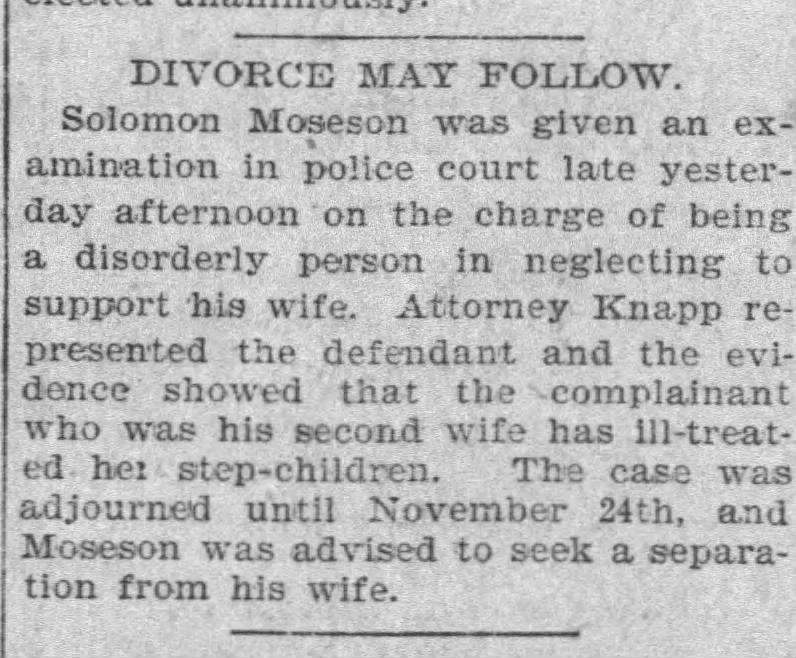
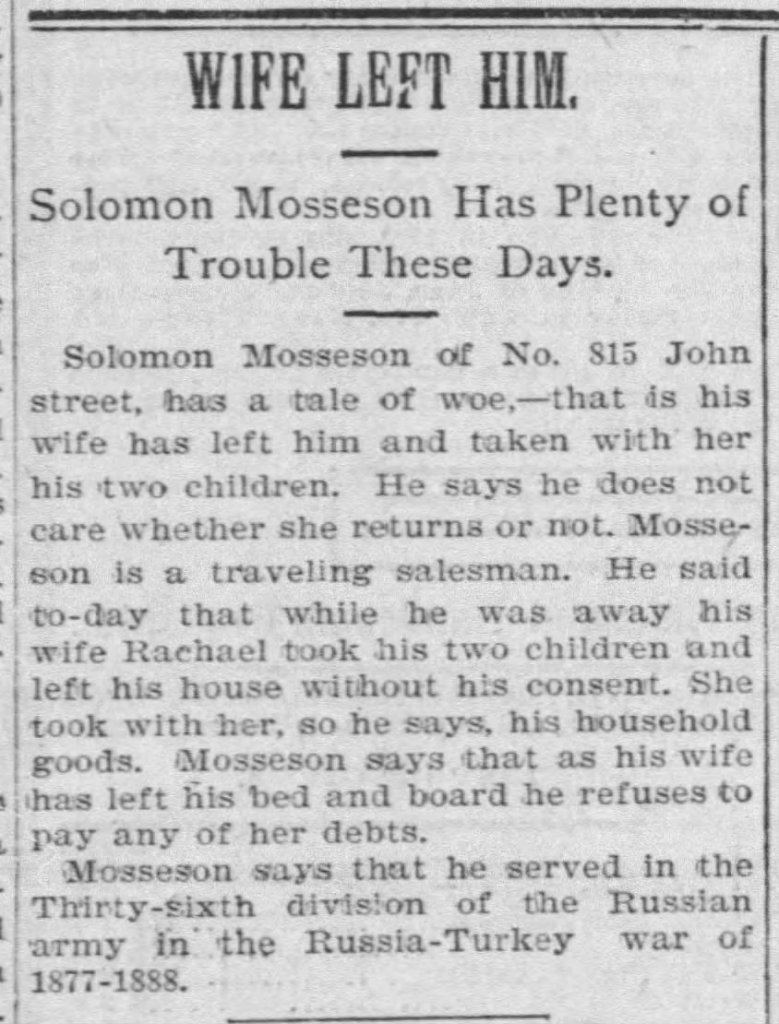
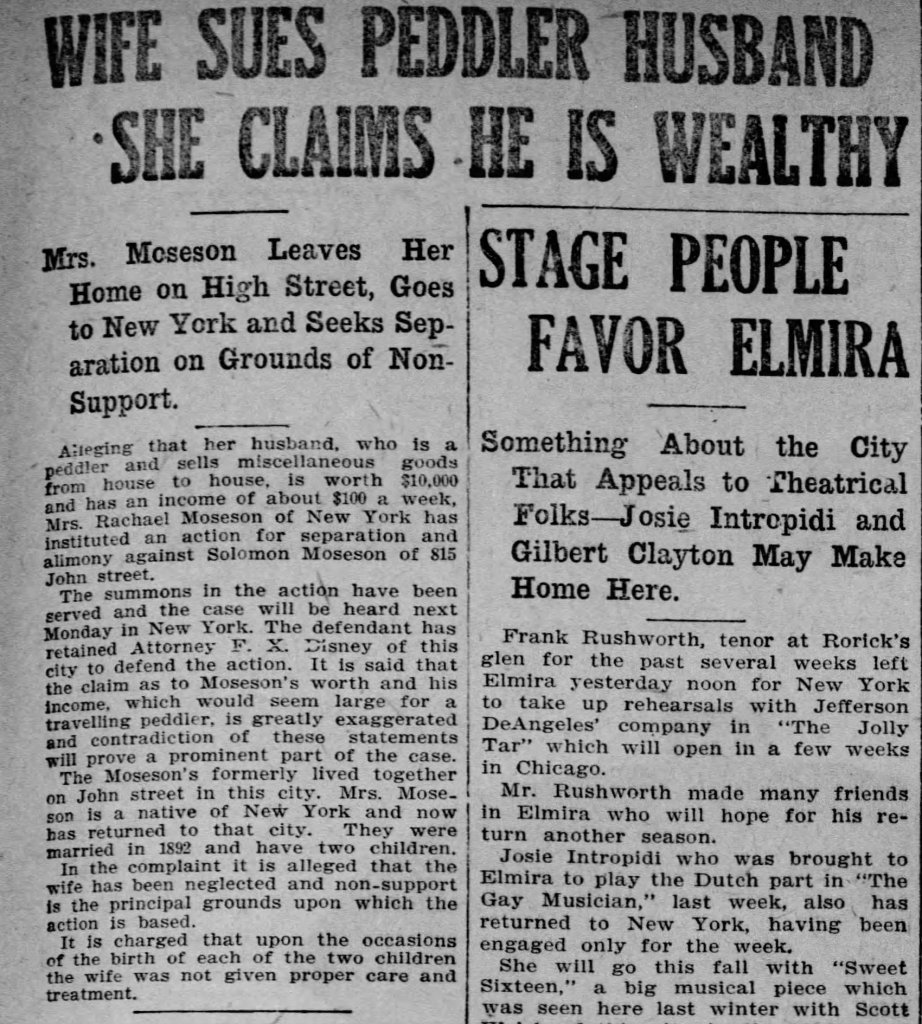


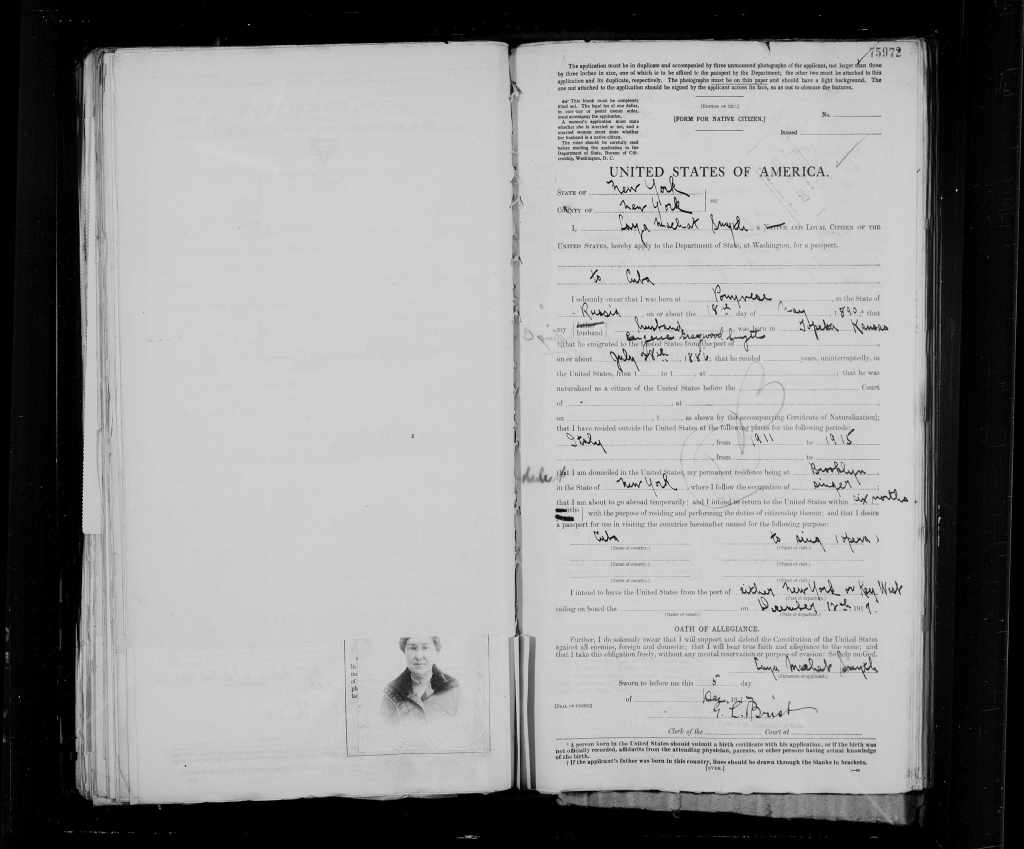
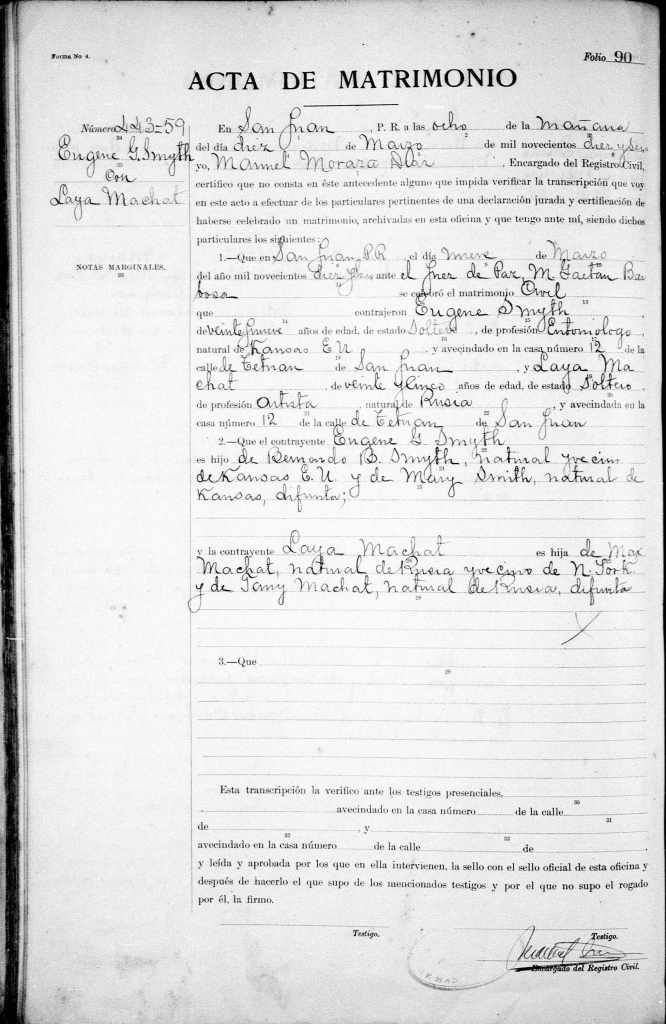
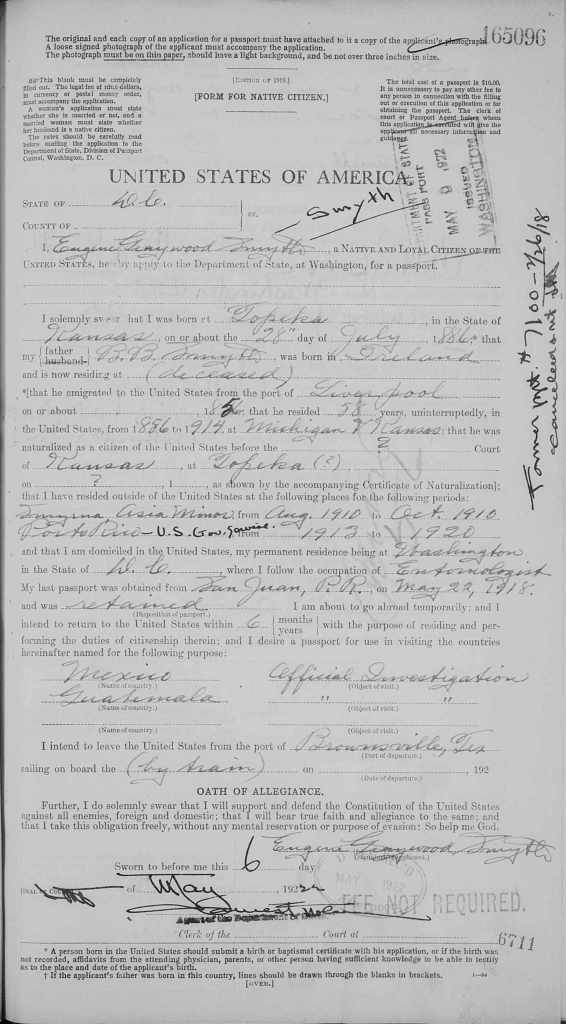




 The Papers of Sonia H. Davis