It is no secret that Sonia first met H.P. Lovecraft at the National Amateur Press Association Boston Convention in 1921. Neither is it a secret that she wasn’t entirely a fan of his quirks.
“I first met him at the Boston Convention when the Amateur Journalits [sic] gathered there for this conclave, in 1921. I admired his personality but frankly, at first, not his person.”
The Private Life of Howard Phillips Lovecraft manuscript, p. 17, 1948.
However, what continues to remain a mystery is the precise details of their first introduction. There are several reports of who played cupid between the two, of who made it their mission to make their paths cross. You may read some of those particulars in this interview: Apropos of Sonia Greene. Well, Sonia had her own testimony on who introduced her to Lovecraft. Although she neglected to provide details, she maintained this statement consistently throughout her accounts surrounding her relationship with Lovecraft.
“And evenings the two men (Lovecraft and Samuel Loveman) would meet me and we would go to dinner and see a play, or sometimes have a conclave of “amateur” friends—James F. Morton Jr. (who had introduced me to Lovecraft)…”
Books at Brown, Vol. XI, Nos. 1 and 2, p. 4, February, 1949.
“This was a favorite spot of my good friend, the late James F. Morton whom I knew many years before I met H.P. In fact it was dear James who introduced me to that convention in 1921 where I met H.P.”
The Private Life of Howard Phillips Lovecraft manuscript, p. 31, 1948.
The events which transpired in Boston at the National Amateur Press Association Convention were thankfully recorded nearly in full, as far as I know, by two amateur journalists: George Julian Houtain and Edith Miniter, both of which shared insightful tidbits of both Lovecraft and of Sonia. According to Houtain, Sonia was amongst several others who accompanied him to Boston from New York on July 1, 1921:
“This time Rheinhart and I had company—our party aboard the Calvin Austin, which left New York at 5 p.m. included Ernest and Iva Dench, Albertus and Hazel Adams, Pearl Merritt, Sonia Greene and Dottie. We made Stateroom No. 190 our headquarters presided over by its occupants, Dottie and Sonia. It was a happy care-free party.”
The National Tribute, p. 13, August 1921.
Things were about to get even more fun, for Houtain thereafter discloses some very revealing details about Sonia. Certainly, this following excerpt would inevitably crown her the official vamp of the weekend.
“We are still guessing whether A . M. A. (Albertus M. Adams), because he permitted himself to be fed ginger-ale baby-fashion by Sonia, was a greater vamp than she. In any event, Albertus said that he had no option but to live up to his reputation, while Sonia insisted that the only way to measure up to Presidential standards was to get a ‘rep’— so she immediately started in to vamp all the boys by summoning the steward. This was neatly done, too. It only required the pressing of a little button set in the wall not more than a dozen feet from the floor. This she did with the point of her slipper, at the same time having it encase her dainty foot, the feat bringing forth resounding applause and putting to shame the best terpsichorean art of a Ziegfeld beauty.”
The National Tribute, p. 13, August 1921.
After enduring a storm while at sea, the group finally arrived at Boston the next day, July 2nd.
“We breakfasted aboard. Then in a drizzling rain, accompanied by Sonia, Dorothy, four suit-cases, two bags, one grip, a brief case, two rain-coats; three umbrellas, a hat box, a card index and a look of keen expectancy, I taxied to the Hotel Brunswick.”
The National Tribute, p. 14, August 1921.
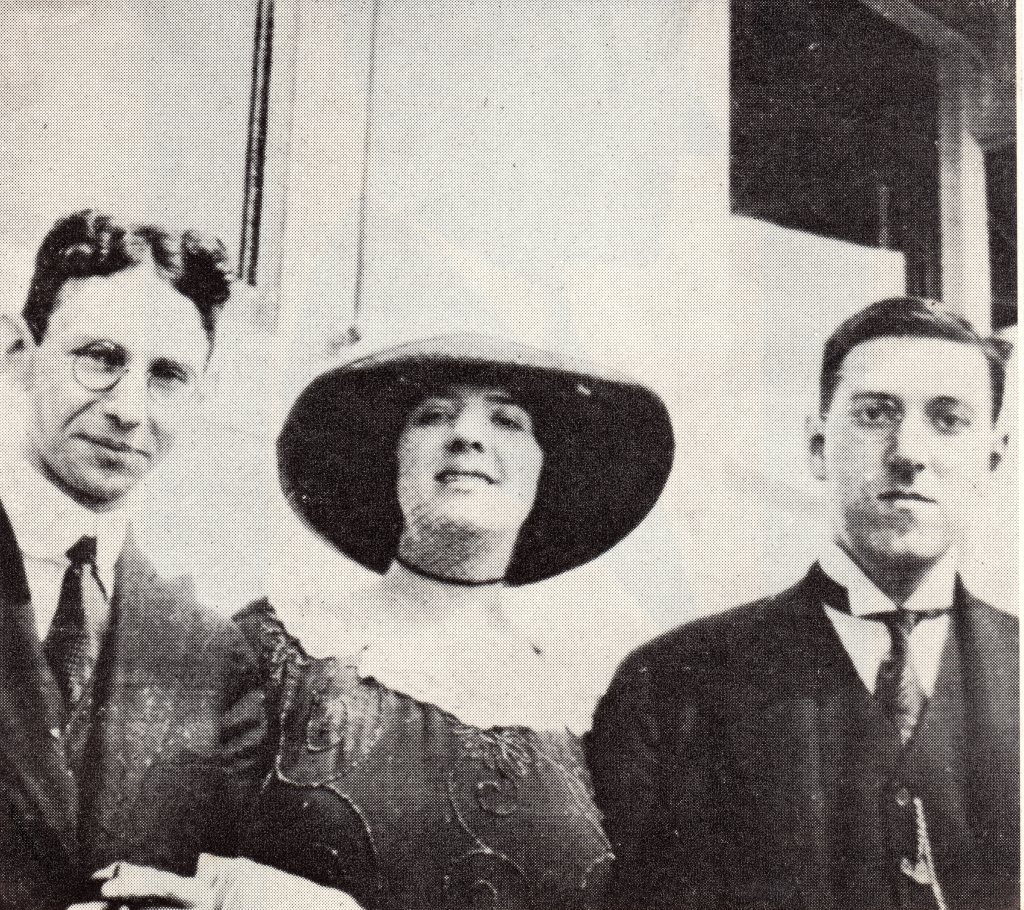
Houtain thereafter reveals that James F. Morton Jr. was already at Boston upon their arrival. In fact, he had left New York one month earlier. Unfortunately, Houtain did not elaborate on the time when Lovecraft arrived at the convention. However, if James F. Morton Jr. did in fact introduced Sonia to Lovecraft, then it was very likely on July 2nd. Houtain goes on to relay a curious instance which occurred on July 3rd, involving Lovecraft and Sonia. This account describes one very specific photograph that has been the embodiment of Lovecraft and Sonia as a couple.

“The time will never be when I will the less enjoy the splendidness of Howard Lovecraft. He is a big man in every way. Much to my delight he has proven himself to be the most human of documents. He possesses a sense of humor that is astounding, because one would doubt he possessed the gift. He is also a man with a deep sense of honor and can always be trusted. He is a modest man and great was my joy when I arranged with our official vamp, Sonia Greene, to steal up on him suddenly, get a half-Nelson clutch on his august form so that I could Brownie No. 2A him—which I did. Then the fun that followed with Lovecraft burlesquing himself as a victim of a blackmailing gang and accusing Sonia and me of being in cohorts—which we were.
Finally a deal was patched up that the negative of the said picture is to be placed under a certain rock on the corner of Broadway and 42nd Street, New York City, July 4, 1922. If Lovecraft is there at ten o’clock P.M. it is to be his—otherwise (and this is the dire threat) it is to be published immediately following the New York convention. Woe be unto him if he doesn’t appear.”
The National Tribute, p. 18, August 1921.
It is very clear by this shared moment that Sonia was comfortably acquainted with Lovecraft. Perhaps by this given time, they had already partaken in several conversations. Of course, we can only speculate the length of time which had passed between the statement above and their introduction, and how well that first meeting went. We can safely assume, however, given by the account above, that it obviously went well in spite of Sonia’s reservations about Lovecraft’s “person”.
The interactions between the two did not stop there. On July 4th, the two were quite busy with the proceedings of the convention. Although at one point of the day, the two banded together, amongst others, to help raise funds for Mrs. Hayes lunch-room and afterwards they went for a hike.
“Along about one o’clock, Sonia and Lovecraft, Bill and friend-wife Lucie, Rheinhart and Gladys, Iva and hubby Ernest, Van and Sandusky, Dottie and I, helped to create more dividends for Mrs. Hayes lunch-room on Huntington Avenue and later the rest of them took a ‘hike’ along the Charles River.”
The National Tribute, p. 23, August 1921.
Were there other instances in which they did things together? Who knows, but we have plenty to be grateful to George Julian Houtain for including these precious moments that Lovecraft and Sonia shared together, because ultimately it was these little instances which would shape a relationship into a marriage. It is tidbits like these which bring additional shades to the portrait of Sonia H. Davis, who at the time of the convention was known as Mrs. Sonia H. Greene.
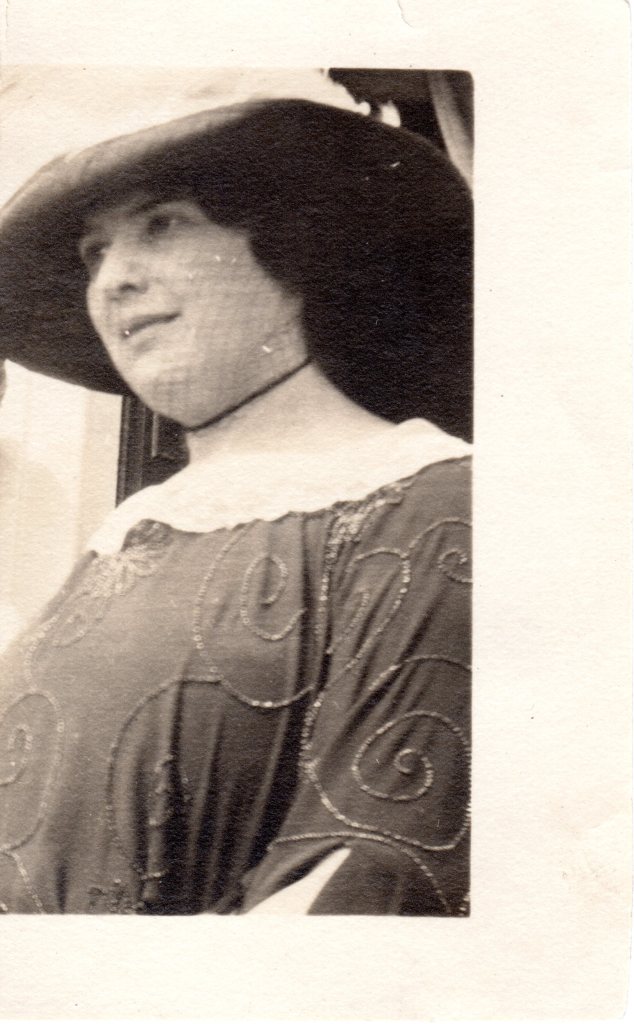
Whilst Houtain portrayed Sonia as the vamp, Edith Miniter’s account of Sonia at the convention was quite the opposite. As different as the reports are, they both paint a very realistic image of Sonia’s personality. She was both wildly fun and undoubtedly shy. She even reveals this much in her own autobiography. I shall, therefore, conclude this article with Edith’s touching remembrances of Sonia at the National Amateur Press Association Convention in 1921.
“Sometimes we missed the clever and interesting Mrs. Sonia Green [sic], but as she always explained that she was in her own room “absolutely absorbed in a book” we had to forgive her. At least I had to, the book being “Our Natupski Neighbors.” The same absorption explained (or I hope so) her getting lost whenever she went into the streets of Boston alone. Even when she departed from 20 Webster Street Saturday after the bean supper, with that book under her arm, she got lost. Said she was looking for a taxi—which was about as big a compliment to our part of Allston as asking change for $10 was to the coon.”
The Aftermath, p. 19, 1921.
“… Sonia Green [sic] had collected a few nickels as a blind and then presented the president-elect with a literal bucket of flowers…”
The Aftermath, p. 12, 1921.
“And one bewildered female may in Boston streets be seen A-seeking the convention halls—and that is Sonia Green [sic].”
The Aftermath, p. 22, 1921.
 The Papers of Sonia H. Davis
One response to “New Shades of Sonia – The NAPA Convention (1921)”
[…] months resulted in twelve posts. For 2023, I have presented you with new shades of Sonia from her attendance at the July 1921 National Amateur Press Association convention in Boson, […]
LikeLike